Cybersecurity Engineering Fundamentals
Introduction to Cybersecurity
What Is Cybersecurity?
Cybersecurity is the practice of protecting computers, networks, and data from digital attacks, damage, or unauthorized access. Think of it like securing your home. You lock your doors and windows to keep intruders out. In the digital world, cybersecurity measures are the locks that protect your personal information, financial data, and other sensitive assets.
The goal isn't just to prevent access, but to ensure digital information remains reliable and available to those who need it.
To understand the core goals of any security program, professionals often refer to the CIA Triad. This isn't the intelligence agency, but a foundational model in security.
Every security measure, from a simple password to a complex firewall, is designed to support one or more of these principles. If a system fails in any of these areas, it's considered a security breach.
The Threat Landscape
Cyber threats are actions intended to cause harm to digital systems or data. The methods used to carry out these threats are called attack vectors. Understanding the most common threats is the first step toward building a defense.
| Threat | Description | Example |
|---|---|---|
| Malware | Malicious software designed to disrupt or damage a computer system. | Ransomware encrypts your files and demands payment for their release. |
| Phishing | Fraudulent emails or messages disguised as legitimate ones to trick you into revealing sensitive information. | An email that looks like it's from your bank asking you to "verify" your password by clicking a link. |
| Denial-of-Service (DoS) | An attack that floods a server with traffic, making a website or service unavailable to legitimate users. | Overwhelming an online store's website with fake requests during a major sale, causing it to crash. |
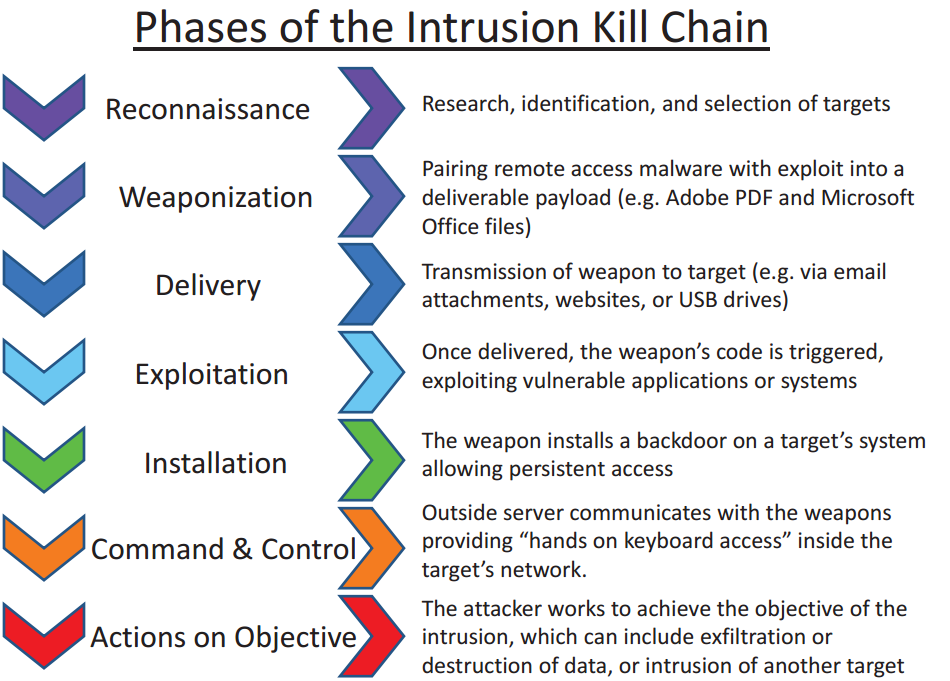
Attackers often follow a series of steps to achieve their goals, a process sometimes called the "cyber kill chain." This framework helps security professionals understand and counter attacks at different stages.
Who Defends Cyberspace?
Cybersecurity is a massive field with a wide variety of roles, each requiring different skills. These professionals work together to protect organizations from the threats we just discussed. While titles can vary, some common roles include:
Security Analyst
noun
Monitors an organization's network and systems for security breaches or intrusions. They are the first line of defense, analyzing alerts and investigating potential incidents.
Penetration Tester
noun
Also known as an ethical hacker, this person is hired to legally hack into systems to find vulnerabilities before malicious attackers can exploit them.
Security Engineer
noun
Designs, builds, and maintains an organization's security infrastructure. They implement firewalls, intrusion detection systems, and other security solutions.
These roles, and many others, fit into broader categories or specializations within cybersecurity.
Domains of Cybersecurity
Cybersecurity isn't one single topic; it's a collection of related fields called domains. Professionals often specialize in one or more of these areas.
Think of it like medicine: a cardiologist specializes in the heart, while an orthopedist focuses on bones. Both are doctors, but their expertise is different. Similarly, all cybersecurity domains aim to protect information, but they focus on different parts of the digital ecosystem.
Some of the core domains include:
- Network Security: Securing the infrastructure that connects computers and devices. This involves firewalls, routers, and monitoring network traffic.
- Application Security (AppSec): Focusing on making software and applications secure from the start of development through their entire lifecycle.
- Identity and Access Management (IAM): Ensuring that the right people have the right level of access to the right resources. This includes managing passwords, permissions, and user accounts.
- Cloud Security: Protecting data and applications that are hosted in cloud environments like Amazon Web Services (AWS) or Microsoft Azure.
- Risk Management: Identifying, assessing, and mitigating potential security risks to an organization. This helps prioritize where to focus security efforts and resources.
It's time to test your knowledge on these foundational concepts.
What are the three core principles of the CIA Triad in information security?
A firewall is a device that monitors and controls network traffic based on security rules. Which cybersecurity domain is primarily concerned with managing firewalls?
Understanding these basic terms, threats, and roles is the first step in your cybersecurity journey. With this foundation, you can begin to explore how to build stronger digital defenses.