Cyber Security Fundamentals and Applications
Cybersecurity Fundamentals
The Pillars of Cybersecurity
At the heart of every security decision, from a simple password policy to a nation's digital defense strategy, are three core principles. They provide a simple, powerful model for thinking about information security.
At its core, cybersecurity aims to protect the Confidentiality, Integrity, and Availability of information, a concept often referred to as the CIA Triad.
This framework, known as the CIA Triad, is the foundation for creating security policies. Each principle represents a different security goal. Let's break them down.
Confidentiality
Confidentiality is about keeping secrets. It's the principle that information should not be disclosed to unauthorized people, programs, or processes. Think of it as digital privacy.
When you log into your online banking portal, you expect that no one else can see your account balance or transaction history. The bank uses encryption and access controls to ensure this confidentiality. A breach of confidentiality occurs when someone who shouldn't have access—a hacker, a curious employee, or even an accidental email recipient—gets to see that private information.
Confidentiality
noun
The security principle that ensures sensitive information is accessed only by an authorized person or process.
Integrity
Integrity means that data is accurate, consistent, and trustworthy over its entire lifecycle. It hasn't been tampered with or altered in an unauthorized way. While confidentiality is about who can see data, integrity is about whether the data you're seeing is correct.
Imagine a hospital's patient database. A patient is allergic to penicillin. If an attacker changed this record to show no allergies, the consequences could be fatal. The data would be available and seemingly confidential, but its integrity would be compromised. Integrity ensures the information is reliable and hasn't been subject to unauthorized modification, insertion, or deletion.
Integrity
noun
The security principle that ensures data is trustworthy and has not been modified by unauthorized entities.
Availability
Availability ensures that systems, applications, and data are accessible to authorized users when they need them. If a user can't access the data, the security system is failing, regardless of how well the data is protected.
A classic example is an e-commerce website during a holiday sale. If a Distributed Denial of Service (DDoS) attack overwhelms the site's servers, customers can't make purchases. Even though no data may have been stolen (confidentiality) or altered (integrity), the business loses money and trust because its service is not available. Ensuring availability involves protecting against hardware failures, network outages, and malicious attacks.
Availability
noun
The security principle that ensures information and systems are accessible and usable upon demand by an authorized entity.
The Balancing Act
The three principles of the CIA Triad don't exist in a vacuum. They often exist in a state of tension, requiring a careful balance. Strengthening one principle can sometimes weaken another. Security professionals must constantly make trade-offs based on the specific needs of a system or organization.
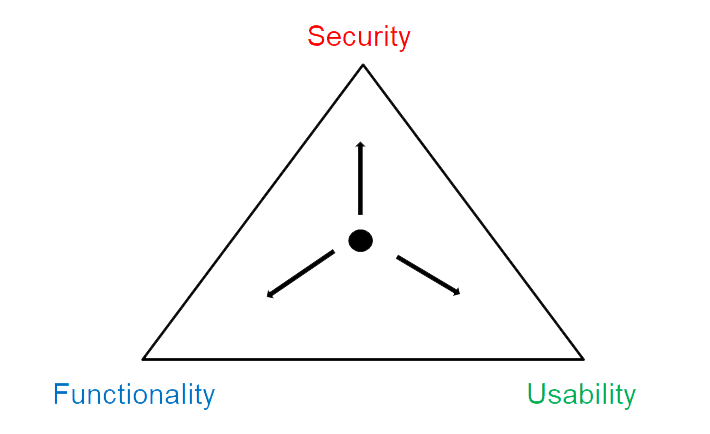
For example, a military system handling classified documents would prioritize confidentiality above all else. It might be physically disconnected from the internet and require multiple layers of authentication. This makes it highly confidential but reduces its availability and ease of use.
Conversely, a public library's website prioritizes availability. It needs to be accessible to everyone, all the time. The security measures are less stringent because the information is not confidential. The goal is to maximize access without compromising the integrity of the site's information.
Understanding these core principles is the first step in creating effective security policies. Every control, from firewalls to employee training, is designed to support one or more of these goals. By analyzing systems through the lens of confidentiality, integrity, and availability, we can identify risks and build stronger, more resilient defenses.
Ready to test your knowledge? Let's see how well you've grasped these foundational concepts.