Current Geopolitical Landscape
Introduction to Geopolitics
What Is Geopolitics?
Geopolitics is the study of how geography shapes politics and international relations. It looks at the world map not just as a collection of countries, but as a physical landscape of mountains, rivers, oceans, and deserts that influences how nations behave. Think of it as the intersection of power, politics, and place.
Location, resources, and terrain aren't just backdrops for history—they are often the driving forces behind it.
At its core, geopolitics explores why certain countries are powerful, why wars happen where they do, and why trade routes follow specific paths. A nation with access to the sea has different opportunities than one that is landlocked. A country with vast oil reserves faces different challenges than one without. These physical realities create advantages and disadvantages that leaders must navigate.
The Rise of a Global View
The formal study of geopolitics began in the late 19th and early 20th centuries. This was an era of empires, and powerful nations were competing for control over territory and resources around the globe. Thinkers started to develop theories to explain and predict these global power struggles based on geography.
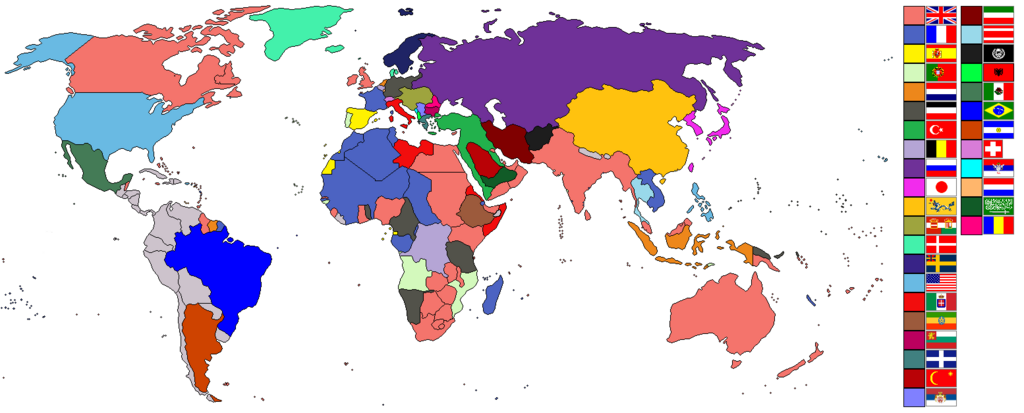
These early analysts weren't just academics. Their ideas influenced military strategy and foreign policy, as governments looked for a strategic edge. They saw the world as a grand chessboard, where geographical features dictated the most powerful moves.
Two Foundational Theories
Two classic theories set the stage for much of modern geopolitical thought. While the world has changed, their core ideas still offer a useful way to think about global power.
First came the Heartland Theory, proposed by British geographer Halford Mackinder in 1904.
Mackinder saw the continents of Europe, Asia, and Africa as a single landmass he called the "World-Island." At its center was the "Heartland," a vast, resource-rich area in Eastern Europe and Central Asia. Because it was largely inaccessible from the sea, it was a natural fortress. Mackinder famously argued:
"Who rules East Europe commands the Heartland; who rules the Heartland commands the World-Island; *who rules the World-Island commands the world."
Decades later, Dutch-American strategist Nicholas Spykman offered a counterargument with his Rimland Theory. He agreed the World-Island was key but believed the coastal areas, or "Rimland," held the real power. This ring of coastal lands included Western Europe, the Middle East, and South and East Asia.
Spykman argued that controlling the Rimland was more important because it had more people, more resources, and access to sea lanes. His version of the formula was:
"Who controls the Rimland rules Eurasia; *who rules Eurasia controls the destinies of the world."
Geography's Modern Role
While these grand theories might seem dated, the fundamental principle—that geography matters—is timeless. Physical features continue to shape political and economic power in several key ways.
| Geographical Factor | Influence on a Nation |
|---|---|
| Natural Barriers | Mountains and oceans can protect a country from invasion but can also isolate it. |
| Access to Waterways | Ports and navigable rivers are vital for trade, projecting military power, and economic growth. |
| Natural Resources | Control over resources like oil, gas, water, and minerals can bring wealth and influence. |
| Climate | Climate affects agriculture, population density, and the availability of resources. |
These factors create a unique set of opportunities and constraints for every country on Earth. Understanding them is the first step to understanding why the world works the way it does.
What is the primary focus of the study of geopolitics?
According to Halford Mackinder's Heartland Theory, control of which region was essential for commanding the world?