Currency Markets Explained
Introduction to Currency Valuation
What's a Currency Worth?
A currency’s value is never absolute. It’s always relative to another currency. Think about it like a marketplace. If you have US dollars and want to buy something in Japan, you can't just use your dollars. You need to trade them for Japanese yen. The price you pay for those yen is the exchange rate.
An exchange rate is simply the price of one nation's currency in terms of another. For example, if the EUR/USD exchange rate is 1.08, it means one euro costs $1.08. In this pair, the euro (EUR) is the base currency, and the US dollar (USD) is the quote currency. The value of the quote currency is what's needed to buy one unit of the base currency.
EUR/USD = 1.08 means €1 = 💲1.08
Exchange rates aren't all managed the same way. They generally fall into two categories.
| Exchange Rate Type | Description | Example |
|---|---|---|
| Floating | The currency's value is determined by the open market through supply and demand. It fluctuates constantly. | US Dollar (USD), Euro (EUR) |
| Fixed (Pegged) | The government or central bank ties the official exchange rate to another country's currency or a commodity like gold. | UAE Dirham (AED) pegged to the US Dollar |
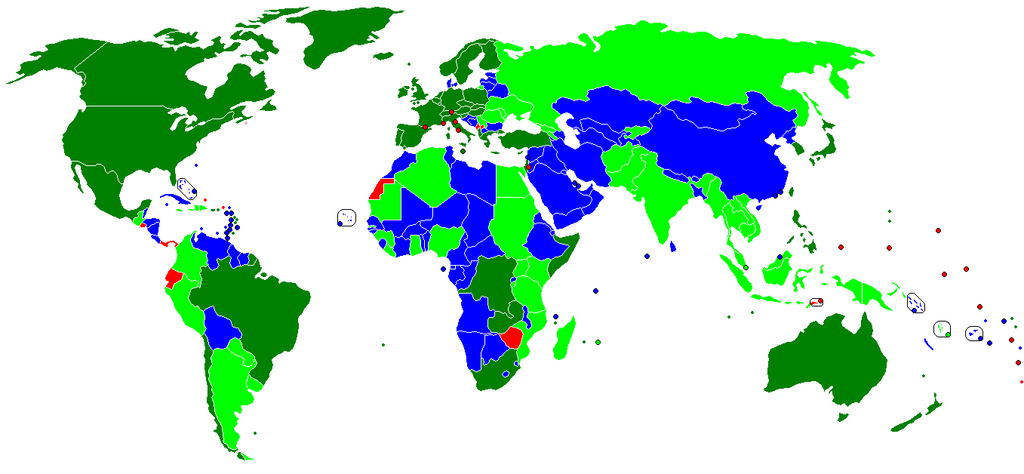
Most major world economies use a floating exchange rate system. This map shows how different countries manage their currency's value.
Supply and Demand in Action
For currencies with a floating exchange rate, value is all about supply and demand. Just like with any other good, if demand for a currency goes up, its price—the exchange rate—will rise. If supply goes up, its price will fall.
So, what drives supply and demand for a currency?
Demand increases when:
- A country exports more goods and services. Foreign buyers need to purchase the local currency to pay for these exports.
- Foreigners want to invest in the country's assets, like stocks, bonds, or real estate. They need the local currency to make these investments.
- The country's central bank raises interest rates, making investments there more attractive.
Supply increases when:
- A country's citizens and companies buy foreign goods (imports). They supply their own currency to the market in exchange for the foreign currency they need.
- Investors pull their money out of a country. They sell the local currency to move their capital elsewhere.
This simple model shows that anything affecting the desire to buy or sell a country's assets or goods will move its exchange rate.
Central Banks and Economic Health
Governments and their central banks, like the Federal Reserve in the US or the European Central Bank, play a huge role in a currency's valuation. They don't just sit back and watch; they actively manage their country's economy, which has direct effects on the currency.
Two of the most important tools they use are interest rates and managing inflation.
Inflation
noun
The rate at which the general level of prices for goods and services is rising, and subsequently, purchasing power is falling.
Imagine you have two savings accounts, one in Country A that pays 1% interest and one in Country B that pays 5% interest. All else being equal, you’d rather save your money in Country B to earn a higher return. To do that, you'd need to buy Country B's currency.
This is why interest rates are so powerful. When a central bank raises its key interest rate, it tends to attract foreign investment. This increases demand for the country's currency, causing its value to appreciate, or strengthen.
Conversely, high inflation is a currency killer. If prices in a country are rising rapidly, your money buys less and less each day. The currency loses its purchasing power. This makes the currency less attractive to hold, decreasing demand and causing its value to depreciate, or weaken.
Higher interest rates generally lead to a stronger currency, while higher inflation leads to a weaker one.
Central banks can also intervene directly in foreign exchange markets by buying or selling large amounts of currency to influence its value, though this is less common for countries with floating exchange rates.
Ready to check your understanding?
What is a currency exchange rate?
In the currency pair USD/CAD, the price quote indicates how many Canadian dollars (CAD) are needed to buy one US dollar (USD). Which is the 'base' currency?
Understanding these core principles of exchange rates, supply and demand, and the role of central banks is the first step to making sense of the global currency market.