Cunning and Conquest The Epic History of Thailand
Sukhothai Diplomacy and Expansion
Breaking Away
In the mid-13th century, much of what is now Thailand was under the sway of the powerful Khmer Empire, ruled from Angkor. Local Tai chieftains governed smaller city-states, or mueang, paying tribute to a distant god-king. But in 1238, two of these leaders, Pho Khun Bang Klang Hao and Pho Khun Pha Mueang, decided they'd had enough. They led a successful rebellion against the local Khmer governor, capturing the regional outpost of Sukhothai and declaring its independence. This act marked the birth of what is considered the first major Thai kingdom.
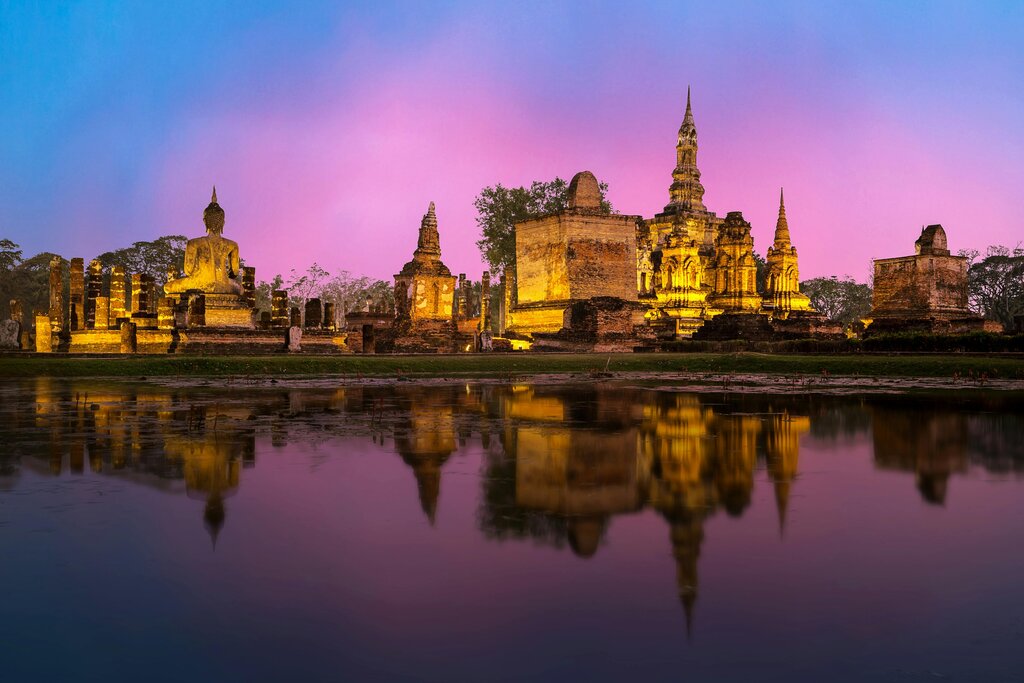
This wasn't just a military victory; it was a political statement. The new kingdom needed more than just walls and soldiers to survive. It needed a new identity, a new way of ruling that could inspire loyalty and set it apart from its former overlords.
The Father King
The architect of Sukhothai's golden age was its third king, Ram Khamhaeng, who reigned from around 1279 to 1298. He understood that to consolidate power, he couldn't simply copy the Khmer model. The Khmer kings were devarajas, or god-kings, who ruled through divine authority and immense ceremony, often remaining distant from their subjects. Ram Khamhaeng chose a different path.
He adopted a style of governance known as Pho Khun, which translates to "father of the community." This was a radical shift. Instead of a remote deity, the king positioned himself as a benevolent patriarch, accessible and directly concerned with his people's welfare. An inscription from his reign claims he hung a bell at his palace gate, inviting any subject with a grievance to ring it and receive a personal hearing. This paternalistic approach was a savvy political move, designed to forge a strong, direct bond between the ruler and the ruled, fostering a sense of shared identity and loyalty that the Khmer system couldn't match.
The Pho Khun model wasn't just a leadership style; it was a strategic tool for nation-building, creating a cohesive state from a collection of formerly vassalised territories.
Religion also played a key role. While the Khmer rulers favoured a blend of Hinduism and Mahayana Buddhism, Ram Khamhaeng established Theravada Buddhism as the state religion. This created another point of cultural distinction and served as a unifying force, not just within Sukhothai but also with other Tai states in the region who shared the same faith. It provided a common ethical framework and social glue for the expanding kingdom.
Alliances and Ambition
Ram Khamhaeng knew that Sukhothai couldn't stand alone against larger, more established powers. Instead of constant warfare, he pursued a strategy of shrewd diplomacy. His most famous achievement in this arena was the Epiphany Treaty of 1287.
He formed a pact with King Mangrai of Lanna (a kingdom to the north, based in Chiang Mai) and King Ngam Muang of Phayao. The three rulers swore an oath of eternal friendship and mutual assistance. This wasn't a treaty of submission or conquest; it was a power-sharing alliance between equals. Together, the three Tai kingdoms formed a strong northern bloc, capable of deterring aggression from the weakening Khmer Empire to the south and the Pagan Kingdom in the west.
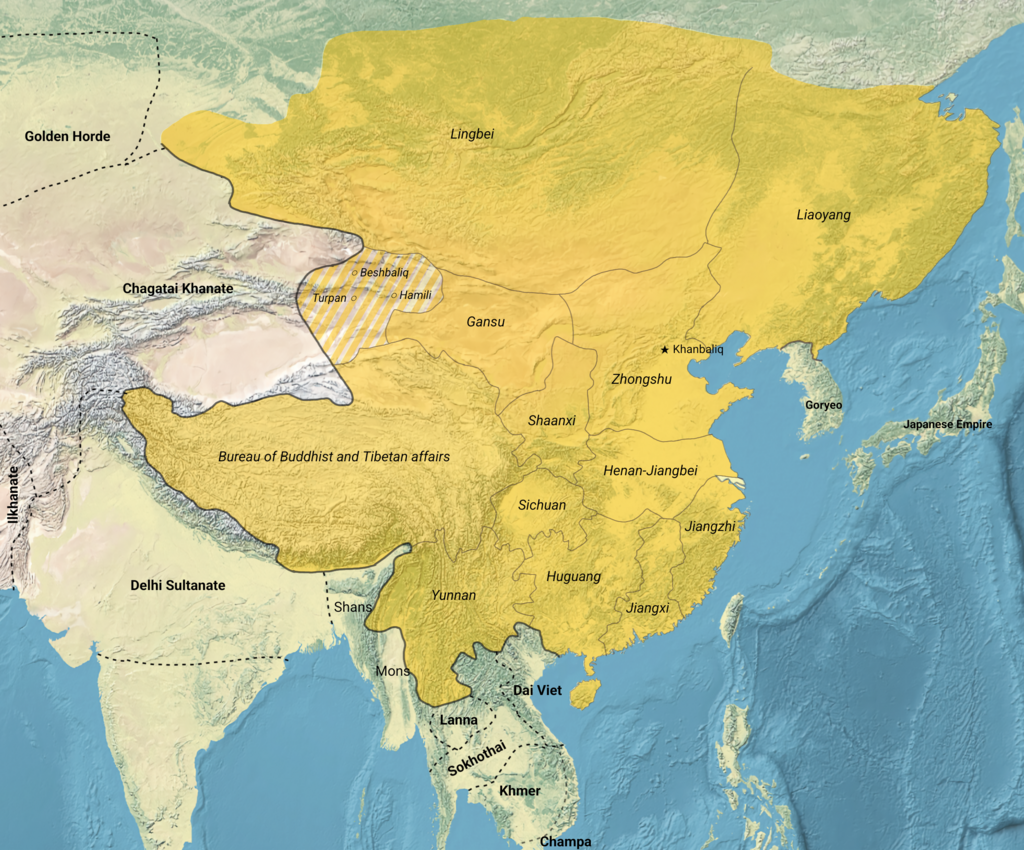
Sukhothai's most daunting challenge, however, came from the north. The Mongol-led Yuan Dynasty in China was the superpower of the age, having conquered vast territories across Asia. Direct confrontation was unthinkable. Ram Khamhaeng instead chose diplomacy, sending multiple tribute missions to the court of between 1282 and 1300.
While this involved acknowledging the Yuan emperor's superiority, it was a masterful strategic play. In exchange for symbolic tribute, Sukhothai gained formal recognition and, crucially, security from Mongol invasion. The relationship also brought significant economic benefits. Ram Khamhaeng is said to have brought back Chinese artisans who introduced advanced ceramic production techniques. This led to the creation of the famous Sangkhalok ware, a type of celadon pottery that became a major export, bringing wealth and prestige to the kingdom.
Through a careful balance of internal reform, regional alliances, and pragmatic diplomacy with a global superpower, Ram Khamhaeng transformed Sukhothai from a rebellious outpost into a flourishing regional power. His legacy was a new model for Thai kingship and a secure foundation for the kingdom's future.
The Sukhothai Kingdom was established in 1238 after a successful rebellion against which dominant regional power?
King Ram Khamhaeng's style of governance, known as Pho Khun or "father of the community", was a deliberate shift away from the Khmer model of the devaraja. What was the primary difference?
Sukhothai's rise demonstrates how shrewd diplomacy and a strong internal identity can be just as important as military strength in building a nation.