Culinary Fundamentals
Knife Skills
The Right Tool for the Job
Cooking becomes faster, safer, and more enjoyable when you use the right knife. While there are dozens of specialty knives, most of your kitchen tasks can be handled by just three core types.
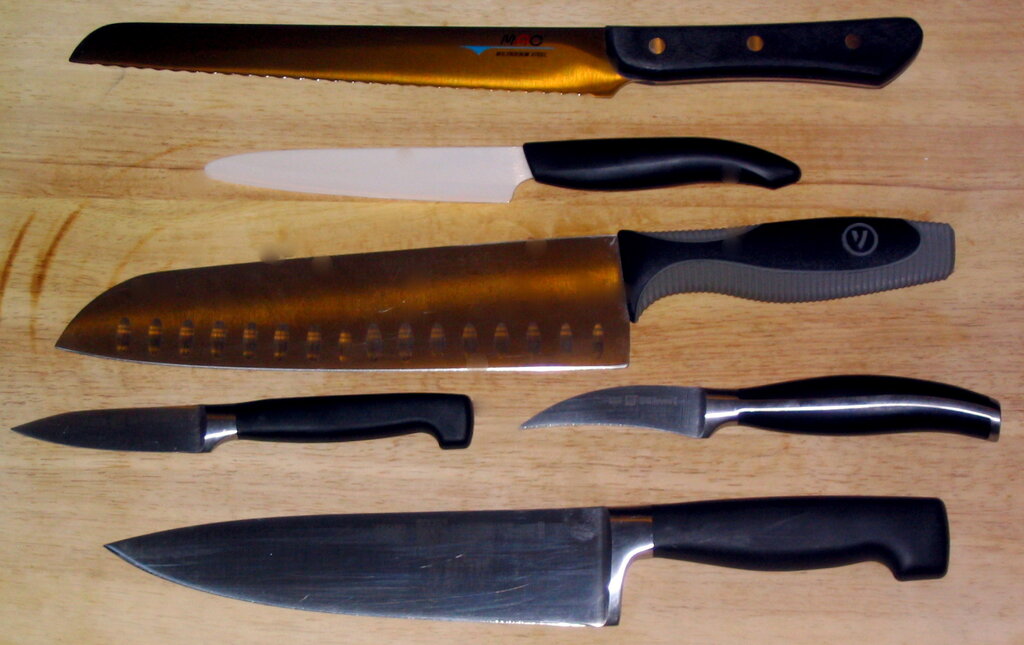
The chef's knife is your all-purpose workhorse, ideal for chopping vegetables, slicing meat, and mincing herbs. The paring knife is for smaller, more delicate jobs like peeling fruits or deveining shrimp. Finally, the serrated knife acts like a small saw, perfect for cutting through things with a hard exterior and soft interior, like bread or tomatoes.
| Knife Type | Best For | Blade |
|---|---|---|
| Chef's Knife | General chopping, slicing, dicing | 8-10 inches, broad, slightly curved |
| Paring Knife | Peeling, trimming, small detailed work | 2-4 inches, small, pointed |
| Serrated Knife | Slicing bread, tomatoes, citrus | Long with a scalloped, tooth-like edge |
Proper Handling and Safety
How you hold your knife is just as important as which one you choose. The most stable and controlled way to hold a chef's knife is the “pinch grip.” You pinch the blade with your thumb and index finger just in front of the handle, then wrap your other three fingers around the handle itself. This gives you much more precision than just holding the handle.
Always keep your fingers on your guiding hand curled into a “claw.” This protects your fingertips by keeping them tucked away, allowing you to guide the blade safely along your knuckles.
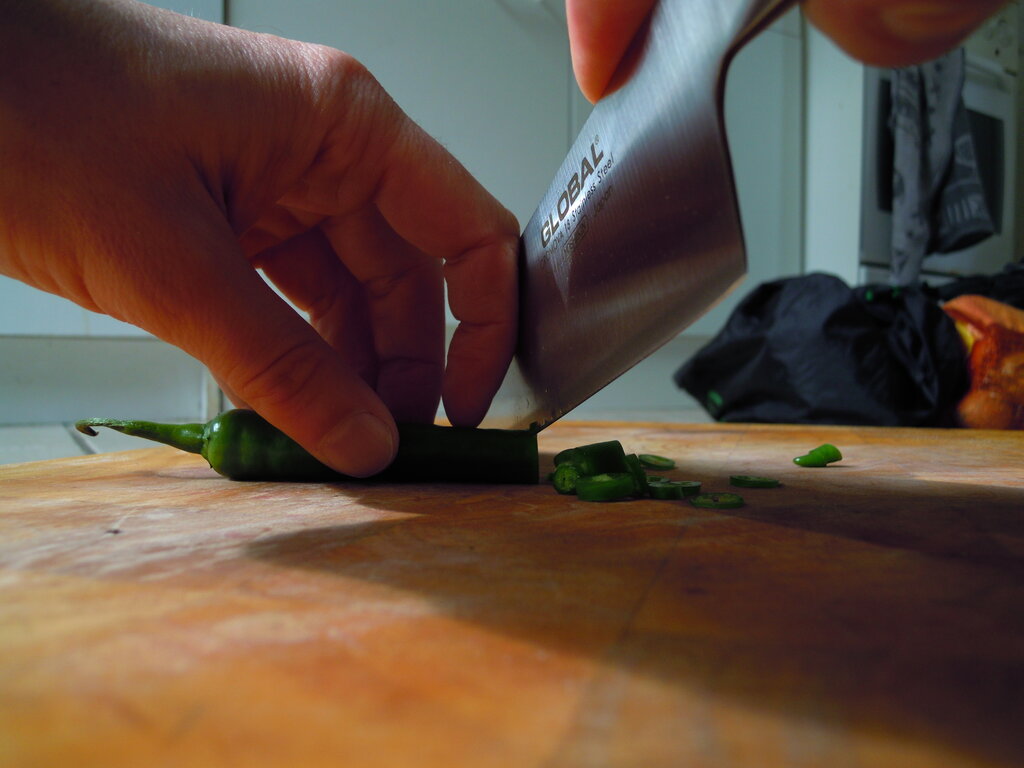
Safety is paramount. Always cut on a stable cutting board, never in your hand or on a slippery surface. When you're not using your knife, place it flat on the counter away from the edge. And never, ever try to catch a falling knife.
Mastering Classic Cuts
Professional-looking dishes often come down to uniform cuts. Consistent pieces not only look better, but they also cook more evenly. Here are three foundational techniques to practice.
Julienne
verb
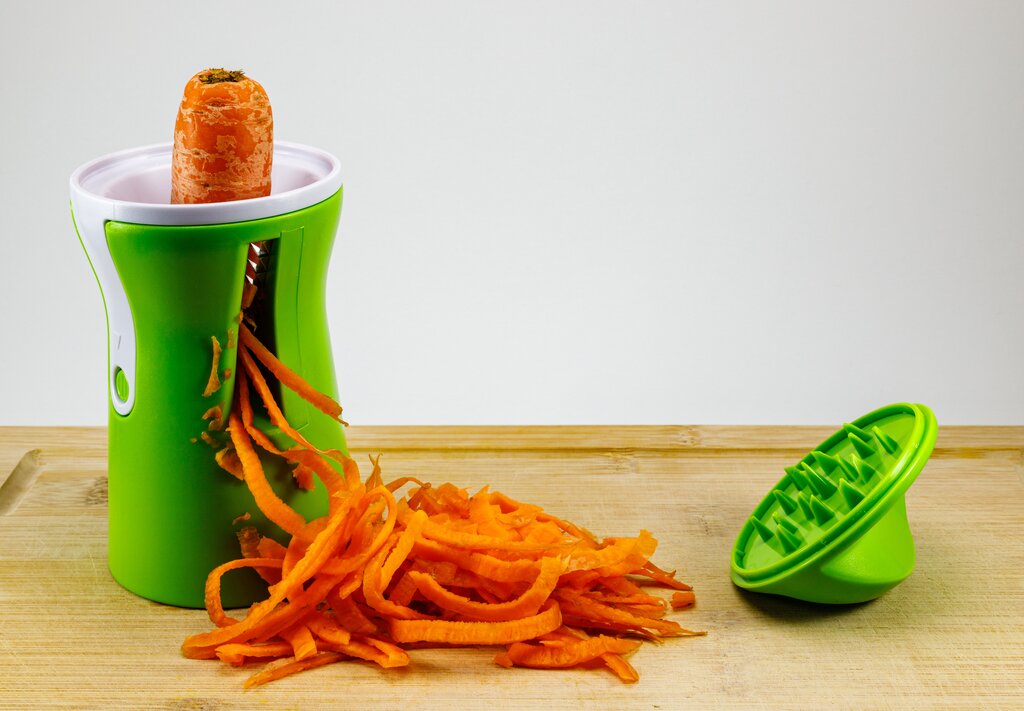
Cutting a vegetable into long, thin matchstick-like strips. This is a great cut for salads, slaws, and stir-fries.
To julienne, first cut your vegetable into thin, flat planks. Then, stack the planks and slice them lengthwise into uniform matchsticks.
Brunoise
noun
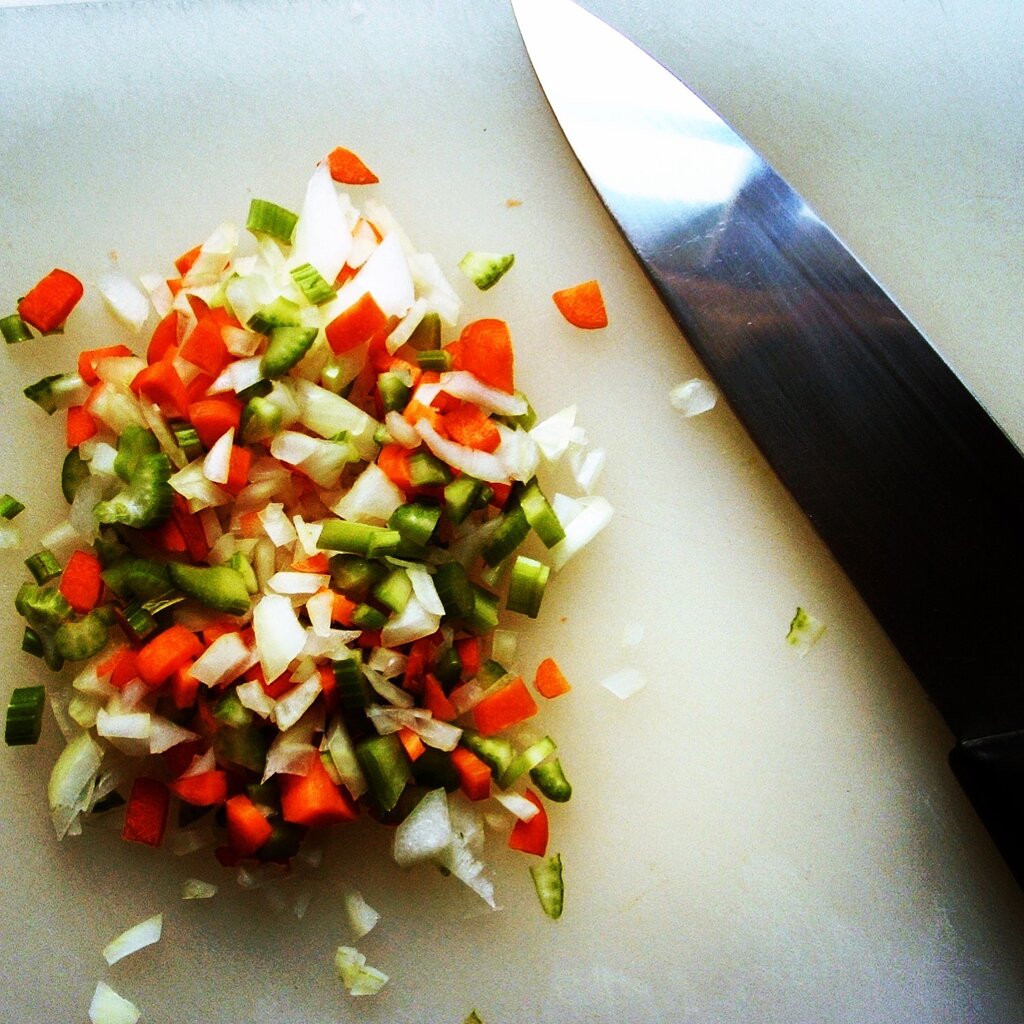
A very fine dice, typically about 1/8 inch (3mm) on each side. It starts with a julienne cut.
To make a brunoise, you first julienne your ingredient. Then, you gather the matchsticks together and dice them into tiny, uniform cubes. This cut is perfect for creating refined sauces and garnishes.
Chiffonade
noun
To slice leafy green vegetables or herbs into long, thin ribbons.
This technique works beautifully for herbs like basil and mint, or leafy greens like spinach. Simply stack the leaves, roll them tightly into a cigar shape, and then slice across the roll to create delicate ribbons.
Keeping Your Edge
A sharp knife is a safe knife. A dull blade is more likely to slip off the food and cut you. Maintaining your knives involves two key processes: honing and sharpening.
Sharp knives allow you to do your prep faster and more safely,
Honing realigns the microscopic edge of the blade. It doesn't remove metal, it just straightens the edge. You should hone your knife often, even before each use, using a honing steel.
Sharpening actually grinds away a tiny bit of the blade to create a new, sharp edge. This is done less frequently, perhaps once or twice a year, using a whetstone or an electric sharpener.
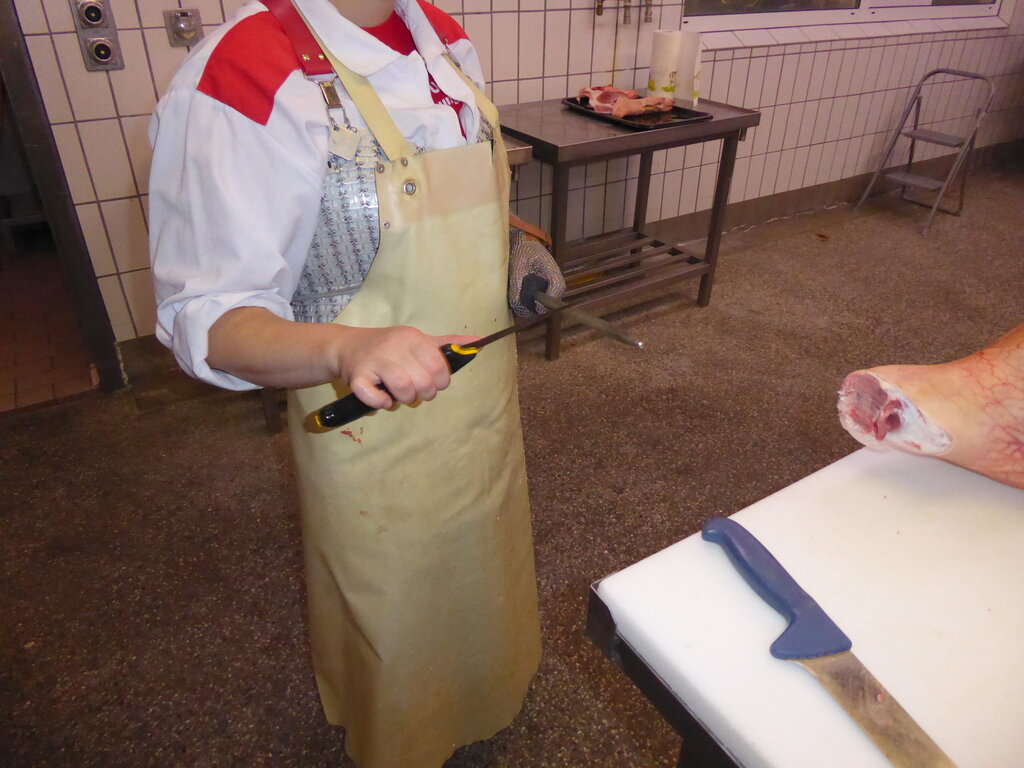
For general care, always wash your knives by hand with soap and warm water, and dry them immediately to prevent rust. Avoid putting them in the dishwasher, as the high heat and harsh detergents can damage both the blade and the handle. Store them in a knife block, on a magnetic strip, or with blade guards to protect their edges.
Now, let's test what you've learned about these essential skills.
You need to cut a crusty loaf of bread and some soft tomatoes for a sandwich. Which knife is specifically designed for this type of task?
The process of grinding away a small amount of metal to create a completely new, sharp edge on a knife is called: