Culinary Fundamentals From Scratch
Kitchen Safety
Safety First, Always
A great meal starts long before you turn on the stove. It begins with a safe and clean workspace. Knowing how to handle your tools and ingredients properly doesn't just prevent accidents, it makes you a more confident and efficient cook. Think of these practices as the foundation of all your future cooking adventures.
Good knife skills are the foundation of efficient and safe cooking.
The most important tool in your kitchen is also the one that demands the most respect: your knife. It might sound strange, but a sharp knife is much safer than a dull one. A dull blade requires more pressure to cut, making it more likely to slip off your food and into your finger. A sharp knife, on the other hand, glides through food with minimal effort.
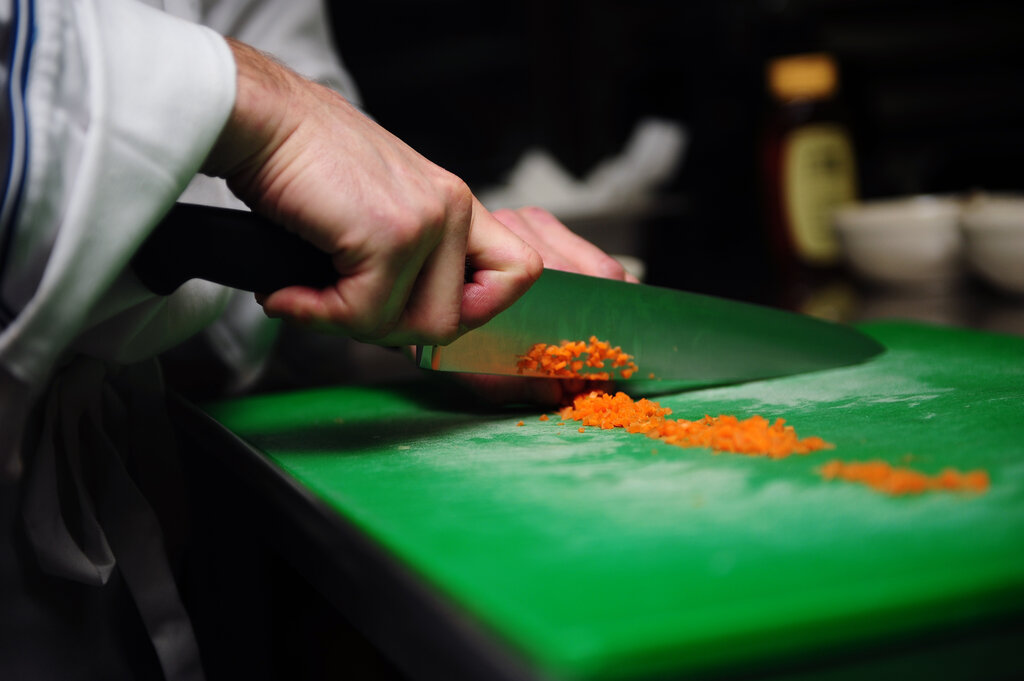
Always use a cutting board on a flat, stable surface. If your board slides around, place a damp paper towel underneath it to keep it in place. When you chop, curl the fingers of your guide hand into a “claw grip,” tucking your fingertips away. This protects your fingers and lets your knuckles guide the blade.
Never try to catch a falling knife. Just step back and let it drop. And when it's time to clean up, wash your knives carefully by hand, one at a time, with the blade facing away from you. Store them in a knife block or on a magnetic strip, not loose in a drawer.
Managing Heat
Most kitchen fires happen for a simple reason: unattended cooking. Never walk away from a hot stove, especially when frying or broiling. It only takes a moment for things to go wrong.
Keep your cooking area clear of anything that can burn. Dish towels, oven mitts, paper towels, and food packaging should all be kept a safe distance from the stovetop. Also, be mindful of loose clothing that could catch fire.
Grease fires are a common hazard. If one happens, stay calm. Never use water—it will cause the flaming oil to splash and spread the fire. Instead, slide a lid over the pan to smother the flames and turn off the heat. For small grease fires, you can also douse them with a generous amount of baking soda.
It's a good idea to have a small fire extinguisher in your kitchen and to know how to use it. The most common type for homes is an ABC-class extinguisher, which works on most types of fires you’d encounter in a kitchen.
The Clean Zone
Food safety is just as important as fire safety. The biggest risk here is cross-contamination, which is when harmful bacteria spread from one food, surface, or piece of equipment to another.
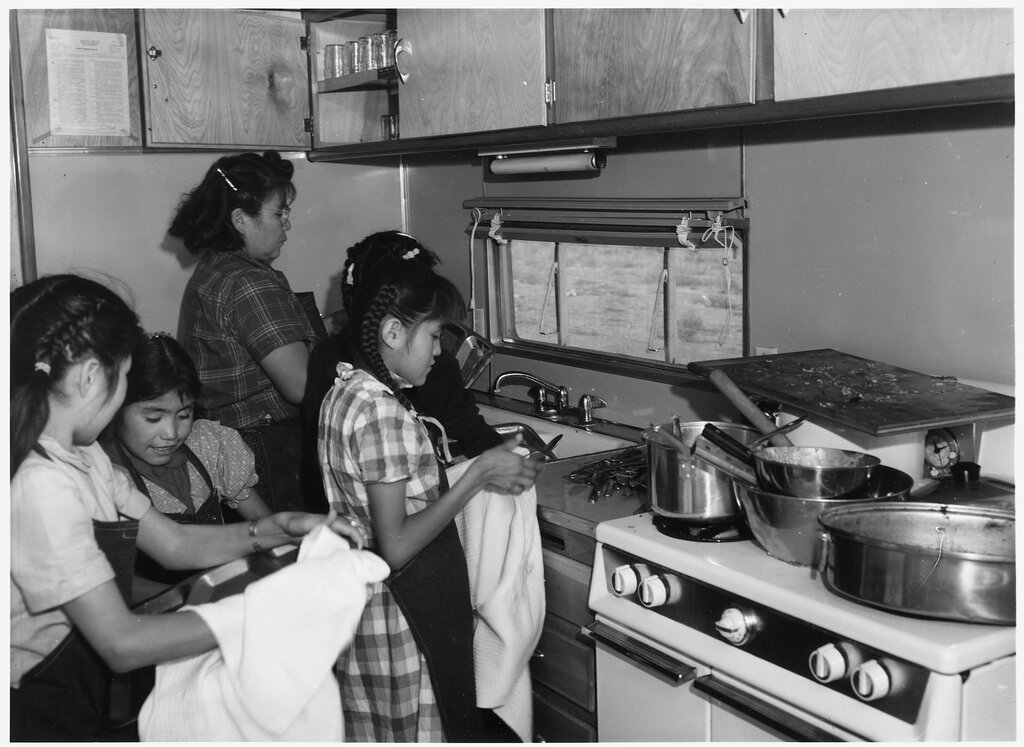
The number one rule is to keep raw meat, poultry, seafood, and their juices away from foods that won't be cooked. Use separate cutting boards—one for raw meats and another for vegetables and other ready-to-eat foods. If you don't have multiple boards, always wash the board, your knife, and your hands with hot, soapy water after handling raw meat and before moving on to another ingredient.
This principle of “clean as you go” is a professional habit that makes cooking safer and more pleasant. Wiping up spills as they happen prevents slips and keeps your workspace organized.
Proper food storage is the final piece of the puzzle. The temperature range between 40°F (4°C) and 140°F (60°C) is known as the “danger zone,” where bacteria can multiply rapidly. Perishable foods should never be left out at room temperature for more than two hours. Make sure your refrigerator is set to 40°F or below and your freezer is at 0°F (-18°C).
When storing leftovers, use airtight containers and eat them within a few days. And when you put groceries away, place raw meat on the bottom shelf of the fridge, preferably in a container or on a plate, to prevent its juices from dripping onto other foods.
Ready to test your knowledge?
Why is a sharp knife considered safer than a dull one in the kitchen?
To prevent cross-contamination, raw meat should be stored on the bottom shelf of the refrigerator.
By making these safety practices a habit, you create a kitchen environment where you can relax, be creative, and focus on making delicious food.