Culinary Fundamentals for Beginners
Kitchen Safety
Handle with Care
In any kitchen, your most important tool is your knife. It's also the one that requires the most respect. A common mistake is thinking a dull knife is safer than a sharp one. The opposite is true. A dull knife requires more pressure to cut, making it more likely to slip and cause an injury. A sharp knife glides through food with minimal effort, giving you more control.
Good knife skills are the foundation of efficient and safe cooking.
Proper technique is just as important as the sharpness of your blade. When cutting, always use the “claw grip” to protect your fingertips. Curl your fingers inward, tucking your thumb behind them, and rest your knuckles against the side of the blade. This keeps your fingertips safely away from the cutting edge while your knuckles guide the knife.
When you're finished using a knife, clean it, dry it, and store it properly. Never leave a sharp knife in a sink full of soapy water where someone could reach in and get cut. The best storage options are a knife block, a magnetic strip on the wall, or individual sheaths for each blade. Tossing them into a drawer with other utensils will dull the blades and creates a risk of injury.
Stay Alert to Fire
A kitchen fire can happen in an instant. The single most important rule is to never leave your cooking unattended. If you need to leave the kitchen, even for a moment, turn off the stove. Keep flammable items like oven mitts, wooden utensils, and paper towels away from the cooktop.
Grease buildup is another major hazard. Clean your stovetop and the vent hood above it regularly to prevent grease from accumulating. If a small grease fire does start in a pan, stay calm. Turn off the heat and cover the pan with a metal lid or another pan to smother the flames. Never use water on a grease fire; it will cause the burning grease to splash and spread the fire.
For a small grease fire, smother it with a lid or douse it with baking soda. Never use water.
It’s wise to keep a fire extinguisher in an accessible location. Make sure it’s rated for kitchen use (Class K for commercial kitchens, or ABC for home use) and that you know how to operate it. Check the pressure gauge periodically to ensure it's ready if you ever need it.
Handle Food Safely
Safe cooking isn't just about preventing accidents, it's also about preventing illness. Proper food handling is critical to avoid cross-contamination, which is the transfer of harmful bacteria from one food to another.
The biggest offenders are raw meat, poultry, and seafood. Their juices can contaminate countertops, cutting boards, and other foods. The golden rule is to keep these items and their juices away from ready-to-eat foods like fresh vegetables or fruits.
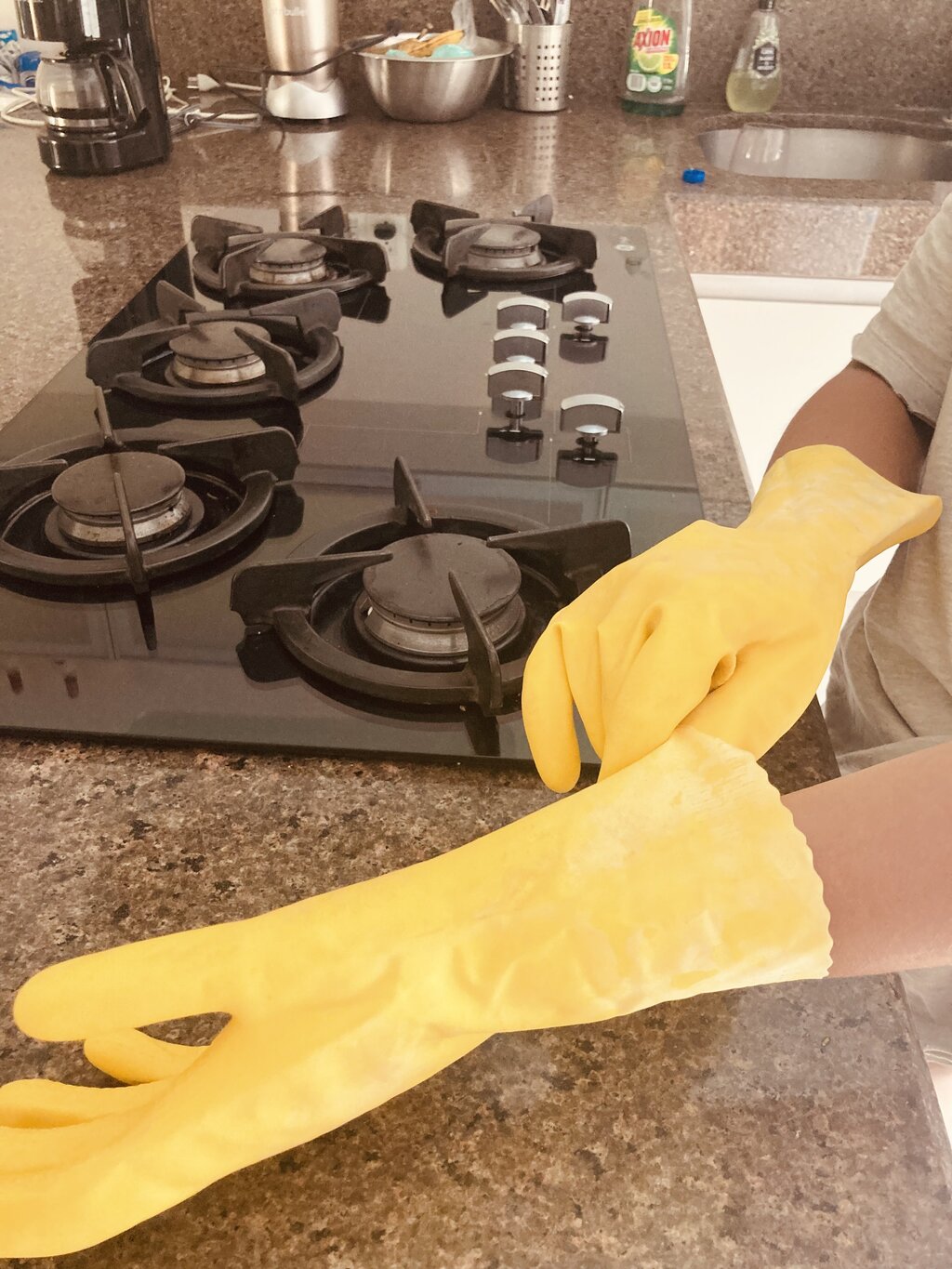
Follow these simple practices to minimize the risk.
| Do | Don't |
|---|---|
| Use separate cutting boards for raw meat and produce. | Place cooked food back on a plate that held raw meat. |
| Wash hands with soap and water after handling raw meat. | Use the same knife for raw chicken and salad greens. |
| Sanitize countertops and sinks after meal prep. | Thaw frozen meat on the counter at room temperature. |
Finally, always cook food to the proper internal temperature to kill any harmful bacteria. A food thermometer is an inexpensive and invaluable tool for ensuring your meals are both delicious and safe.
Clean As You Go
A cluttered and messy workspace is an unsafe one. Spills on the floor can lead to slips and falls. Crowded countertops increase the risk of knocking something over or accidentally touching a hot pan. The solution is simple: clean as you go.
Clean as You Cook
Take a moment to wipe up spills as they happen. Put away ingredients after you use them. Place used utensils and bowls in the sink or dishwasher instead of letting them pile up on the counter. This practice, known in professional kitchens as mise en place (everything in its place), not only keeps your kitchen safer but also makes the cooking process much more efficient and less stressful.
A clean kitchen is a safe kitchen. By handling knives correctly, staying mindful of fire hazards, practicing safe food handling, and keeping your space tidy, you create an environment where you can cook with confidence.
According to kitchen safety principles, which statement about knife sharpness is true?
What is the recommended first step for handling a small grease fire in a pan?