Culinary Foundations and Techniques
Knife Skills
Four Essential Precision Cuts
Precise, uniform cuts aren't just for looks. They ensure everything in your pan cooks at the same rate, which is the key to consistent texture and flavor. Let's move beyond basic chopping and explore four techniques that will elevate your cooking: dicing, julienning, mincing, and chiffonade.
Dice
verb
To cut food into small, uniform cubes.
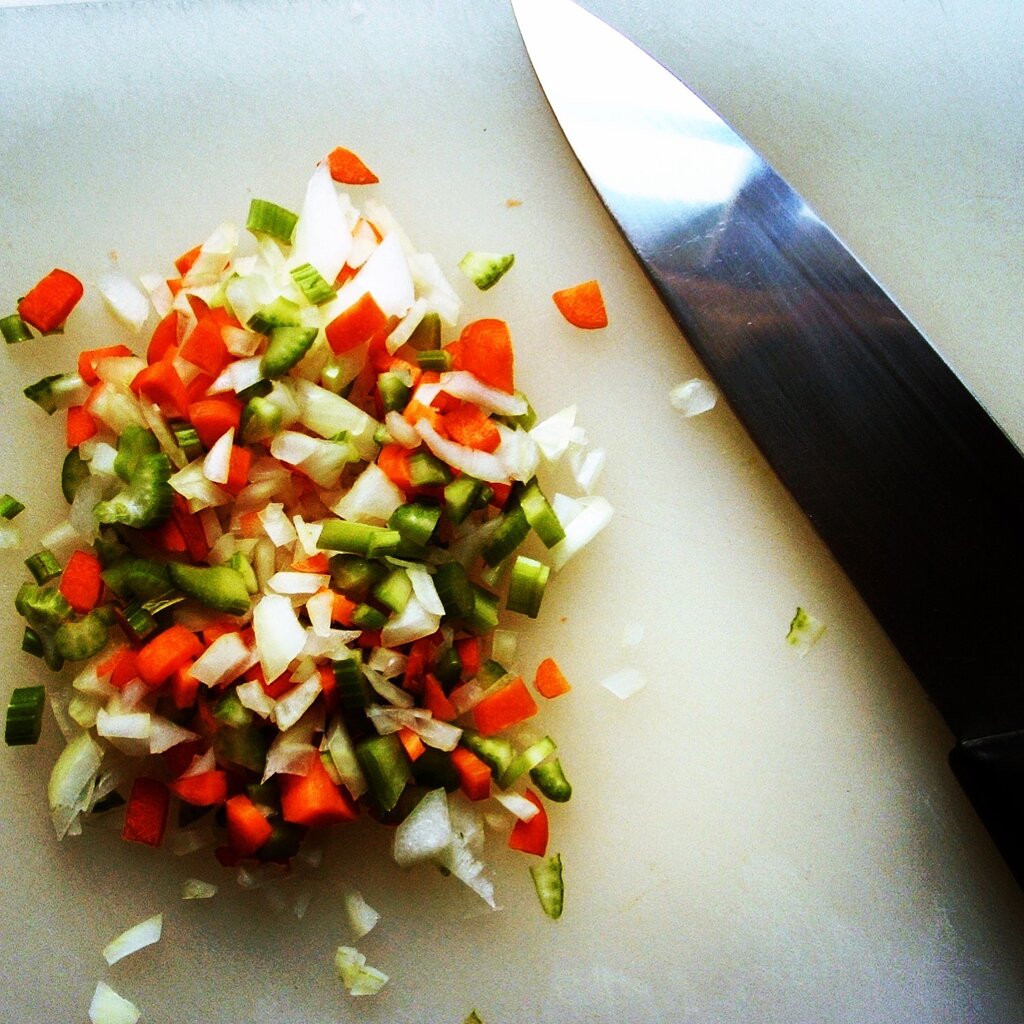
Dicing is fundamental for dishes where ingredients are meant to blend, like soups, stews, and sauces. A classic example is the mirepoix, a mix of diced onion, carrot, and celery that forms the flavor base for countless recipes.
To dice an onion, first cut off the top and root ends and slice it in half pole-to-pole. Lay a half cut-side down. Make several vertical slices, stopping just before the root end to hold it together. Then, make a few horizontal cuts parallel to the cutting board. Finally, slice straight down across your previous cuts to produce a uniform dice.
Next is the julienne, which creates long, thin matchsticks. This cut is perfect for salads, slaws, and garnishes, adding a delicate texture that's pleasing to the eye and palate. To julienne a carrot, trim the ends and cut it into two-inch sections. Square off the sides of each section to create a stable rectangular block. Slice this block into thin planks, then stack the planks and slice them again into fine matchsticks.
Squaring off a round vegetable before slicing is a professional technique that makes the process much safer and the results more consistent.
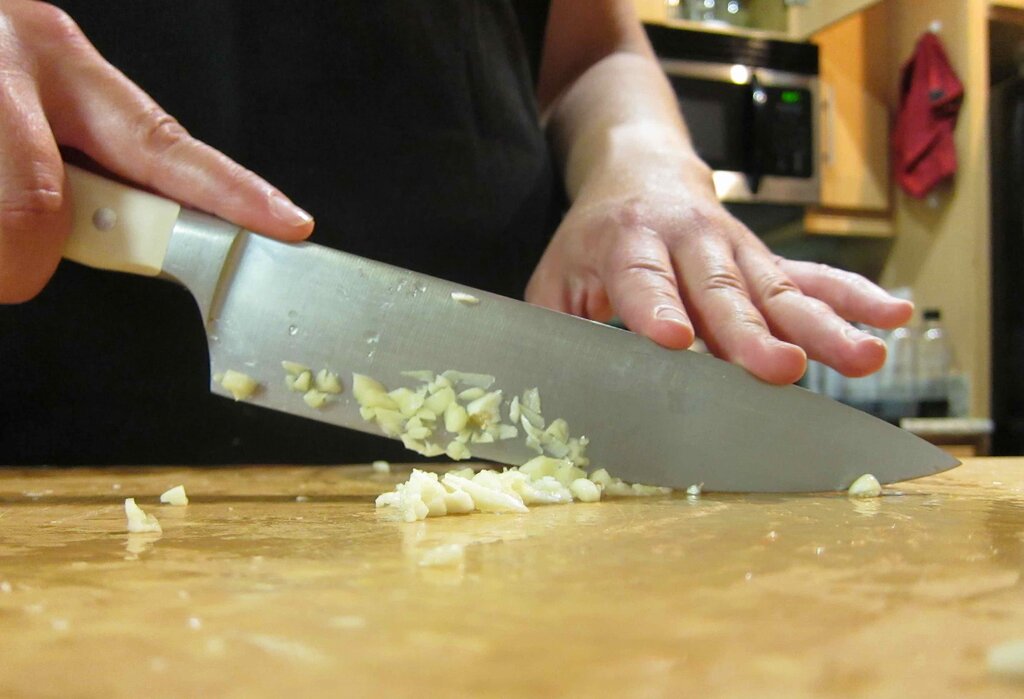
Mincing is used for aromatics like garlic, ginger, and shallots, where you want the flavor to disperse completely into the dish. The goal is to chop the ingredient into the smallest, most irregular pieces possible. After an initial rough chop, rock your knife back and forth over the pile, using your guide hand to keep the pieces contained until they are finely minced.
Finally, the chiffonade is a technique reserved for leafy greens and herbs like basil, mint, or spinach. It creates elegant, thin ribbons. To do it, stack several leaves on top of one another, roll them tightly into a cigar-like tube, and then slice thinly across the roll. The result is a beautiful garnish for pastas, soups, or salads.
Keeping Your Edge
A sharp knife is a safe knife. It bites into food without slipping, giving you more control. A dull knife is more likely to slide off a tough vegetable skin and cause an injury. Proper maintenance involves two distinct but related processes: honing and sharpening.
A sharp knife is actually safer than a dull one because it cuts cleanly with less force. Use a honing steel regularly and sharpen your knives when needed. Sharp tools make prep quicker and more enjoyable.
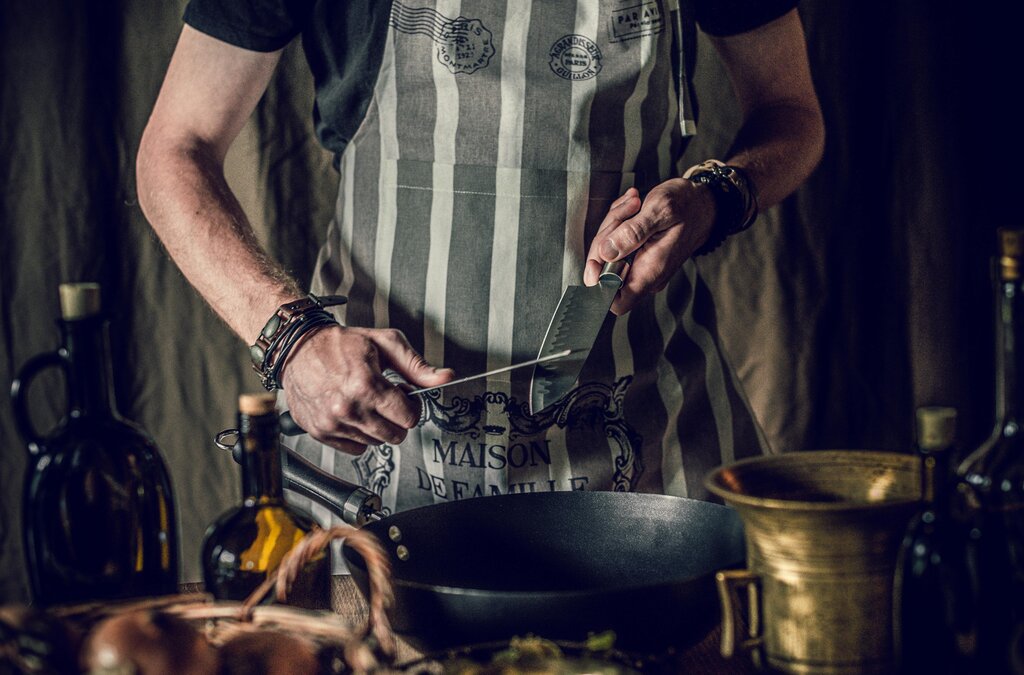
Honing doesn't remove metal. It realigns the microscopic teeth on the blade's edge that get bent out of shape with regular use. You should hone your knife frequently, even after every use. Hold the honing steel vertically, with the tip firmly on a cutting board. Place the heel of the blade against the top of the steel at a 15- to 20-degree angle. Then, draw the knife down and towards you, sweeping from heel to tip. Repeat on the other side. A few strokes per side is all you need.
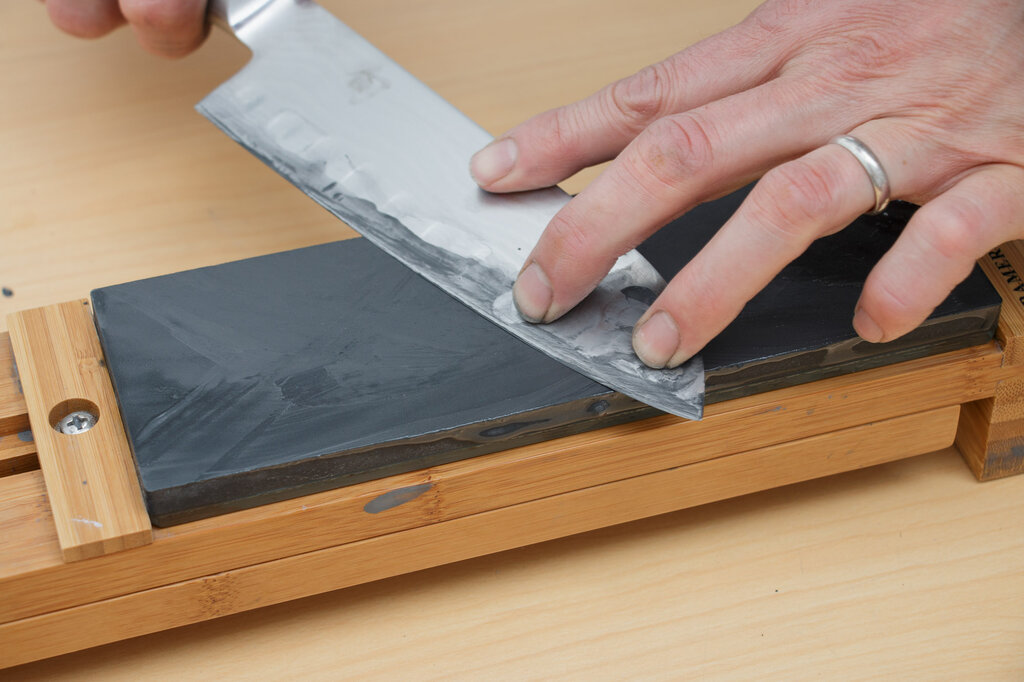
Sharpening, on the other hand, is a less frequent task that actually grinds away a tiny bit of metal to create a new, sharp edge. This is necessary when honing no longer seems effective. The most common tool for this is a whetstone. Whetstones come in different grits; you start with a coarser grit to remove material and finish with a finer grit to polish the edge.
To use one, soak it in water if required by the manufacturer. Then, holding the knife at a consistent 15- to 20-degree angle, slide the blade across the stone in a sweeping motion, as if you're trying to slice off a thin layer of the stone. Be sure to sharpen the entire length of the blade and repeat on both sides an equal number of times.
Handling with Confidence
Beyond a sharp blade, safe and efficient cutting relies on how you hold both the knife and the food. The two most important grips are the handle grip for the knife and the claw grip for your guide hand.
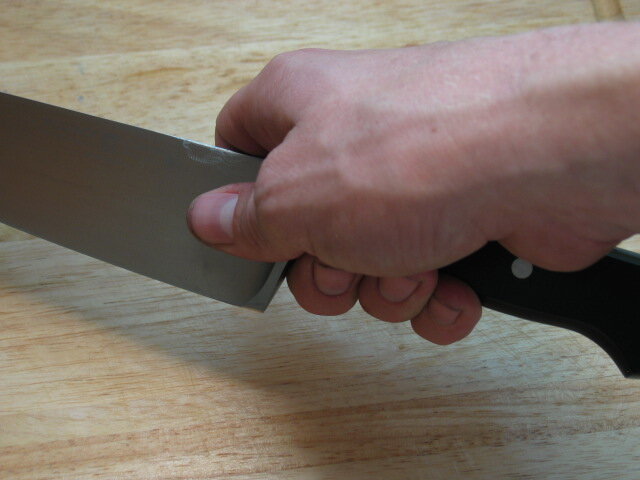
The most stable way to hold a chef's knife is the “pinch grip.” Grip the handle with your last three fingers, then pinch the top of the blade right where it meets the handle (the bolster) with your thumb and index finger. This provides maximum control over the blade.
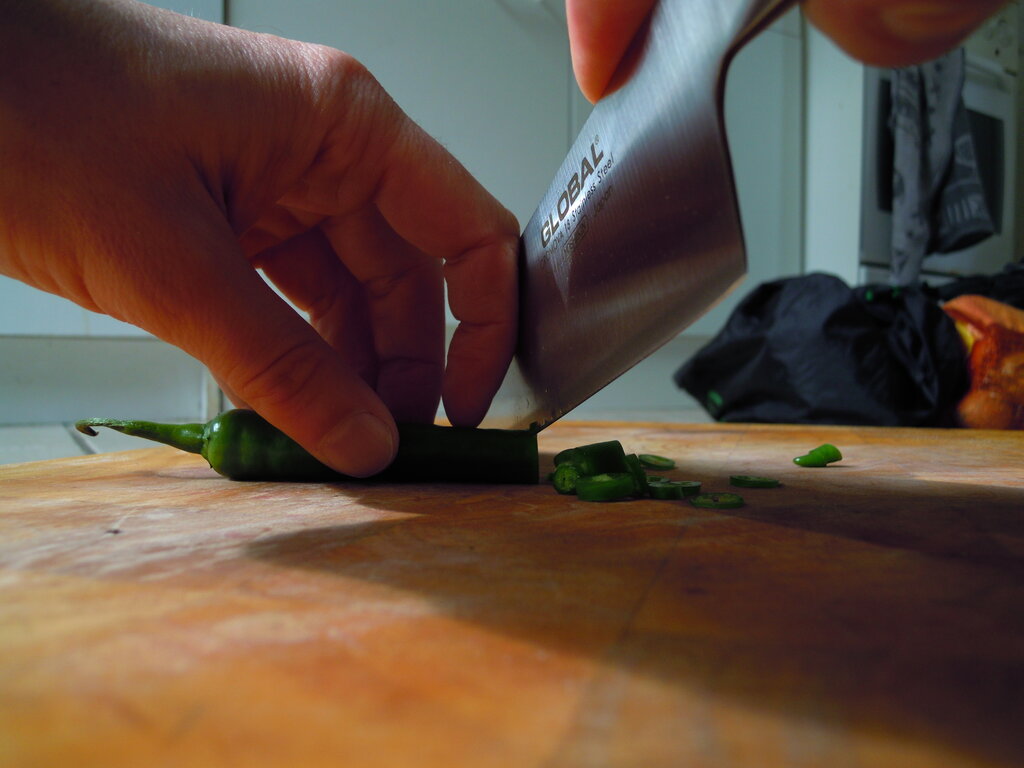
Your other hand, the guide hand, is just as important. It secures the food and guides the knife. Curl your fingertips under to form a “claw,” keeping your thumb tucked behind them. The side of the knife blade should rest gently against your knuckles as you cut. This keeps your fingertips safely away from the blade and allows your knuckles to act as a guide for straight, even cuts.
Which cutting technique is specifically designed for leafy greens and herbs, creating thin, ribbon-like strips?
What is the main difference between honing and sharpening a knife?
Mastering these techniques and habits will make you faster, safer, and more confident in the kitchen.