Culinary Foundations and Chef Mindset
Kitchen Safety and Setup
Your Kitchen Command Center
A great meal doesn't start when the pan hits the flame. It begins with a safe, organized kitchen. Think of your cooking space as a command center. When it's set up correctly, everything runs smoothly. When it's chaotic, you're more likely to make mistakes, get stressed, or even hurt yourself. The pillars of a great kitchen are safety, organization, and cleanliness.
Handle with Care
Your most important—and most dangerous—tools are your knives. A sharp knife is actually safer than a dull one because it requires less force to cut, making it less likely to slip. Always treat your knives with respect.
When chopping, use a "claw grip" with your non-dominant hand. Curl your fingertips under your knuckles, using your knuckles to guide the blade. This keeps your fingertips safe and away from the cutting edge.
When you're finished, clean and dry your knives immediately. Store them properly in a knife block, on a magnetic strip, or with blade guards in a drawer. Never toss an unsheathed knife into a drawer or sink; it's dangerous for you and bad for the blade.
Common Kitchen Hazards
Beyond sharp objects, kitchens have other potential dangers. Be mindful of these common hazards to stay safe.
-
Fire: Never leave a hot stove or oven unattended. Keep flammable items like oven mitts, paper towels, and food packaging away from burners. If a grease fire starts in a pan, never use water on it. The water will vaporize instantly and spread the burning grease. Instead, turn off the heat and smother the flames by sliding a lid over the pan.
-
Slips and Spills: A wet floor is a major slipping hazard. Clean up any spills—water, oil, or food scraps—as soon as they happen.
-
Cross-Contamination: This occurs when bacteria from one food, usually raw meat, spreads to another. To prevent it, use separate cutting boards for raw meat and produce. Wash your hands, knives, and surfaces with hot, soapy water after handling raw meat, poultry, or seafood.
Hygiene is the backbone of a professional kitchen, ensuring food safety, maintaining customer trust, and creating a safe working environment for chefs and staff.
The Art of Mise en Place
Have you ever started a recipe, only to realize halfway through that you're missing an ingredient or haven't chopped the onions yet? This frantic searching is stressful and leads to poorly cooked food. The solution is a French culinary principle called mise en place.
Mise en Place
noun
A French culinary phrase meaning 'everything in its place.' It refers to the practice of preparing and organizing all your ingredients and tools before you begin cooking.
Practicing mise en place transforms cooking from a chaotic scramble into a calm, methodical process. It ensures you have everything you need, exactly when you need it. Think of it like a surgeon laying out all their instruments before an operation. Here’s how to do it:
- Read the entire recipe first. Understand all the steps before you begin.
- Gather your tools. Get out all the pans, bowls, and utensils you'll need.
- Prep your ingredients. Wash, peel, chop, dice, and measure everything. Place each prepared ingredient into a separate small bowl or container.
- Arrange your station. Line up your prepped ingredients in the order you'll use them. This makes the cooking process seamless.
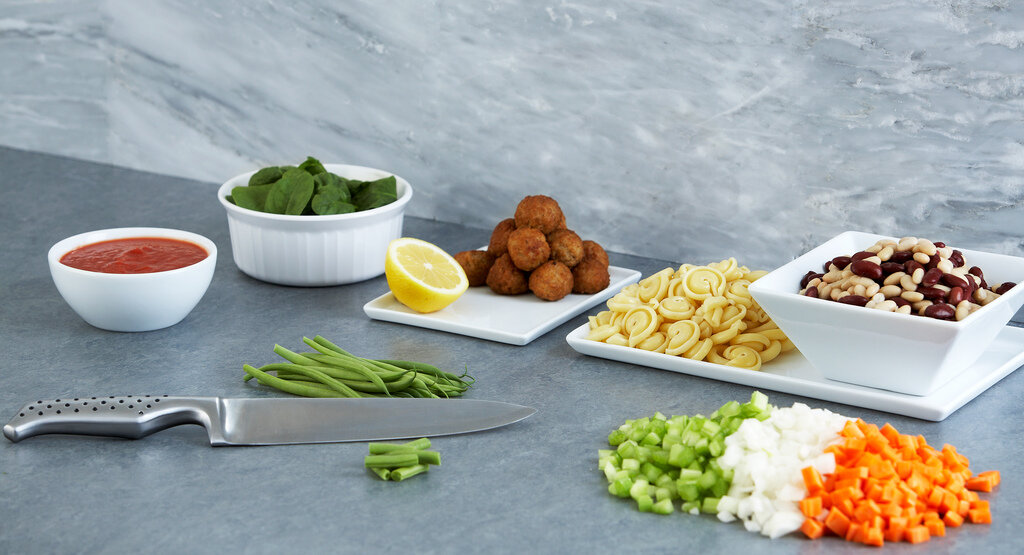
Once your mise en place is complete, the actual cooking becomes the easy part. You can focus on technique and timing instead of frantically chopping a carrot while your garlic burns.
A clean kitchen is fundamental. It prevents foodborne illness and makes your workspace more pleasant and efficient. Get into the habit of cleaning as you go. Have a bowl for compost or trash nearby to keep your cutting board clear. When you have a few minutes of downtime—while waiting for water to boil, for instance—wash a few dishes or wipe down a counter.
A tidy station reduces clutter, which in turn reduces stress and the chance of accidents. It's a simple habit that pays huge dividends in safety and enjoyment.
Why is a sharp knife considered safer than a dull one?
When chopping, the 'claw grip' is used to...
By mastering these foundational principles of safety and organization, you're not just learning to cook—you're learning to be a chef in your own kitchen.