Cucumber Playwright TypeScript Testing
Introduction to End-to-End Testing
The Big Picture Test
Imagine you're building a car. You could test the engine on its own, check if the wheels spin freely, and make sure the radio turns on. These are all important checks. But they don't answer the most crucial question: can you actually drive the car from your house to the grocery store? To know that, you need to get in, start the engine, put it in gear, steer, brake, and park. You need to test the entire journey from start to finish.
This is the core idea behind end-to-end (E2E) testing. It’s a method for verifying that a software application works as expected by simulating a complete user scenario from beginning to end. Instead of testing individual parts in isolation, E2E testing examines the entire system workflow, ensuring all the integrated components work together correctly in a real-world environment.
End-to-end testing verifies the complete workflow of an application from start to finish, just as a real user would experience it.
To understand where E2E testing fits, developers often think of a “testing pyramid.” It’s a simple way to visualize the different types of software tests and how many of each you should have.
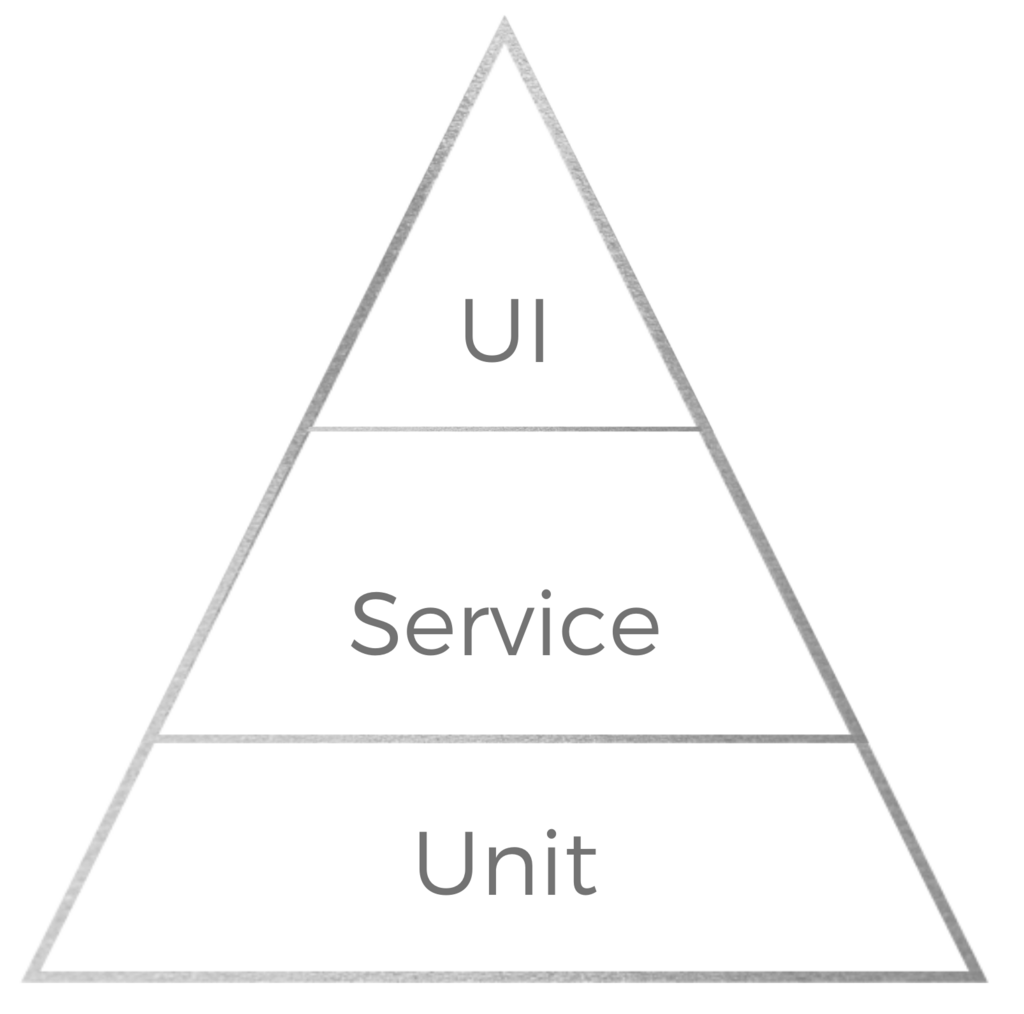
At the bottom of the pyramid are Unit Tests. These are fast, numerous, and check the smallest pieces of code in isolation, like a single function. They ensure the basic building blocks are solid.
In the middle are Integration Tests. These verify that different units or services work correctly when combined. They're like checking if the car's engine properly connects to the transmission.
At the very top are End-to-End Tests. There are fewer of these because they are slower and more complex. They test the entire application flow, from the user interface (what you see) to the database and back. An E2E test for an e-commerce site might simulate a user logging in, searching for a product, adding it to their cart, and completing the purchase. This process touches many different parts of the system, and the E2E test confirms they all cooperate to deliver the right outcome.
Writing Tests for Humans
Since E2E tests mimic user behavior, it helps to write them in a way that describes that behavior clearly. This is where Behavior-Driven Development (BDD) comes in. BDD is an approach that encourages teams to write test cases in plain, natural language that anyone, including non-technical people like project managers or business analysts, can understand.
BDD uses a simple structure, often called Gherkin syntax, to define test scenarios. It follows a Given-When-Then format:
| Keyword | Purpose |
|---|---|
| Given | Describes the initial context or setup. |
| When | Describes an action the user takes. |
| Then | Describes the expected outcome or result. |
Let’s apply this to our e-commerce example.
Given I am on the online store's homepage, And I am logged into my account, When I search for “Running Shoes”, And I click “Add to Cart” on the first result, Then the shopping cart icon should show “1 item”.
This format makes the purpose of the test crystal clear. It serves as both a test script for automation and living documentation for the application's features. By focusing on behavior, BDD ensures that your E2E tests are truly verifying the user journey and that your application meets the actual business requirements.
By combining the comprehensive scope of E2E testing with the clarity of BDD, teams can build greater confidence that their software not only works technically but also delivers a smooth and reliable experience for its users.
Time to check your understanding of these core testing concepts.