CTO OKRs for AI Companies
Understanding OKRs
What Are OKRs?
Most companies have goals. But often, those goals are vague desires, like “increase sales” or “improve customer satisfaction.” It's hard for teams to know what to do day-to-day to actually make those things happen. This is where Objectives and Key Results, or OKRs, come in.
OKRs are a goal-setting framework that connects a company's big ambitions to the measurable work of its teams. The concept started with Andy Grove at Intel in the 1970s and was later popularized by John Doerr, who introduced it to a young startup called Google. The idea was simple: set a clear direction with an inspiring Objective, then define exactly how you'll measure progress with a few Key Results.
An OKR consists of a goal, which defines a goal to be achieved, and up to 5 Key Results, which measure progress towards the goal.
Think of it as a recipe for achievement. The Objective is the name of the dish you want to make. The Key Results are the specific, measurable ingredients and steps you need to follow to create it.
The Anatomy of an OKR
The power of OKRs lies in their simple, two-part structure. Let's break it down.
Objective
noun
A qualitative, ambitious, and memorable goal describing what you want to achieve.
An Objective is the destination. It should be inspiring and point to a clear direction. It answers the question, “Where do we want to go?” Objectives are not numbers; they are words that rally the team.
Then you have Key Results.
Key Result
noun
A quantitative metric that measures progress towards the Objective.
Key Results make the Objective concrete. They are the signposts that tell you you're on the right track. If an Objective is the destination, Key Results are the mile markers along the way. They must have a number. If it doesn't have a number, it's not a Key Result.
The simple formula is: I will (Objective) as measured by (Key Results).
Let's see this in action for a local bookstore.
| Objective | Become the go-to community hub for local book lovers. |
|---|---|
| Key Result 1 | Host 12 author events in the next quarter. |
| Key Result 2 | Increase loyalty program membership by 25%. |
| Key Result 3 | Achieve an average of 4.8 stars on online review platforms. |
Why Bother with OKRs?
Setting goals this way brings powerful benefits to an organization. It's about more than just writing things down; it’s about changing how a team works together.
First, OKRs create focus. A team can only concentrate on a few things at once. By setting just 2-4 OKRs per quarter, organizations are forced to make tough decisions about what's most important.
Second, they drive alignment. When OKRs are shared transparently across the company, everyone can see how their work contributes to the bigger picture. A marketing team's OKRs should connect to the sales team's OKRs, which in turn support the company's overall strategic goals. This horizontal and vertical alignment gets everyone pulling in the same direction.
Finally, they foster accountability. Because Key Results are measurable, progress is clear to everyone. It’s not about blame; it’s about learning. If a Key Result is off track, the team can have an honest conversation about why and adjust their approach.
OKRs vs. Other Frameworks
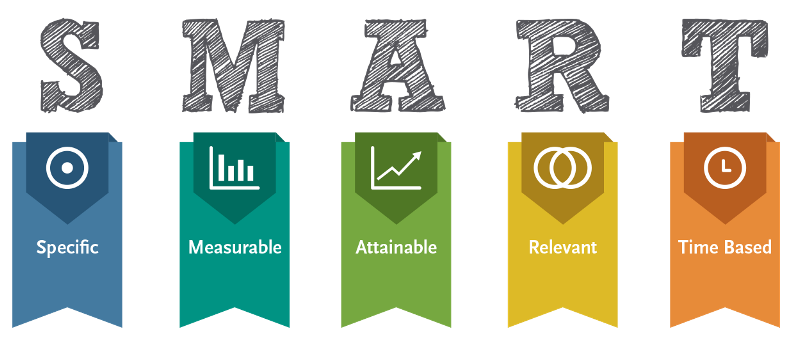
You might be familiar with other goal-setting methods like SMART goals (Specific, Measurable, Achievable, Relevant, Time-bound). So, what makes OKRs different?
The key distinction is ambition and cadence. OKRs are designed to be ambitious. A good OKR is a “stretch goal” that feels slightly uncomfortable. If you hit 100% of your Key Results all the time, your Objectives probably aren't ambitious enough. A score of 70% is often considered a success, as it shows the team pushed its limits.
OKRs also operate on a faster rhythm. Instead of being set annually and forgotten, they are typically set quarterly. This agility allows teams to adapt to changes quickly, learn from the previous cycle, and set fresh goals that are relevant to the current business environment.
This structure makes OKRs more of a strategic framework than a simple to-do list. It’s not about tracking every single task; it’s about measuring impact and outcomes.
What is the primary purpose of the OKR framework?
Which of the following is a well-formed Key Result?
OKRs provide a simple, powerful way to turn strategy into action. By setting a clear direction with an Objective and defining success with measurable Key Results, teams can achieve focus, alignment, and a culture of accountability.