CSWIP 3.1 Visual Welding Inspection
Welding Processes
Core Welding Processes
To properly inspect a weld, you first need to understand how it was made. Different welding processes create welds with unique characteristics and potential flaws. We'll explore four of the most common arc welding methods you'll encounter.
Shielded Metal Arc Welding (SMAW)
Often called "stick welding," SMAW is one of the oldest and most versatile welding processes. It uses a consumable electrode, or "stick," coated in a material called flux. When the electric arc is struck between the electrode and the workpiece, the intense heat melts both the metal electrode and the base metal, fusing them together.
The flux coating also burns, creating a protective cloud of gas that shields the molten weld pool from oxygen and nitrogen in the air. These atmospheric gases can cause defects like porosity. As the weld cools, the remaining flux forms a hard, protective layer called slag, which must be chipped away after the weld is complete. Because the shielding is built into the electrode, SMAW is highly portable and excellent for outdoor work, even in windy conditions.
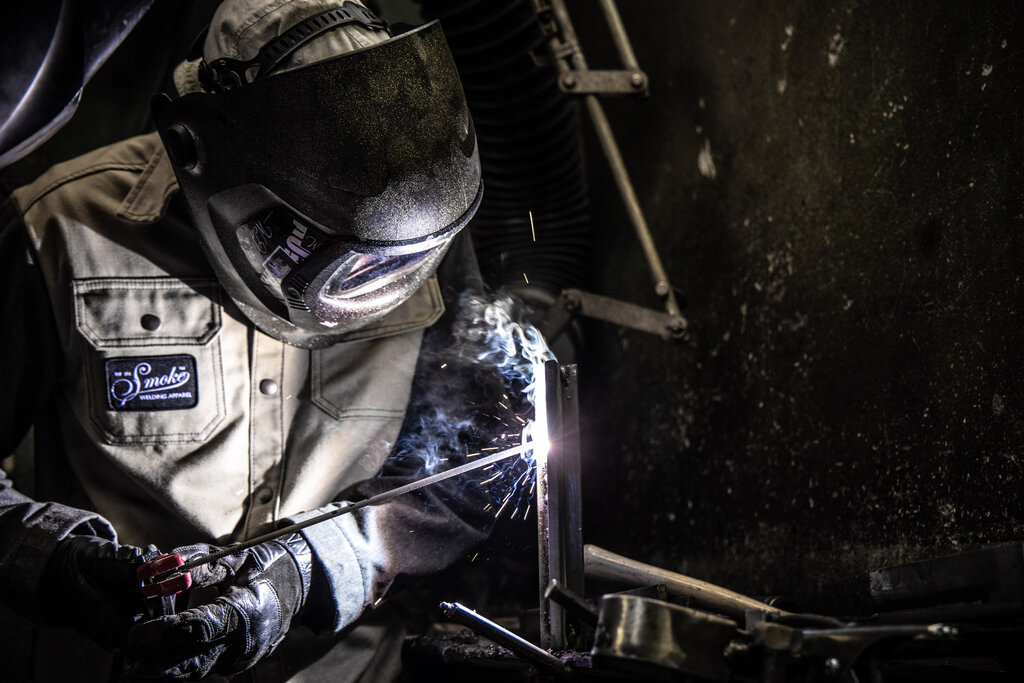
SMAW is widely used in construction, pipeline installation, and general repair work. However, it's a manual process that requires significant skill to produce consistent, high-quality welds. The stop-start nature of using individual sticks can also introduce defects at the beginning or end of a weld pass.
Common SMAW Defects:
- Slag Inclusions: Bits of slag get trapped in the weld metal instead of floating to the surface. This happens if the welder moves too quickly or doesn't clean properly between passes.
- Porosity: Small gas pockets or voids in the weld, often caused by a contaminated electrode or an unstable arc.
- Spatter: Molten metal droplets that fly out from the arc and stick to the base metal, which can be a cosmetic issue and indicate improper settings.
Gas Metal Arc Welding (GMAW)
Known commercially as MIG (Metal Inert Gas) welding, GMAW is a semi-automatic process that is much faster than SMAW. Instead of a stick electrode, it uses a continuously fed wire that travels through a welding gun. When the operator pulls the trigger, the wire feeds out, and an electric arc forms between the wire and the workpiece.
At the same time, a shielding gas (like argon or a carbon dioxide blend) flows from a cylinder through the gun and out the nozzle, protecting the molten weld pool from the atmosphere. Because the wire feed is continuous, GMAW allows for long, uninterrupted welds and is easier for beginners to learn. It produces clean welds with very little spatter and no slag to chip off.
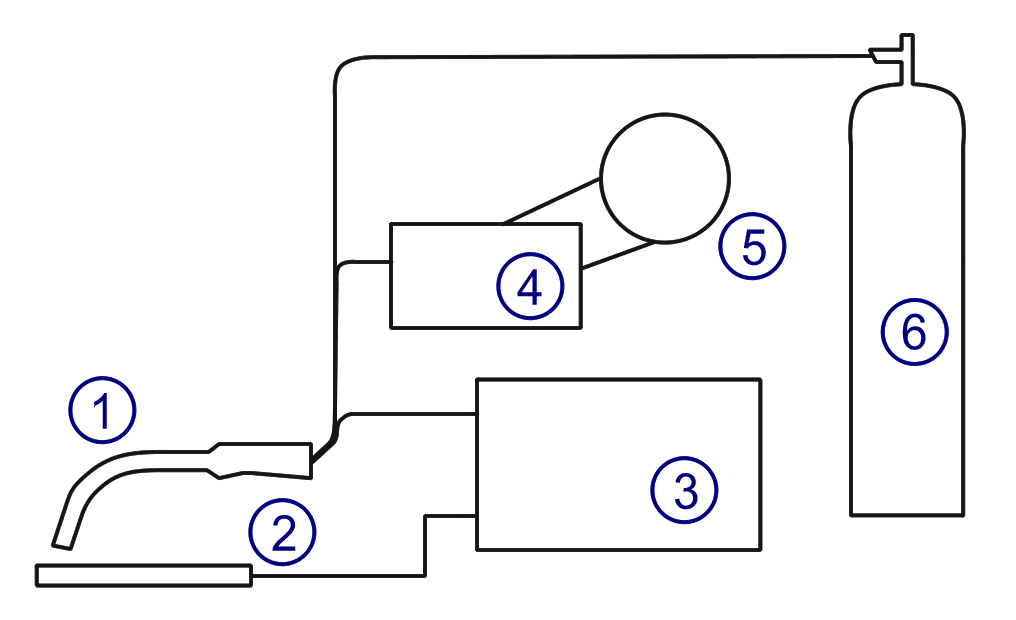
This process is a favorite in manufacturing and automotive industries due to its speed and efficiency. Its main limitation is the need for a gas cylinder, making it less portable and difficult to use outdoors where wind can blow the shielding gas away.
Common GMAW Defects:
- Lack of Fusion: The weld metal doesn't properly fuse with the base metal, creating a weak bond. This is often caused by incorrect settings or technique.
- Porosity: Gas gets trapped in the weld, usually because the shielding gas flow is inadequate or disturbed by drafts.
- Burn-through: The arc melts completely through the base metal, creating a hole. This is common on thinner materials.
Gas Tungsten Arc Welding (GTAW)
Gas Tungsten Arc Welding, or TIG (Tungsten Inert Gas) welding, is a precision process known for producing high-quality, clean welds. Unlike SMAW and GMAW, GTAW uses a non-consumable tungsten electrode to create the arc. The tungsten has a very high melting point, so it doesn't melt into the weld pool.
Like GMAW, a shielding gas protects the weld area. The welder feeds a separate filler rod into the weld pool by hand to add material. This separation of heat source and filler material gives the operator exceptional control over the weld. The process is slow and requires a high degree of skill, but the results are strong and aesthetically pleasing. It can be used on a wide variety of metals, including stainless steel, aluminum, and magnesium.
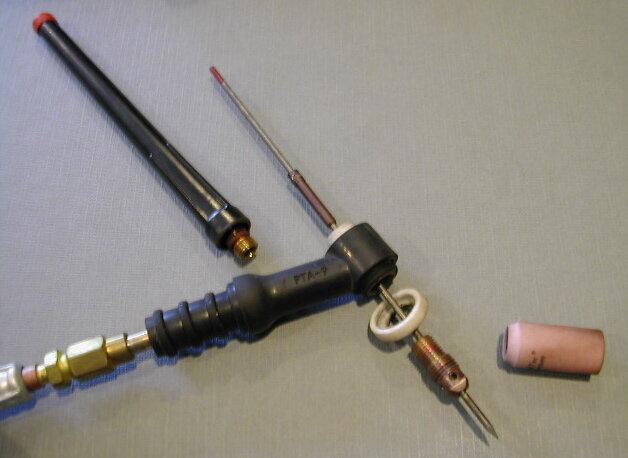
You'll find GTAW used in the aerospace, nuclear, and high-performance automotive industries where weld quality is critical.
Common GTAW Defects:
- Tungsten Inclusions: If the welder accidentally touches the tungsten electrode to the molten weld pool, small pieces can break off and become trapped in the weld, creating a weak spot.
- Lack of Penetration: The weld does not fuse deep enough into the base metal, often due to insufficient heat or moving too quickly.
- Cratering: A small depression at the end of the weld can form if the arc is stopped too abruptly, which can lead to cracking.
Submerged Arc Welding (SAW)
Submerged Arc Welding is a high-productivity, automated process used for welding thick steel plates. It works by feeding a continuous wire electrode into the joint, similar to GMAW. However, the shielding is provided by a blanket of granular flux that is deposited on the weld area just ahead of the arc.
The electric arc is completely submerged beneath this flux blanket, hence the name. The flux melts to create a protective slag layer and shield the weld from the atmosphere. Because the arc is hidden, there is no bright flash, sparks, or fumes, making it safer for operators. The thick flux layer also provides excellent insulation, allowing for very high welding currents and deep penetration. This results in high deposition rates, meaning a lot of metal can be welded very quickly.
SAW is ideal for long, straight welds on thick materials. It's commonly used in shipbuilding, pressure vessel fabrication, and manufacturing large structural beams.
The main limitation is that it can only be used in the flat or horizontal positions, as the granular flux would otherwise fall off.
Common SAW Defects:
- Slag Inclusions: Similar to SMAW, bits of the molten flux can become trapped if parameters are not set correctly.
- Undercut: A groove is melted into the base metal at the edge of the weld and is not filled by weld metal, creating a stress point.
- Centerline Cracking: A crack can form down the middle of the weld as it cools, often due to the shape of the joint or incorrect welding parameters.
Recognizing the tools and characteristics of each process is the first step toward becoming a skilled visual inspector. Each method leaves behind distinct clues about the weld's quality.
| Process | Electrode | Shielding | Key Feature |
|---|---|---|---|
| SMAW | Consumable stick | Flux coating | Highly portable, good for outdoors |
| GMAW | Continuous wire | External gas | Fast and efficient |
| GTAW | Non-consumable tungsten | External gas | High precision and control |
| SAW | Continuous wire | Granular flux | High deposition, for thick materials |
Now, let's test your understanding of these fundamental welding processes.