CSCS Exam Prep and Coaching Mastery
Exercise Science Fundamentals
Anatomy and Physiology
To understand how to build a stronger, faster human body, you first need to know how it's put together and how it works. This is the essence of anatomy and physiology.
Think of anatomy as the body's blueprint. It's the study of the body's structures: the bones, muscles, nerves, and organs. It tells you what and where everything is. Physiology, on the other hand, is the instruction manual. It explains how all those parts function and work together to keep you alive and moving.
Anatomy is the structure; physiology is the function. You can't understand one without the other.
Let's take a simple movement like a bicep curl. Anatomy tells us about the humerus (upper arm bone), the radius and ulna (forearm bones), and the biceps brachii muscle that attaches to them. Physiology explains the process: a signal from your nervous system tells the biceps muscle to contract. This contraction pulls on the forearm bones, causing your elbow to bend and lift the weight.
Every system in the body plays a role. The skeletal system provides the framework. The muscular system creates movement. The nervous system directs the action. The cardiovascular system delivers oxygen and nutrients to fuel the muscles. They all work in a coordinated effort to maintain a stable internal environment, a state known as homeostasis.
Biomechanics
If anatomy and physiology are the 'what' and 'how' of the body, biomechanics is the 'why' of movement. It applies the principles of physics to the human body to understand why we move the way we do. It's the science of forces and their effects on living systems.
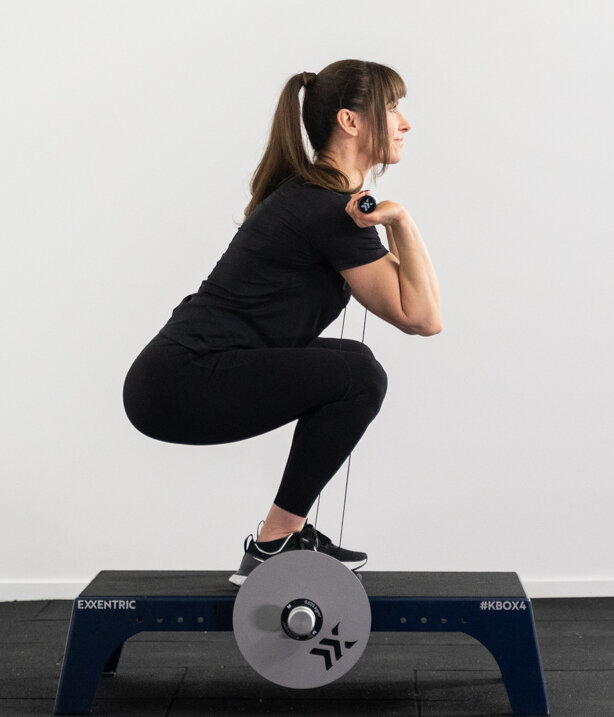
Our bodies are systems of levers. Bones act as the rigid bars, joints serve as the pivots (or fulcrums), and muscles provide the force to move the levers. Understanding this helps us see how small changes in form can have big impacts on performance and safety.
For example, when you perform a squat, biomechanics helps us analyze the forces on your knees and spine. It explains why keeping your chest up and pushing your hips back creates a safer and more effective lift. The goal is to maximize the force produced by your muscles while minimizing stress on vulnerable joints.
Key concepts in biomechanics include force, velocity, torque, and momentum. You don't need to be a physicist, but having a basic grasp of these ideas is crucial for analyzing movements and correcting technique. Proper biomechanics makes movement more efficient and drastically reduces the risk of injury.
Bioenergetics
Every muscle contraction, every nerve impulse, every single process in your body requires energy. Bioenergetics is the study of how your body gets, converts, and uses that energy. It’s the body’s energy economy.
The main currency of energy in the body is a molecule called adenosine triphosphate, or ATP. When your body needs to do work, it 'spends' ATP. Since we only store a tiny amount of ATP at any given time, our bodies must constantly produce more. This is done through three different energy systems.
| Energy System | Fuel Source | Duration of Action | Example Activity |
|---|---|---|---|
| Phosphagen | Creatine Phosphate | 0-10 seconds | 1-rep max deadlift, 40-yard dash |
| Glycolytic | Carbohydrates | 10-90 seconds | 400-meter sprint, a set of 12 squats |
| Oxidative | Carbs, Fats, Protein | > 2-3 minutes | Marathon, long-distance cycling |
These systems don't work like light switches; they are not simply on or off. Instead, they all contribute to energy production at the same time, but their relative contribution depends on the intensity and duration of the activity.
A powerlifter attempting a max squat will rely almost entirely on the phosphagen system. A soccer midfielder will use a mix of all three throughout a game: the phosphagen system for a quick jump, the glycolytic system for a sprint to the ball, and the oxidative system to jog and recover between plays. Understanding bioenergetics allows you to tailor training and nutrition to meet the specific energy demands of a sport or goal.
Which field of study is primarily concerned with identifying the location of bones, muscles, and organs in the human body?
The coordinated effort of all body systems to maintain a stable internal environment is known as ____.
Together, these three areas—anatomy and physiology, biomechanics, and bioenergetics—form the bedrock of exercise science. Mastering these fundamentals is the first step toward creating safe and effective training programs.