Cryptocurrency Wealth Generation Strategies
Introduction to Cryptocurrency
What is Cryptocurrency?
Cryptocurrency is a type of digital money. Unlike the dollars or euros in your bank account, it doesn't exist in a physical form and isn't controlled by any single bank or government. Instead, it's a peer-to-peer system, meaning people can send funds directly to each other without an intermediary.
This is made possible by a technology called blockchain, which acts like a public ledger that records all transactions. Security is handled by cryptography, the practice of secure communication, which ensures that no one can spend money they don't own.
The core idea is decentralization. There is no central authority. The network is maintained by a global community of users.
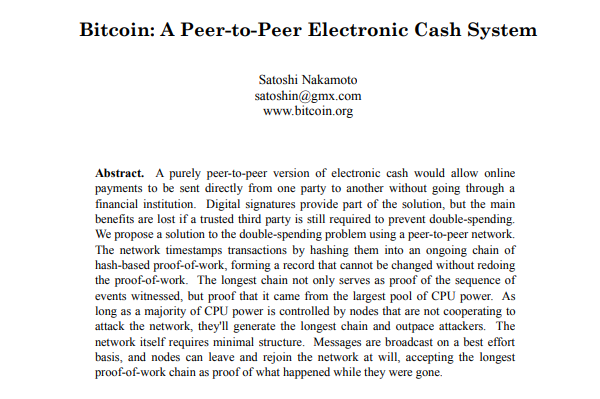
The concept of digital cash existed for years, but it always faced the "double-spending problem." How do you stop someone from spending the same digital dollar twice? In 2008, a person or group using the pseudonym Satoshi Nakamoto solved this problem with the invention of Bitcoin. It was the first successful cryptocurrency and laid the groundwork for thousands that followed.
The Blockchain Backbone
Blockchain is the technology that makes most cryptocurrencies possible. Think of it as a special kind of digital notebook. This notebook is shared with thousands of people, and everyone has an identical copy. When a new transaction happens, it's added as a new entry on a new page, or "block."
Each new block is cryptographically linked to the previous one, forming a chain. This is where the name "blockchain" comes from. Because every block is connected to the one before it, altering any past transaction would require changing every single block that came after it across the entire network. This makes the ledger permanent and tamper-proof, creating a system where trust is built into the code itself.
This structure provides a secure and transparent record of ownership. Anyone can view the blockchain, but no single person can control or alter it.
How Transactions Stay Secure
Cryptography is the "crypto" in cryptocurrency. It's a set of techniques used for secure communication, and it's essential for keeping the network safe. One of the core tools is called hashing.
A hash function takes any input, like a list of transactions, and produces a unique, fixed-size string of characters called a hash. It's like a digital fingerprint. Even a tiny change to the input will produce a completely different hash.
| Input Text | SHA-256 Hash |
|---|---|
| Send 1 BTC to Alice | a2b1... |
| Send 1 BTC to Bob | f7e3... |
| send 1 BTC to Alice | 9c8d... |
Notice how changing just one capital letter in the third example results in a completely different hash. This property is what helps link blocks together securely. Each block contains the hash of the one before it, ensuring the chain's integrity.
Agreeing on the Truth
Since there's no central bank to validate transactions, how does a decentralized network agree on which transactions are legitimate? This is solved through a consensus mechanism.
Two of the most common mechanisms are Proof of Work and Proof of Stake.
Proof of Work
other
A consensus mechanism where network participants, called miners, compete to solve a complex mathematical puzzle. The first one to solve it gets to add the next block to the blockchain and is rewarded with cryptocurrency.
Proof of Work (PoW) is the original consensus mechanism used by Bitcoin. It's highly secure because attacking the network would require an immense amount of computing power, making it prohibitively expensive. However, this process consumes a lot of energy.
Proof of Stake
other
A consensus mechanism where participants, called validators, are chosen to create new blocks based on the amount of cryptocurrency they hold and are willing to "stake" as collateral.
Proof of Stake (PoS) was developed as a more energy-efficient alternative. Instead of miners competing with computational power, validators are chosen to create blocks based on the amount of coins they lock up, or "stake." If a validator acts dishonestly, they can lose their staked coins. This economic incentive is what secures the network.
Bitcoin and Ethereum
While thousands of cryptocurrencies exist, two stand out for their historical and technological importance.

Bitcoin (BTC) was the very first cryptocurrency. Its primary purpose is to be a decentralized, peer-to-peer electronic cash system. It proved that a digital currency could work without a central authority, and its success paved the way for the entire industry. It has a limited supply of 21 million coins, which makes it a deflationary asset, sometimes referred to as "digital gold."

Ethereum (ETH) came next and introduced a major innovation: smart contracts. These are self-executing contracts with the terms of the agreement written directly into code. This programmability means Ethereum is more than just a currency. It's a platform for building decentralized applications (dApps), which has led to the growth of areas like decentralized finance (DeFi) and non-fungible tokens (NFTs).
These foundational concepts provide the framework for understanding the world of cryptocurrency. It's a field built on principles of decentralization, security through cryptography, and community consensus.
What is the primary role of a consensus mechanism like Proof of Work in a cryptocurrency network?
The core innovation introduced by Ethereum that distinguishes it from Bitcoin is the concept of ___________.