Cryptocurrency Fundamentals
Introduction to Cryptocurrency
What Is Cryptocurrency?
At its core, a cryptocurrency is a form of digital money. Unlike the dollars or euros in your bank account, it doesn't exist in a physical form and isn't controlled by a central authority like a government or a bank. Instead, it’s a purely digital asset that uses cryptography to secure transactions.
cryptocurrency
noun
A digital or virtual currency that uses cryptography for security and operates independently of a central bank.
Think of it as electronic cash you can send directly to another person without an intermediary. This is known as a peer-to-peer system. When you pay a friend using a traditional banking app, the bank acts as a trusted middleman, verifying and recording the transaction. With cryptocurrency, a network of computers around the world works together to validate and record transactions on a shared digital ledger.

A Brief History
The idea of digital cash isn't new, but previous attempts struggled with a key problem: double-spending. Without a central authority to check, how could you stop someone from spending the same digital coin twice?
This changed in 2008. An anonymous person or group using the name Satoshi Nakamoto published a paper called "Bitcoin: A Peer-to-Peer Electronic Cash System." In early 2009, they released the software that created the Bitcoin network.
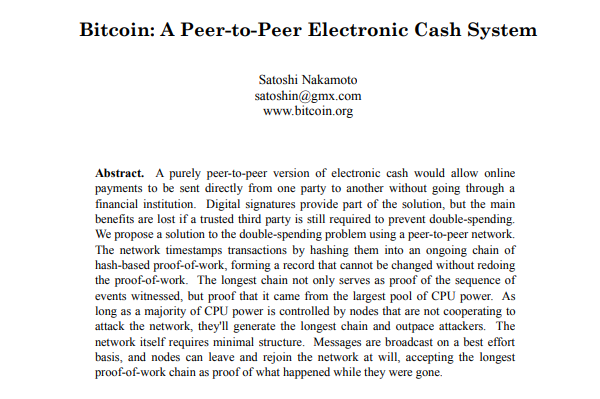
Nakamoto’s breakthrough was a system that allowed transactions to be verified and recorded by a decentralized network, solving the double-spending problem without needing a bank or other trusted third party. Bitcoin was the first successful cryptocurrency, and its creation kicked off a new era of digital finance.
Following Bitcoin's success, thousands of other cryptocurrencies, often called "altcoins," have been created. Each one aims to improve upon Bitcoin's design or serve a different purpose.

Key Characteristics
Cryptocurrencies share a few core principles that set them apart from traditional financial systems.
Decentralization This is the most fundamental characteristic. There is no single point of control. The network is maintained by a distributed community of participants, making it resistant to censorship or shutdown by any single entity, like a government or corporation.
Transparency Most cryptocurrency transactions are recorded on a public ledger, which is often called a blockchain. Anyone can view the history of transactions between digital addresses. However, the system is pseudonymous. While the transactions are public, the real-world identities behind the addresses are not, providing a layer of privacy.
Security As the name suggests, cryptography is central to how these currencies work. Complex mathematical algorithms secure the network and verify transactions. This process makes the ledger extremely difficult to alter, preventing fraud and ensuring the integrity of the transaction history.
These three pillars—decentralization, transparency, and security—are what make cryptocurrency a unique and potentially transformative technology. They allow for a financial system that operates globally, without intermediaries, on a foundation of mathematical proof.
What is the primary role of a central authority, like a bank, in traditional finance that is handled differently by cryptocurrencies?
The key innovation introduced by Satoshi Nakamoto that solved the 'double-spending problem' for digital cash was...
Now you have a foundational understanding of what cryptocurrency is, where it came from, and its core features. Next, we'll explore the technology that makes it all possible: the blockchain.