Cryptocurrency Fundamentals
Introduction to Cryptocurrency
What Is Cryptocurrency?
At its heart, cryptocurrency is digital money. Think of it like the cash in your online banking app, but with a few major twists. It's designed to be secure and, in many cases, anonymous. The 'crypto' part comes from cryptography, the science of encoding and decoding information, which is used to secure transactions and control the creation of new units.
Cryptocurrency
noun
A digital or virtual currency that uses cryptography for security and operates independently of a central bank.
The main purpose of most cryptocurrencies is to create a financial system that isn’t controlled by any single entity, like a government or a bank. It allows people to send and receive money directly with each other, anywhere in the world, without needing a middleman. This is often called a peer-to-peer system.

Crypto vs. Traditional Money
The money we use every day—dollars, euros, yen—is called fiat currency. It’s issued and backed by a government, which gives it value. A government’s central bank can print more money or change interest rates to manage the economy. Cryptocurrencies work very differently.
| Feature | Fiat Currency (e.g., USD) | Cryptocurrency (e.g., Bitcoin) |
|---|---|---|
| Control | Centralized (by government/banks) | Decentralized (by a network of users) |
| Issuance | Unlimited, printed by central banks | Often limited and predictable |
| Transactions | Verified by banks or payment processors | Verified by a network of participants |
| Form | Physical (coins/notes) and digital | Exists only in digital form |
| Transparency | Private, managed by institutions | Often public and transparent on a ledger |
A Brief History
The idea of digital cash isn't new; computer scientists were experimenting with it back in the 1990s. But these early systems struggled with a key problem: how to prevent people from spending the same digital coin twice without a central authority like a bank to check the books.
Everything changed in 2008. A person or group using the name Satoshi Nakamoto published a paper called "Bitcoin: A Peer-to-Peer Electronic Cash System." In early 2009, the Bitcoin network was launched, becoming the first successful decentralized cryptocurrency.
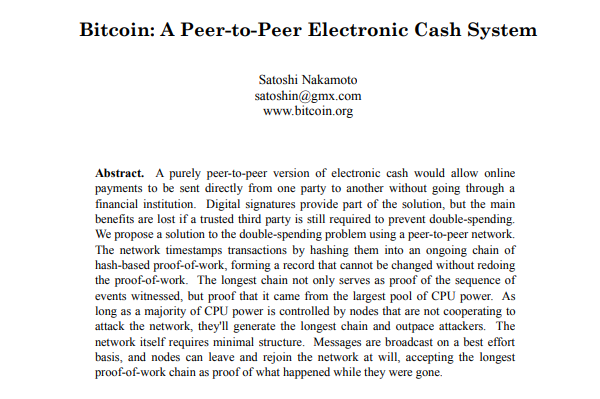
Nakamoto's paper solved the double-spending problem and laid the foundation for the thousands of cryptocurrencies that exist today. It was a revolutionary moment for finance and technology.
The Core Principles
Cryptocurrencies are built on a few key ideas that make them different from traditional finance.
Decentralization: No single person, company, or government is in charge. Power is distributed among all the users on the network.
Imagine a bank's ledger, which is a private record of all transactions. Only the bank can see and update it. A cryptocurrency network is more like a shared notebook that everyone on the network has a copy of. When a transaction happens, everyone updates their copy. This shared, public ledger is called a blockchain.
Cryptographic Security: Every transaction is secured using complex math puzzles. This makes the network extremely difficult to cheat or hack. It ensures that only the owner of the cryptocurrency can spend it.
Peer-to-Peer Transactions: As mentioned earlier, cryptocurrencies let you send funds directly to someone else. There's no need for a bank to process the payment, which can make transactions faster and cheaper, especially across borders.
Bitcoin and Ethereum
While thousands of cryptocurrencies exist, two have dominated the landscape.

Bitcoin (BTC) was the first and remains the most well-known cryptocurrency. It was created to be a digital alternative to cash—a way to store and send value.
Ethereum (ETH) came along a few years later. It does everything Bitcoin does, but it's also programmable. Think of it like the difference between an old calculator and a modern smartphone. The calculator does one thing well (math), but the smartphone can run all sorts of apps. Ethereum allows developers to build applications on its network, from financial tools to games, using something called "smart contracts."
Ethereum is a decentralized, open-source blockchain platform that extends the foundational ideas of Bitcoin but pushes them far beyond just digital currency.
These two projects paved the way for the entire crypto ecosystem we see today. They introduced the world to the power of decentralized digital money and platforms.
Now, let's test your knowledge on these foundational concepts.
What is the primary purpose of most cryptocurrencies?
What is the key problem that Satoshi Nakamoto's Bitcoin paper successfully solved, which had been a major hurdle for earlier digital cash systems?
This covers the basics of what cryptocurrency is, where it came from, and how it's different from the money you use every day. It's a technology built on the ideas of decentralization and security, offering a new way to think about finance.