Cryptocurrency Explained
Introduction to Cryptocurrency
What Is Cryptocurrency?
At its core, cryptocurrency is digital money. Unlike the dollars or euros in your bank account, it doesn't exist in a physical form. It's a purely virtual currency that lives on the internet.
The "crypto" part comes from cryptography, the practice of secure communication. Every transaction is secured using complex math problems, making them extremely difficult to alter or fake. This is what gives cryptocurrencies their security without needing a central authority.
Think of it this way: with traditional money, a bank or government verifies and records transactions. With cryptocurrency, a decentralized network of computers does that job.
cryptocurrency
noun
A digital or virtual currency that uses cryptography for security and operates independently of a central bank.
This lack of a central authority is a key feature. No single entity prints it, controls its value, or can freeze your account. It's a peer-to-peer system for online payments, allowing anyone, anywhere to send and receive money directly.
A Brief History
The story of cryptocurrency begins in 2008. The global financial system was in crisis, and trust in traditional banks was low. In this climate, a paper was published online by a person or group using the pseudonym Satoshi Nakamoto.
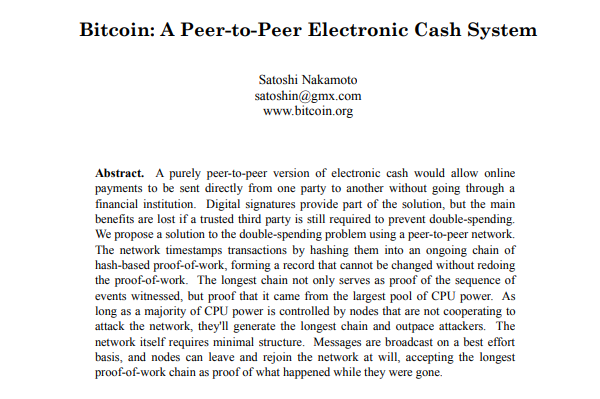
The paper, titled "Bitcoin: A Peer-to-Peer Electronic Cash System," outlined a new form of digital money that didn't rely on any central authority. In January 2009, the Bitcoin network came into existence. It was the first successful, decentralized cryptocurrency, and it kicked off a revolution.
For a few years, Bitcoin was a niche interest for cryptographers and tech enthusiasts. But as its value grew, so did public interest. Soon, new cryptocurrencies began to appear, each aiming to improve upon Bitcoin's design or serve a different purpose.
More Than Just Bitcoin
Today, there are thousands of different cryptocurrencies. While Bitcoin is the original and most well-known, the landscape has expanded dramatically. They generally fall into two categories: altcoins and tokens.

An altcoin is, quite simply, any cryptocurrency that isn't Bitcoin. The name is a shorthand for "alternative coin." Some altcoins are small variations of Bitcoin. Others are built from scratch with unique features. A famous example is Ethereum, which introduced "smart contracts"—self-executing contracts with the terms of the agreement written directly into code. Other notable altcoins include Ripple (XRP), designed for fast international payments, and Litecoin, which aimed for faster transaction times than Bitcoin.
A token is a bit different. Instead of having its own dedicated network (blockchain), a token is built on top of an existing one, most commonly Ethereum. Tokens can represent virtually anything: a share in a project, a loyalty point, or even a unique digital collectible. They are often used to raise funds for new projects or to grant access to an app or service.
Why Create Digital Money?
The creators of cryptocurrencies were motivated by the shortcomings of the traditional financial system. They envisioned a more open, transparent, and efficient way to handle money.
One of the biggest benefits is decentralization. Because there's no central server or company in charge, the network is more resilient. No government can shut it down, and no single person can dictate the rules.
Cryptocurrencies can also make financial services more accessible. Anyone with an internet connection can create a wallet and start using crypto, regardless of where they live or their access to traditional banks. This could be revolutionary for billions of people around the world who are "unbanked."
Transactions can also be faster and cheaper, especially across borders. Sending money internationally through a bank can take days and involve high fees. A cryptocurrency transaction can often be completed in minutes for a fraction of the cost.
Cryptocurrency is a digital or virtual form of money that relies on cryptographic technology to secure transactions, control the creation of new units, and verify transfers.
Of course, the world of crypto isn't without its challenges, including price volatility and regulatory questions. But its core ideas—decentralization, security, and accessibility—continue to inspire innovation.
Ready to check your understanding? Let's see what you've learned.
What does the 'crypto' in 'cryptocurrency' primarily refer to?
A new cryptocurrency is launched with its own unique blockchain, aiming to offer faster transactions than Bitcoin. What is this new currency best described as?
That covers the fundamentals of what cryptocurrency is and why it was created. It's a new kind of money, built for the digital age.