Cryptocurrency Explained
Introduction to Cryptocurrency
Beyond Physical Cash
Most of us are used to money we can hold, like dollar bills and coins. We're also familiar with digital money in our bank accounts, which is managed by financial institutions. Cryptocurrency is a different kind of money altogether. It's a digital or virtual currency that exists only online and uses cryptography to secure transactions.
cryptocurrency
noun
A digital or virtual currency that uses cryptography for security, making it difficult to counterfeit.
The "crypto" part is key. It refers to the advanced encryption techniques used to protect the network and verify transactions. Unlike traditional currencies issued by governments (like the U.S. dollar or the Euro), cryptocurrencies are generally not controlled by any single entity, like a bank or government. This makes them decentralized.
Core Characteristics
Cryptocurrencies have a few unique properties that set them apart from the money in your bank account.
Decentralized: As mentioned, there's no central authority. Instead, control is distributed among all the users on the network. Think of it like a shared document that everyone can see and update according to a set of rules, rather than a single file controlled by one person.
Transparent: While user identities are typically pseudonymous (not directly linked to real-world identities), the transactions themselves are often public. Anyone can view the transactions that happen on the network, which are recorded on a public ledger.
Immutable: Once a transaction is recorded on this ledger, it cannot be altered or deleted. This permanence creates a trustworthy record of ownership and prevents fraud like double-spending, where someone tries to spend the same digital coin twice.
Decentralization, transparency, and immutability are the three pillars that make cryptocurrency a fundamentally different way of handling value.
A Brief History
The idea of digital cash has been around for decades, but it wasn't until 2009 that the first successful cryptocurrency was created. An anonymous person or group known as Satoshi Nakamoto released a white paper outlining a system for a peer-to-peer electronic cash system called Bitcoin.
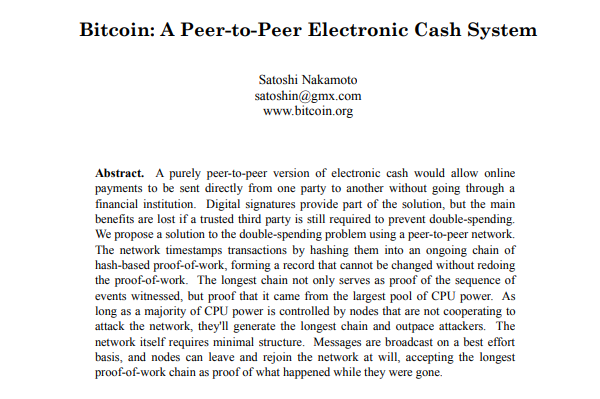
Nakamoto solved the double-spending problem without needing a trusted third party, like a bank. This breakthrough paved the way for Bitcoin and the thousands of other cryptocurrencies, often called altcoins, that have emerged since.
How Does It Work?
So how does a transaction happen without a bank in the middle? It works through a peer-to-peer network of computers.
Imagine Alice wants to send one Bitcoin to Bob. She initiates the transaction using her private key, which acts like a secure, digital signature. This request is then broadcast to a network of computers around the world.
These computers, often called "miners" or "validators," work to confirm that Alice's transaction is legitimate. They check that she has the funds and that all the rules of the network are being followed. Once the transaction is verified, it's bundled with other transactions into a "block" and permanently added to the public ledger. At this point, the Bitcoin is officially in Bob's digital wallet.
This process ensures that every transaction is secure and agreed upon by the network, creating a system that can operate without a central authority.