Crypto Web3 Tokenization and Regulation Mastery
Introduction to Cryptocurrencies
What is Cryptocurrency?
At its heart, a cryptocurrency is a form of digital money. Unlike the dollars or euros in your bank account, it doesn't exist in a physical form. It's entirely virtual, secured by cryptography, which makes it nearly impossible to counterfeit.
A fundamental feature of cryptocurrencies is their decentralized nature.
This decentralization is a key difference. Traditional currencies are managed by central banks and governments. Cryptocurrencies operate on a peer-to-peer network, meaning no single entity is in charge. This idea isn't entirely new, but it took off in 2008 when a person or group using the name Satoshi Nakamoto published a paper called "Bitcoin: A Peer-to-Peer Electronic Cash System."
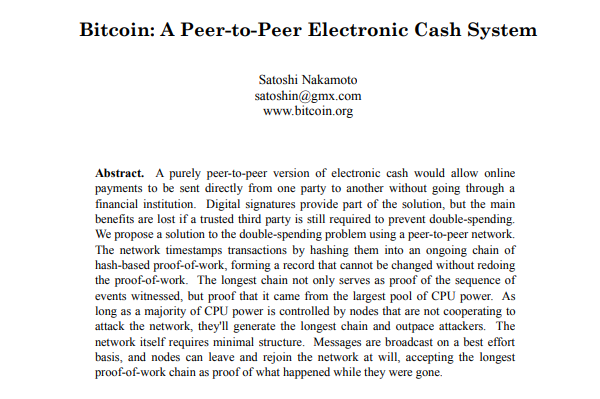
This paper laid the groundwork for Bitcoin, the first and most well-known cryptocurrency, which launched in 2009. It solved a tricky problem for digital cash: how to prevent someone from spending the same money twice without a bank to verify transactions.
The Technology Behind the Scenes
The solution Nakamoto proposed is called blockchain. Think of it as a special kind of digital notebook that is shared among many computers around the world. Every transaction is recorded as a "block" in this notebook. Once a block is filled with transactions, it's added to the end of the chain, creating a permanent, unchangeable record.
A blockchain is essentially a growing list of records, called blocks, that are securely linked together using cryptography.
Because this digital ledger is distributed across thousands of computers, it's incredibly difficult to tamper with. To change a transaction, a hacker would need to alter the block on a majority of the computers in the network simultaneously, which is practically impossible. This distributed and secure nature is what makes the technology so powerful.
How It All Stays Secure
Cryptography is the 'crypto' in cryptocurrency. It's the science of secure communication, and it uses complex math to protect information. In crypto, this is mainly done through public and private keys.
Think of it like an email address and password.
- Your public key creates an address that you can share with anyone. It's like your email address, which people use to send you emails.
- Your private key is a secret password that gives you access to your funds. You should never share this with anyone.
This system allows you to receive funds from anyone without revealing the secret key that gives you control over them.
Another crucial cryptographic tool is hashing. A hash function takes an input of any size and produces a fixed-size string of characters. This output is a unique digital fingerprint of the data. Even a tiny change to the input data, like adding a comma, will produce a completely different hash. This is how blocks in the blockchain are linked and secured. Each block contains the hash of the one before it, creating a secure chain.
Reaching an Agreement
Since there's no central authority, how does the network agree on which transactions are valid? This is achieved through a consensus mechanism. It's a set of rules that helps everyone on the network agree on the state of the ledger.
Proof-of-Work
noun
A consensus mechanism that requires participants, called miners, to solve a complex computational puzzle to propose a new block of transactions.
Proof-of-Work (PoW) is the original consensus mechanism, used by Bitcoin. Computers on the network, called miners, compete to solve a difficult mathematical problem. The first one to find the solution gets to add the next block to the blockchain and is rewarded with a certain amount of cryptocurrency. This process requires a massive amount of computational power and energy, which is a significant drawback.
Proof-of-Stake
noun
A consensus mechanism where participants, called validators, lock up their own crypto as collateral (a 'stake') for the chance to be chosen to validate transactions and create a new block.
Proof-of-Stake (PoS) is a more energy-efficient alternative. Instead of miners competing with computational power, validators are chosen to create new blocks based on the number of coins they hold and are willing to "stake" as collateral. If a validator approves fraudulent transactions, they lose their stake. This incentivizes good behavior without the high energy consumption of PoW.
The Major Players: Bitcoin and Ethereum
While thousands of cryptocurrencies exist, two stand out.
Bitcoin (BTC) is the pioneer. Its primary purpose is to be a decentralized digital currency, an alternative to traditional money. Its supply is limited to 21 million coins, which makes it a scarce asset, similar to gold.

Ethereum (ETH) came later and expanded on Bitcoin's ideas. While it also has its own currency (Ether), the Ethereum network is much more than just a payment system. It's a platform that allows developers to build and run decentralized applications (dApps) and smart contracts—agreements that automatically execute when certain conditions are met.
Think of it this way: if Bitcoin is like digital gold, Ethereum aims to be a global, decentralized computer. This programmability has opened the door to a huge range of applications, from finance to gaming.
The rise of cryptocurrencies has already made a significant impact. They offer a way to send money across borders quickly and with low fees, providing financial access to people in countries with unstable currencies. They have also sparked a wave of innovation in finance, leading to a new field called Decentralized Finance (DeFi), which aims to build traditional financial services like lending and borrowing on the blockchain, without intermediaries.
Now, let's test your understanding of these core concepts.
What is the defining characteristic of a cryptocurrency that separates it from traditional currencies like the US Dollar?
To ensure security and immutability, each block in a blockchain contains the ______ of the previous block, linking them together.
This is just the beginning of the crypto world. Understanding these fundamentals provides a solid base for exploring the many other innovations happening in this space.