Crypto Tech vs Hype
Introduction to Cryptocurrencies
What Is Cryptocurrency?
Cryptocurrency is a type of digital money. Unlike the dollars or euros in your bank account, it doesn't exist in a physical form like bills or coins. It's purely digital. Its name comes from the two concepts that make it work: cryptography and currency.
Cryptography is the art of secure communication, using codes to keep information safe. Cryptocurrencies use this to secure transactions and to control the creation of new units. The main purpose is to allow people to send and receive payments directly with each other online, without needing a middleman like a bank.

One of the most important features of most cryptocurrencies is that they are decentralized. This means they are not controlled by any single entity, like a government or a bank. Instead, they are managed by a network of computers spread across the globe. This structure is what makes them different from the traditional financial system.
A Quick History
The idea of digital cash isn't new. In the 1980s and 1990s, computer scientists and cryptographers experimented with it. However, they all ran into a major obstacle: the double-spending problem.
Double-spending is the risk that a digital currency can be spent more than once. Unlike a physical coin that you can only give to one person at a time, a digital file can be copied easily. How do you stop someone from spending the same digital dollar twice?
For years, the only solution was to have a central authority, like a bank, keep a master ledger of all transactions to verify them. But that defeated the purpose of a truly decentralized system.
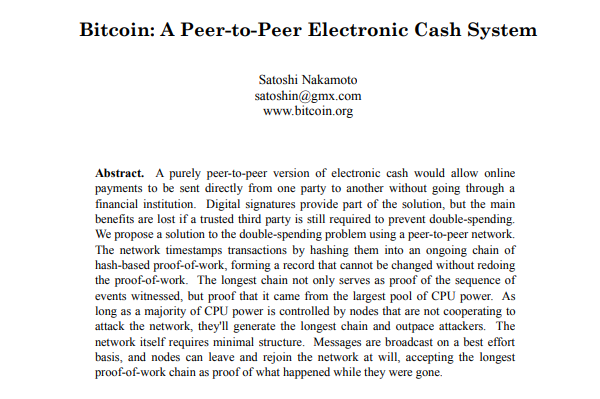
Everything changed in 2008. A person or group using the name Satoshi Nakamoto published a paper titled "Bitcoin: A Peer-to-Peer Electronic Cash System." In 2009, they released the software that created Bitcoin, the first successful decentralized cryptocurrency. Nakamoto had solved the double-spending problem without needing a central authority.
The solution was a groundbreaking technology called blockchain.
The Magic of Blockchain
Think of a blockchain as a special kind of digital notebook that is shared among many people. Every time someone makes a transaction, it's recorded as a new entry in the notebook.
These transactions are gathered together into a list called a "block." Each block is then cryptographically linked to the one before it, forming a chain. This structure creates a permanent and unchangeable record of all transactions. Once a block is added to the chain, it's incredibly difficult to alter, which prevents fraud.
This notebook, or ledger, isn't kept in one central location. Instead, a copy is distributed across a vast peer-to-peer network of computers. Every computer on the network has its own copy of the blockchain. When a new block is added, the ledger is updated across the entire network. This distribution is the key to decentralization.
Blockchain emerged over a decade ago as the underlying technology behind cryptocurrencies like Bitcoin.
Because the ledger is public and spread out everywhere, it creates trust without needing a trusted third party. Anyone can view the transactions, and because so many people have a copy, it's nearly impossible for one person to cheat the system. To successfully alter a transaction, a bad actor would have to control more than half of the network's computing power, which is an immense and impractical task.
What is the primary purpose of a cryptocurrency like Bitcoin?
What does it mean for a cryptocurrency to be decentralized?