Crypto Tech vs. Hype
Introduction to Cryptocurrencies
What Is Cryptocurrency?
Think of cryptocurrency as digital cash. It's a form of money that exists only online and uses cryptography to secure transactions. Unlike the dollars or euros in your bank account, cryptocurrencies aren't issued or controlled by any central authority, like a government or a bank. This simple fact changes everything about how money can work.

The main purpose of most cryptocurrencies is to allow people to send and receive payments directly with each other, anywhere in the world, without needing a middleman. Imagine sending money to a friend overseas. Normally, you'd go through a bank or a wire service, which takes time and charges fees. Cryptocurrencies aim to make that process faster, cheaper, and more direct.
The Power of Blockchain
So, how does it all work without a bank keeping track of everything? The magic behind most cryptocurrencies is a technology called blockchain.
Blockchain is the foundational technology on which most cryptocurrencies are built.
A blockchain is like a shared digital notebook that is public and can't be erased. Every transaction is recorded as a "block" of data. Once a block is filled, it's chained onto the previous block, creating a chronological chain of transactions. This chain is copied and spread across thousands of computers around the world.
Because the ledger is distributed everywhere, it's incredibly difficult to cheat. To alter a transaction, you'd have to change that block on thousands of computers simultaneously, which is practically impossible. This creates a secure and transparent record of every transaction ever made.
No Banks, No Problem
This leads us to the concept of decentralization. Traditional finance is centralized. A bank sits in the middle of transactions, controls the ledger, and has the power to approve or deny payments. If the bank's server goes down, you can't access your money.
A fundamental feature of cryptocurrencies is their decentralized nature.
Cryptocurrencies are decentralized. There is no central server or controlling entity. Instead, the network is maintained by a global community of users. This peer-to-peer system means that power and control are distributed among everyone involved, not concentrated in one place.
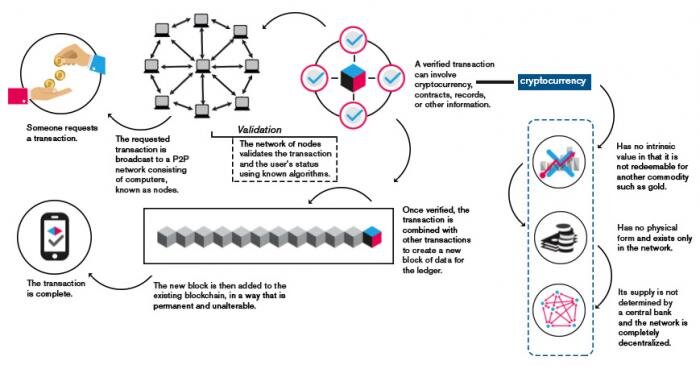
This structure makes the system more resilient. There's no single point of failure. It also allows for transactions between two people (peers) who don't know or trust each other, because the trust is built into the network's code and shared ledger.
Crypto's Role in Finance
Beyond just digital cash, cryptocurrencies are exploring new roles in the financial world. They can facilitate low-cost international money transfers, bypassing the slow and expensive traditional banking system. For people in countries with unstable currencies, some cryptocurrencies can offer a more stable store of value.
They also open up financial services to anyone with an internet connection, a concept known as financial inclusion. This could provide banking-like services to the billions of people worldwide who don't have access to a traditional bank account.
In short, cryptocurrencies offer a new way to think about money, ownership, and trust, all powered by the innovative technology of the blockchain.
Let's review the key terms we've covered.
Now, check your understanding of these foundational concepts.
What is the primary characteristic that distinguishes cryptocurrency from traditional currencies like the US Dollar or the Euro?
The technology that records cryptocurrency transactions on a public, shared, and unchangeable digital notebook is called a ________.
Understanding these basics is the first step. With this foundation, you're better equipped to explore the vast and evolving world of cryptocurrency projects.