Crypto Project Evaluation
Introduction to Cryptocurrencies
The Idea of Digital Money
At its heart, a cryptocurrency is a form of digital money. Unlike the dollars or euros in your bank account, it doesn't exist as physical coins or bills. It's purely digital, secured by a powerful type of mathematics called cryptography.
cryptography
noun
The use of codes to secure information and communications so that only those for whom the information is intended can read and process it.
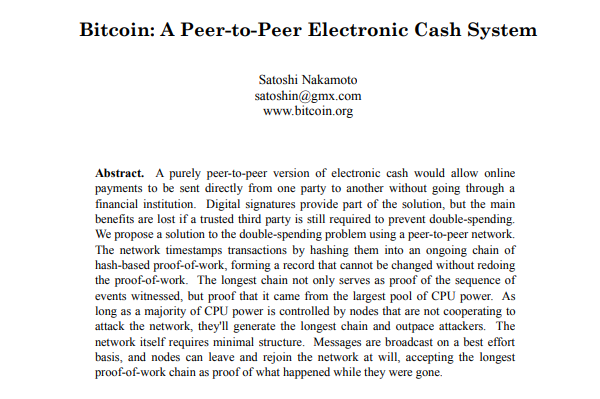
The first and most famous cryptocurrency, Bitcoin, was introduced in 2009 by a mysterious person or group known as Satoshi Nakamoto. The goal was to create a new kind of electronic cash system that didn't need a traditional bank or government to work.
This idea of operating without a central authority is a core principle. Instead of one company or bank controlling the system, the power is distributed among all the users on its network. This is known as decentralization.
How It All Works
Cryptocurrencies run on a technology called blockchain. Think of a blockchain as a shared digital notebook. Every transaction is a new entry in this notebook. Once an entry is made, it can't be erased or altered, creating a permanent, trustworthy record.
A blockchain is a growing list of records, called blocks, that are securely linked together using cryptography.
Each block contains a batch of recent transactions. It also holds two important pieces of information: its own unique identifying code (a "hash") and the hash of the block that came right before it. By including the previous block's hash, it creates a secure link, forming a chain.
This structure makes the blockchain incredibly secure. If someone tried to change the data in a past block, its hash would change. This would break the link to the next block, and all following blocks, making the tampering immediately obvious to everyone on the network.
Keeping the Network Honest
Since there's no central authority to approve transactions, the network needs a way to agree on what's valid. This is done through a "consensus mechanism." It's a set of rules that lets all the participants in the network agree on the current state of the ledger.
A consensus mechanism is how a decentralized network ensures that every new block added to the chain is the one and only true version.
One of the most well-known methods is called Proof-of-Work (PoW). In this system, network participants, often called "miners," compete to solve a complex mathematical puzzle. The first one to solve it gets to add the next block of transactions to the blockchain and is rewarded with cryptocurrency. This process requires significant computing power, which helps secure the network from attacks.
Another popular method is Proof-of-Stake (PoS). Instead of using computing power, participants lock up or "stake" their own cryptocurrency to get a chance to be chosen to validate transactions and create a new block. If they act dishonestly, they risk losing their staked coins. This method is much more energy-efficient than Proof-of-Work.
Ready to check your understanding? Let's try a few questions.
What is the core principle that allows cryptocurrencies to operate without a traditional bank or government?
How does a blockchain ensure the integrity of its historical transaction records?
This covers the foundational ideas behind cryptocurrencies. You now understand what they are, the blockchain technology that powers them, and the systems that keep them secure and decentralized.