Crypto KOL Launchpad
Understanding Cryptocurrency Fundamentals
Before Bitcoin
The idea of a digital currency didn't start with Bitcoin. For decades, computer scientists and cryptographers dreamed of creating electronic cash that could be spent securely and anonymously, just like the bills in your wallet. Early attempts in the 1980s and 90s, like DigiCash, came close. They developed powerful cryptographic tools but always ran into a central problem: the need for a trusted third party, like a bank, to prevent people from spending the same digital money twice. This is known as the "double-spending problem."
If you hand someone a $20 bill, you can't give that same bill to someone else. It's physically gone. But with digital information, making a perfect copy is trivial. How could you create a digital currency system where no single company or government was in charge of verifying transactions? For a long time, it seemed impossible.
The Blockchain Breakthrough
In 2008, a paper titled "Bitcoin: A Peer-to-Peer Electronic Cash System" was published online by someone using the name Satoshi Nakamoto. To this day, no one knows who Satoshi is. This paper solved the double-spending problem without needing a central authority. The solution was a revolutionary technology called the blockchain.
Think of a blockchain as a shared digital ledger, like a notebook that's open for everyone in a network to see. Every time a transaction happens, it's recorded as a "block" of data. This new block is then cryptographically linked to the previous one, forming a chain. Each block contains transaction details, a timestamp, and a reference to the block that came before it.
This structure is incredibly secure. Because each block contains the cryptographic signature (or "hash") of the one before it, changing a block would change its hash. This would break the link to the next block, and the next, and so on, making any tampering immediately obvious to everyone on the network.
Since this digital notebook is distributed across thousands of computers worldwide, there's no single point of failure. To corrupt the chain, an attacker would need to control more than half of the network's computing power, which is practically impossible for major cryptocurrencies.
The Major Players
The blockchain concept gave birth to the world's first cryptocurrency: Bitcoin (BTC). Bitcoin was designed to be a peer-to-peer electronic cash system, a way to send money over the internet without going through a financial institution. Its supply is limited to 21 million coins, which gives it a scarcity similar to precious metals like gold. This has led many to see it as a "digital gold" or a store of value.

While Bitcoin proved that a decentralized currency could work, others saw that blockchain technology could do much more than just record transactions. In 2015, a new platform called Ethereum (ETH) was launched. Ethereum took the core idea of the blockchain and expanded on it.
Ethereum's key innovation is the "smart contract." A smart contract is a program that runs on the blockchain and automatically executes when certain conditions are met. Think of it like a digital vending machine. You put in money (a cryptocurrency), select an item, and the machine automatically dispenses your product. There's no need for a cashier. Smart contracts allow developers to build complex, decentralized applications (dApps) for everything from finance to gaming, all running on the blockchain without a central server.
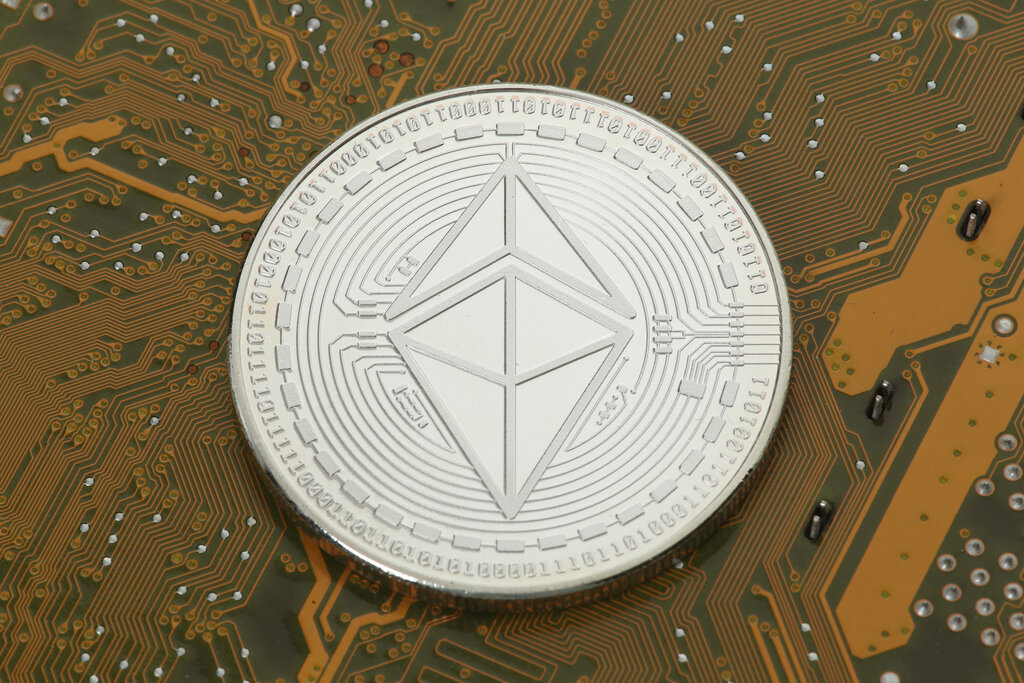
Bitcoin and Ethereum are the two giants of the crypto world, but they represent two different philosophies. Bitcoin aims to be a secure, decentralized form of money. Ethereum aims to be a global, decentralized computer for running applications.
Understanding these two provides a strong foundation. Bitcoin introduced the world to decentralized digital currency, and Ethereum showed us that the underlying blockchain technology could potentially reshape the entire internet.
Ready to test your knowledge? Let's see what you've learned about the basics of cryptocurrency.
What was the fundamental challenge that early digital cash systems in the 1980s and 90s failed to solve without a central authority?
How does the blockchain make tampering with past transactions extremely difficult?
From early digital cash concepts to the launch of Bitcoin and Ethereum, you now have a solid grasp of how cryptocurrency began and the core technology that makes it work. This is the essential first step into a much larger world.