Cross-Cultural Communication Skills
Understanding Cultural Dimensions
Frameworks for Culture
Why do people in different parts of the world behave so differently? It’s not random. Underlying cultural values shape everything from how people conduct business to how they express emotions. To make sense of this, researchers have developed frameworks that act like maps of cultural tendencies. These aren't rigid rules, but they help us navigate the fascinating diversity of human behavior.
One of the most influential frameworks comes from Dutch social psychologist Geert Hofstede. While working at IBM in the 1960s and 70s, he collected data from employees in over 50 countries. Analyzing this data, he found clear patterns in how cultures approach common problems. He initially proposed four dimensions of culture, later expanding them to six.
Hofstede's Six Dimensions
Hofstede's model gives us a vocabulary to discuss cultural differences. Let's break down each dimension.
1. Power Distance Index (PDI) This dimension measures how a society handles inequality. In cultures with high power distance, people accept a hierarchical order where everyone has a place and which needs no further justification. In societies with low power distance, people strive to equalize the distribution of power and demand justification for inequalities.
Think of it this way: In a high power distance culture, an employee is less likely to challenge their boss's decision. In a low power distance culture, that same employee might feel comfortable speaking up and offering a different opinion.
2. Individualism vs. Collectivism (IDV) This is about the degree to which people are integrated into groups. Individualistic societies emphasize personal achievement and individual rights. People are expected to look after themselves and their immediate family. In collectivistic societies, individuals act as members of a lifelong, cohesive group or organization. The group's interests are prioritized over the individual's.
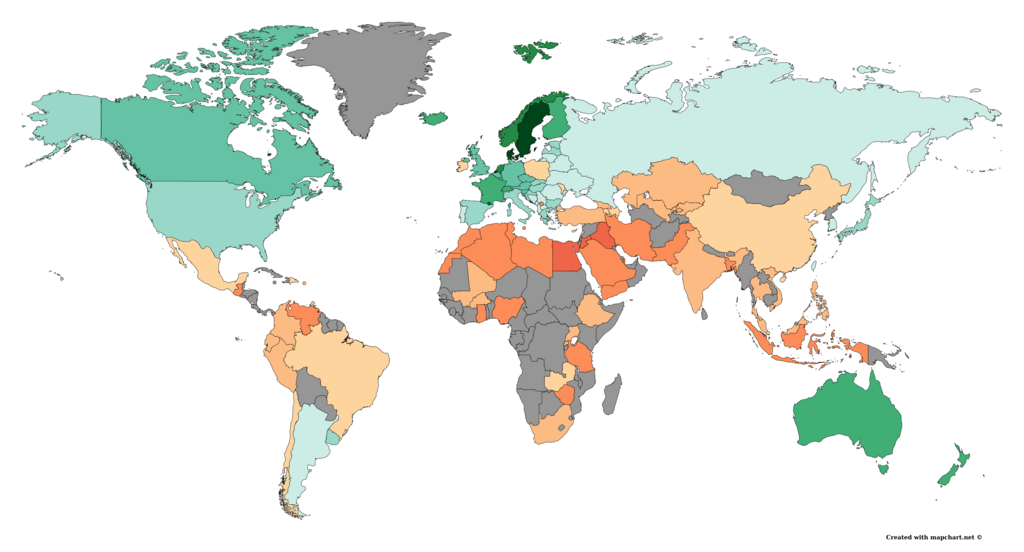
3. Masculinity vs. Femininity (MAS) This dimension isn't about gender roles in the traditional sense. "Masculine" societies value assertiveness, competition, and material success. "Feminine" societies, in contrast, value cooperation, modesty, and quality of life. The focus is on what motivates people: wanting to be the best (masculine) or liking what you do (feminine).
4. Uncertainty Avoidance Index (UAI) How does a society deal with the fact that the future can never be known? Societies with strong uncertainty avoidance maintain rigid codes of belief and behavior and are intolerant of unorthodox ideas. Cultures with weak uncertainty avoidance maintain a more relaxed attitude in which practice counts more than principles.
5. Long-Term vs. Short-Term Orientation (LTO) This dimension describes how a culture balances its links with its own past while dealing with the challenges of the present and future. Short-term oriented societies prefer to maintain time-honored traditions and norms while viewing societal change with suspicion. Long-term oriented cultures encourage thrift and efforts in modern education as a way to prepare for the future.
6. Indulgence vs. Restraint (IVR) This dimension revolves around the extent to which people try to control their desires and impulses. Indulgent societies allow for relatively free gratification of basic and natural human drives related to enjoying life and having fun. Restrained societies suppress gratification of needs and regulate it by means of strict social norms.
Trompenaars's Model
Another valuable framework was developed by Fons Trompenaars and Charles Hampden-Turner. They identified seven dimensions of culture, focusing specifically on how people relate to each other, to time, and to their environment.
| Dimension | Question Addressed |
|---|---|
| Universalism vs. Particularism | Do we apply rules and laws to everyone, or do we consider the specific circumstances and relationships? |
| Individualism vs. Communitarianism | Do we function as individuals or as part of a group? (Similar to Hofstede's dimension) |
| Neutral vs. Emotional | Do we display our emotions openly or keep them controlled and in check? |
| Specific vs. Diffuse | How separate do we keep our private and working lives? Is a boss a boss only at work, or in all situations? |
| Achievement vs. Ascription | Do we gain status through our accomplishments or is it based on factors like age, gender, or social connections? |
| Sequential vs. Synchronic | Do we do things one at a time, in order, or do we multitask and see time as fluid? |
| Internal vs. External Control | Do we believe we control our environment, or that the environment controls us? |
These frameworks from Hofstede and Trompenaars are powerful tools. They help us move beyond stereotypes and develop a more nuanced understanding of why people from different cultures act and communicate the way they do. By understanding the underlying values, we can anticipate potential misunderstandings and adapt our approach for more effective and respectful interactions.
Remember, these models describe cultural tendencies, not individual certainties. Every person is unique, and these frameworks are simply a starting point for deeper understanding.
Let's review these concepts before putting your knowledge to the test.
Now, let's see how well you've grasped these ideas.
In a society with a high Power Distance Index (PDI), what is the most likely attitude towards authority?
Which of Hofstede's dimensions focuses on the degree to which a culture prioritizes individual achievement versus group cohesion?
By learning these frameworks, you've gained a valuable lens for viewing the world. They provide a structure for observing, understanding, and ultimately bridging cultural differences.