Critical Appraisal of Medical Research
Evidence Hierarchies
Not All Evidence Is Equal
In medicine, not all research is created equal. Some studies provide stronger, more reliable evidence than others. To make sense of this, experts use a concept called the hierarchy of evidence. It's a way of ranking different study designs based on how well they protect against bias.
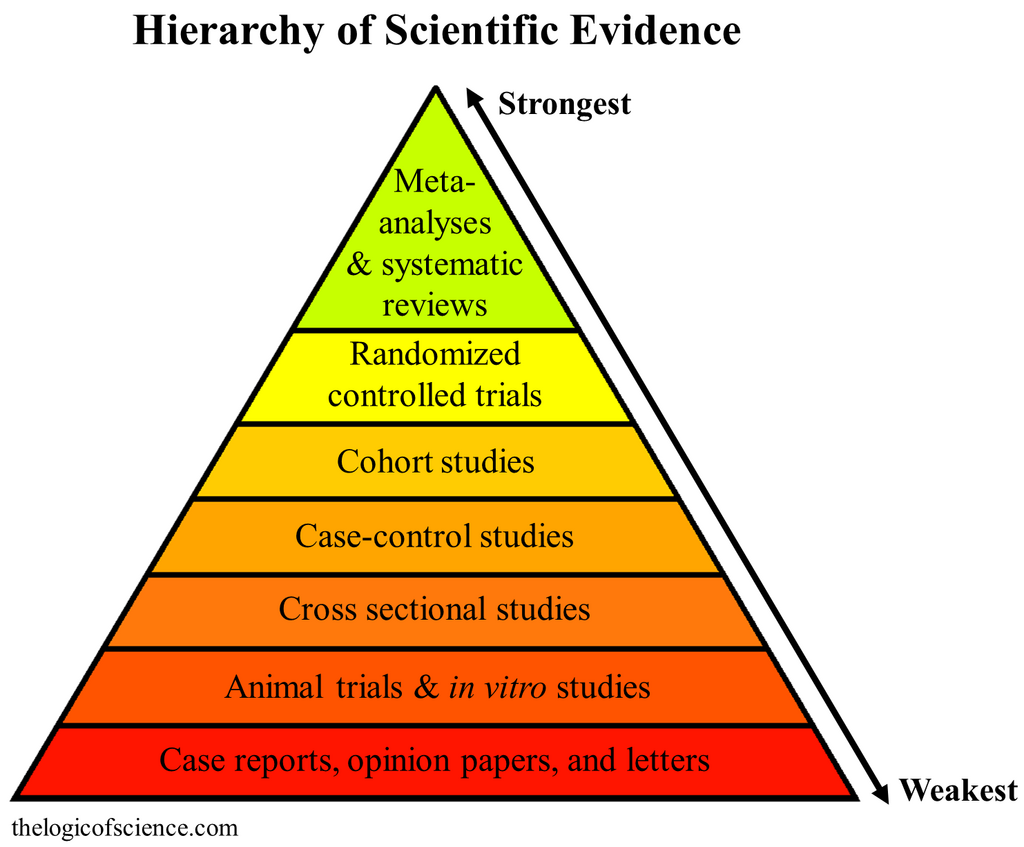
Think of it as a pyramid. At the bottom, you have weaker forms of evidence like expert opinions and case reports. While these can offer valuable insights, they are highly susceptible to individual bias and random chance. As we move up the pyramid, the study designs become more rigorous and the quality of evidence stronger.
Observational vs. Experimental
A major split in study types is between observational and experimental designs. In observational studies, researchers simply observe subjects and measure variables without assigning treatments. These include cohort studies, which follow a group over time to see who develops a condition, case-control studies, which look backward from a condition to find a cause, and cross-sectional studies, which capture data at a single point in time. While useful, these designs can be muddied by variables—factors that are associated with both the exposure and the outcome, creating a false association.
This is where experimental studies, specifically Randomized Controlled Trials (RCTs), come in. An RCT is considered the gold standard for determining if an intervention works. Researchers take a group of participants and randomly assign them to either a treatment group (receiving the new drug, for example) or a control group (receiving a placebo or standard care).
Randomization is the key. By randomly assigning participants, researchers ensure that both known and unknown confounding variables are, on average, distributed evenly between the groups. Any difference in outcomes can then be more confidently attributed to the intervention itself, not some other hidden factor.
This leads to a crucial trade-off: internal versus external validity. Internal validity refers to how well a study is conducted and its results are free from confounding and other biases. RCTs excel here. However, they often have strict inclusion criteria and take place in idealized settings, which can limit their external validity—the extent to which the results can be generalized to real-world patients and clinical settings. Observational studies, while lower in internal validity, often have better external validity because they reflect a broader, more diverse patient population.
Synthesizing the Evidence
At the very top of the evidence pyramid sit systematic reviews and . A systematic review answers a defined research question by collecting and summarizing all empirical evidence that fits pre-specified eligibility criteria. It's a study of studies.
However, even the pyramid is a simplification. The quality of a study isn't just about its design; it's also about how well it was executed. A poorly conducted RCT might provide weaker evidence than a large, well-designed cohort study. This is why frameworks like GRADE have been developed.
To facilitate the evaluation of scientific articles, a so-called evidence pyramid is often used.
GRADE (Grading of Recommendations, Assessment, Development and Evaluation) is a transparent framework for developing and presenting summaries of evidence. It starts by rating evidence from RCTs as high quality and observational studies as low quality, but then adjusts this rating based on several factors. Evidence quality can be downgraded for issues like risk of bias, inconsistency, or imprecision. Conversely, evidence from observational studies can be upgraded if there is a large effect size or a clear dose-response relationship. This provides a more nuanced and accurate picture of the certainty we can have in the evidence.
Now, let's see what you've learned about evaluating evidence.
What is the primary purpose of the hierarchy of evidence in medicine?
A study with high internal validity can sometimes have low external validity.
Understanding these hierarchies and frameworks is crucial for anyone navigating the world of medical research. It allows us to critically appraise information and distinguish between findings that are robust and those that are merely suggestive.