Critical Appraisal of Medical Research
Study Design Frameworks
Beyond the Basics of Study Design
You already know that different types of studies exist. But how do they stack up? In medical research, not all evidence is created equal. Some study designs provide much stronger, more reliable findings than others. This ranking is often visualised as a hierarchy of evidence.
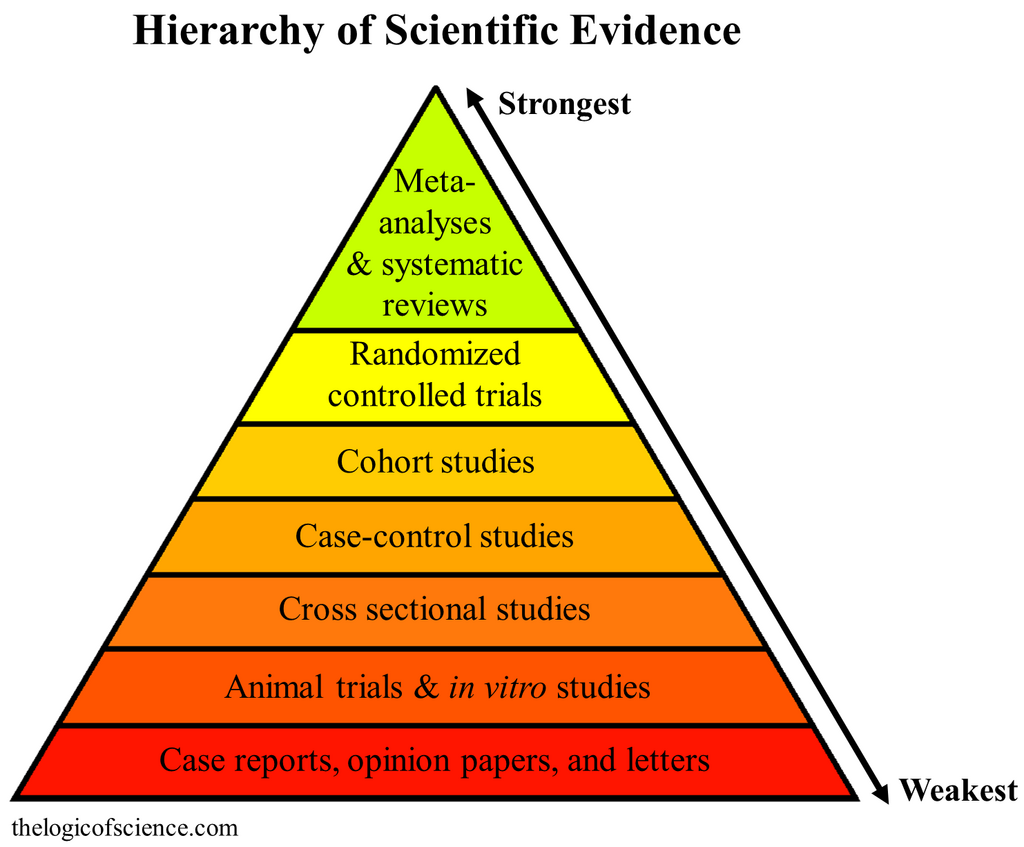
At the peak are systematic reviews and meta-analyses, which synthesise the results of multiple studies. Just below them sit Randomised Controlled Trials (RCTs). Further down are observational studies, like cohort and case-control studies. The structure of the study is what determines its place in the hierarchy. A well-designed study actively works to eliminate bias and alternative explanations, allowing for more confident conclusions.
The Power of Experimental Design
Randomised Controlled Trials are considered the gold standard for a reason. Their power comes from two key structural features: randomisation and a control group. By randomly assigning participants to either an intervention group or a control group, researchers minimise the risk of selection bias. This ensures that, on average, the groups are comparable at the start of the trial for both known and unknown factors that could influence the outcome. Any difference observed at the end can therefore be more confidently attributed to the intervention itself. This is the foundation of establishing —showing that the intervention actually caused the effect.
In an RCT, randomisation creates a level playing field. The control group shows what would have happened without the intervention, providing a crucial baseline for comparison.
However, running an RCT isn't always possible or ethical. You can't randomly assign people to smoke cigarettes for 20 years to see if it causes cancer. For many questions, we must rely on observing what happens in the real world.
Observational Designs in Practice
When an RCT is off the table, researchers turn to observational studies. The two most common types are cohort and case-control studies. The key difference is their starting point and direction.
| Study Type | Starting Point | Direction | Best For... |
|---|---|---|---|
| Cohort | A group of people (cohort) defined by exposure status (e.g., smokers and non-smokers). | Forward-looking. Follows the cohort over time to see who develops the outcome (e.g., lung cancer). | Studying common diseases and the effects of rare exposures. Can calculate incidence rates. |
| Case-Control | Two groups: people with the outcome ('cases') and people without ('controls'). | Backward-looking. Investigates past exposures to find differences between the groups. | Studying rare diseases or outcomes with long latency periods. It's faster and cheaper. |
A researcher might choose a prospective cohort study to investigate the link between a new dietary supplement and heart disease. They would recruit a large group of people who do and do not take the supplement and follow them for years. This design is strong because the exposure is measured before the outcome occurs, reducing the risk of recall bias. The trade-off is that it's slow and expensive.
Conversely, to study a rare brain tumour, a case-control study would be more practical. Researchers would identify a group of patients who already have the tumour (cases) and a similar group without it (controls). Then, they would look back at their histories, perhaps through interviews or medical records, to see if a specific exposure (like a chemical or a genetic trait) was more common in the case group. It's efficient, but relies on people accurately remembering past events, which can be a significant limitation.
Critiquing the Choice
When you critically appraise a paper, you must evaluate the suitability of its architecture. Don't just accept the study design; question it. Ask yourself: Was this the best method to answer the specific clinical question?
The selection of an appropriate study design is important in order to provide an unbiased and scientific evaluation of the research questions.
If a study uses a case-control design to test the effectiveness of a new therapy, be sceptical. That question is about causality, and an RCT would be far more appropriate. If an RCT was not feasible, did the authors acknowledge the limitations and control for potential confounding factors in their analysis? The choice of study design isn't just a methodological detail—it's the very foundation upon which the study's conclusions are built.
Which type of study is generally considered the 'gold standard' for determining if a new medical intervention causes a specific outcome?
What is the primary purpose of randomisation in a Randomised Controlled Trial?