Critical Appraisal of Medical Research
Evidence Hierarchy Dynamics
Beyond the Pyramid
Most clinicians are familiar with the evidence pyramid. It’s a clean, simple tool that ranks study designs by their rigour. At the top, you have systematic reviews and meta-analyses, which synthesise findings from multiple studies. Below them sit randomised controlled trials (RCTs), followed by cohort studies, case-control studies, and finally, expert opinion at the base. This hierarchy is a useful starting point for evaluating medical literature.
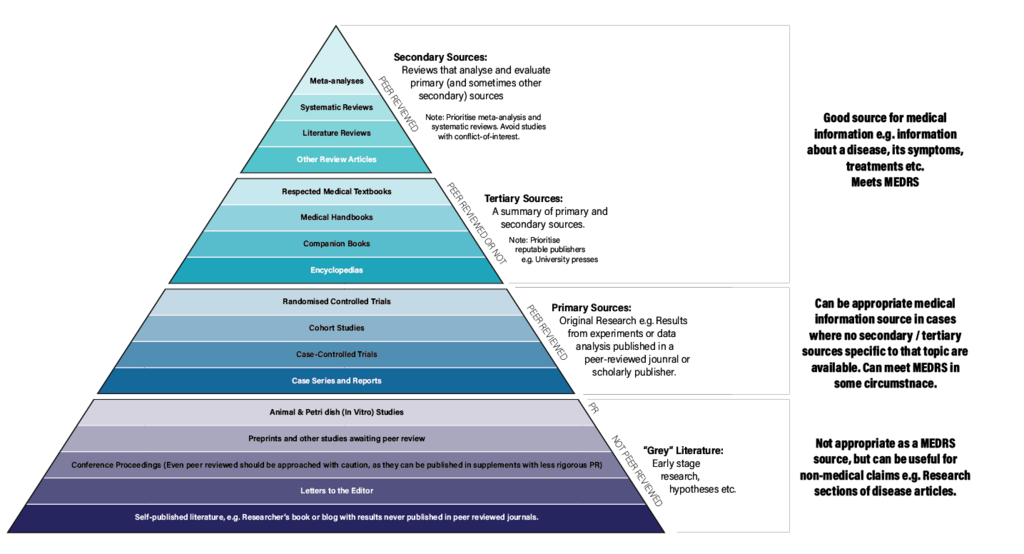
However, treating the pyramid as a rigid set of rules is a mistake. The quality of a study matters just as much, if not more, than its design. A well-conducted cohort study can provide stronger evidence than a poorly designed or executed randomised controlled trial that's riddled with flaws. The pyramid is a heuristic, a mental shortcut, not an unbreakable law. In practice, evaluating evidence is a more dynamic process of weighing strengths and weaknesses.
To bring evidence-based improvements in medicine and health care delivery to clinical practice, health care providers must know how to interpret clinical research findings and critically evaluate the strength of evidence.
Validity: The Great Trade-Off
Every study tries to balance two types of validity: internal and external.
Internal validity refers to how well a study is conducted. It's about the confidence we have that the results are true for the specific group of people studied. An RCT, with its random allocation and controlled environment, typically has very high internal validity. By minimising confounding variables, it allows researchers to isolate the effect of the intervention.
External validity, or generalisability, is about how well the results can be applied to a wider population. This is where the strict controls of an RCT can sometimes become a limitation. The highly specific inclusion and exclusion criteria might create a study population that doesn't reflect the diversity of patients you see in your own clinic. An observational study, like a large cohort study, might have lower internal validity but capture a more realistic patient population, giving it higher external validity.
Thinking about this trade-off is crucial. If you're considering a new drug for a patient with multiple comorbidities, a pristine RCT that excluded all such patients might be less helpful than a large, real-world observational study that, despite its limitations, included patients just like yours. The 'best' evidence depends on the clinical question you're asking.
Grading the Evidence
This is where frameworks like (Grading of Recommendations, Assessment, Development and Evaluations) become invaluable. GRADE provides a systematic approach to rating the quality of evidence and the strength of recommendations.
Instead of just looking at study design, GRADE assesses several factors:
| Factor | Description |
|---|---|
| Risk of Bias | How well was the study designed and conducted to minimise bias? |
| Inconsistency | Are the results similar across different studies? |
| Indirectness | Does the evidence directly apply to your patient, intervention, and outcome of interest? |
| Imprecision | How wide is the confidence interval? Is the result statistically robust? |
| Publication Bias | Are negative or inconclusive studies missing from the literature? |
A body of evidence from RCTs starts as 'high quality' but can be downgraded based on these factors. Conversely, evidence from observational studies starts as 'low quality' but can be upgraded if the effect size is very large, if there's a clear dose-response gradient, or if all plausible confounders would have reduced the observed effect.
This flexible approach allows a high-quality observational study showing a dramatic effect (e.g., the link between smoking and lung cancer) to be rated as strong evidence.
Synthesising the Pinnacle
At the top of the pyramid are systematic reviews and their quantitative cousins, These are not just literature summaries; they are rigorous research projects in their own right. A systematic review aims to find, appraise, and synthesise all available evidence that answers a specific clinical question.
A meta-analysis goes a step further by using statistical methods to combine the results from individual studies. This increases statistical power and can provide a more precise estimate of the treatment effect than any single study alone.
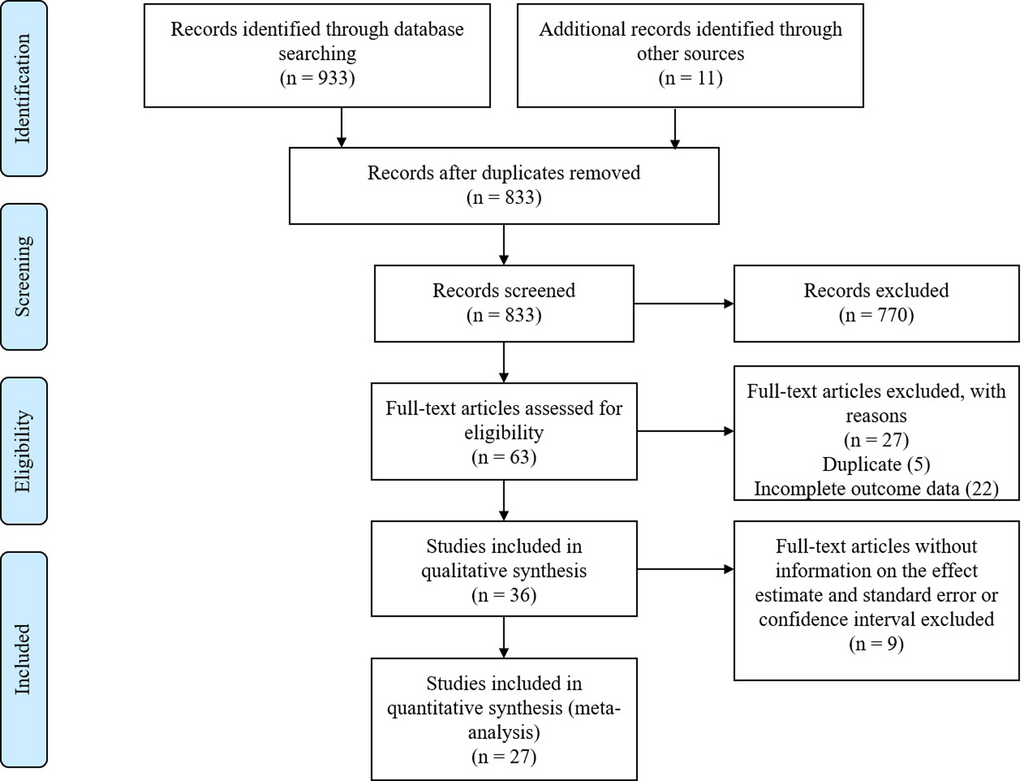
However, the 'garbage in, garbage out' principle applies. A meta-analysis of several small, biased RCTs will still produce a biased result, albeit a more precise-looking one. That's why critical appraisal of the included studies, as facilitated by the GRADE framework, is a non-negotiable step in evidence-based practice. The goal is not just to find the highest level of evidence, but to understand its quality, its limitations, and its relevance to the patient in front of you.
According to the traditional evidence pyramid, which of the following study designs is ranked the highest?
A study with very strict inclusion criteria and a highly controlled environment typically has high ________ validity but may have low ________ validity.
Evaluating evidence is a skill that blends scientific principles with clinical judgement. By looking beyond the simple hierarchy and considering the dynamics of study quality and validity, you can make more informed and patient-centred decisions.