CRISPR Gene Editing for Disease Correction
Introduction to CRISPR-Cas9
A Pair of Molecular Scissors
Scientists have developed a powerful tool that can change the very code of life. It’s called CRISPR-Cas9, and it works like a tiny pair of molecular scissors, allowing us to edit DNA with incredible precision. This technology wasn't invented in a lab from scratch; it was discovered in bacteria, where it serves as an ancient defense system.
CRISPR is essentially a find and replace function for DNA, and in the hands of scientists, it's a super powerful molecular tool for rewriting the code of life.
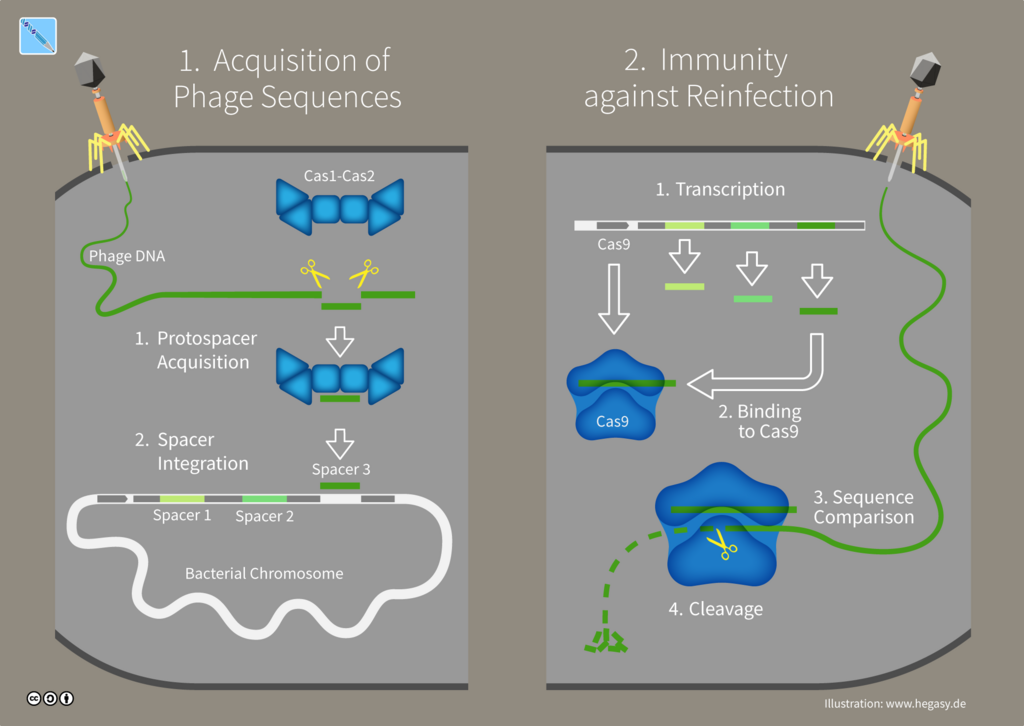
Bacteria are constantly under attack from viruses called phages. To survive, some bacteria developed a clever immune system. When a phage attacks, the bacterium captures a small snippet of the virus's DNA and stores it in its own genome, in a special region called a CRISPR array. These stored snippets act as a genetic memory of past infections.
If the same type of virus attacks again, the bacterium transcribes the stored viral DNA into an RNA molecule. This RNA molecule then acts as a guide, leading a bacterial protein to the invading virus's DNA. Once the matching sequence is found, the protein cuts the viral DNA, disabling the threat.
The Editing Toolkit
Researchers adapted this natural defense mechanism into a two-part gene-editing tool. The system is simple yet powerful, consisting of a cutting enzyme and a guide molecule.
- Cas9: This is a nuclease, a type of enzyme that acts like molecular scissors to cut DNA. It's the workhorse of the system, but it can't find its target on its own.
- Guide RNA (gRNA): This is a small, custom-made piece of RNA that acts as a guide. It's designed to match a specific sequence of DNA that we want to edit. The gRNA leads the Cas9 enzyme directly to that target location in the genome.
nuclease
noun
An enzyme that cleaves the chains of nucleotides in nucleic acids such as DNA and RNA.
Together, the Cas9 protein and the guide RNA form a complex that can scan an organism's entire genome. The gRNA is the system's GPS, ensuring the Cas9 scissors only cut at the intended spot.
Making the Cut
The editing process is remarkably direct. The gRNA-Cas9 complex is introduced into a cell. Once inside the nucleus, it starts searching for its target sequence on the DNA.
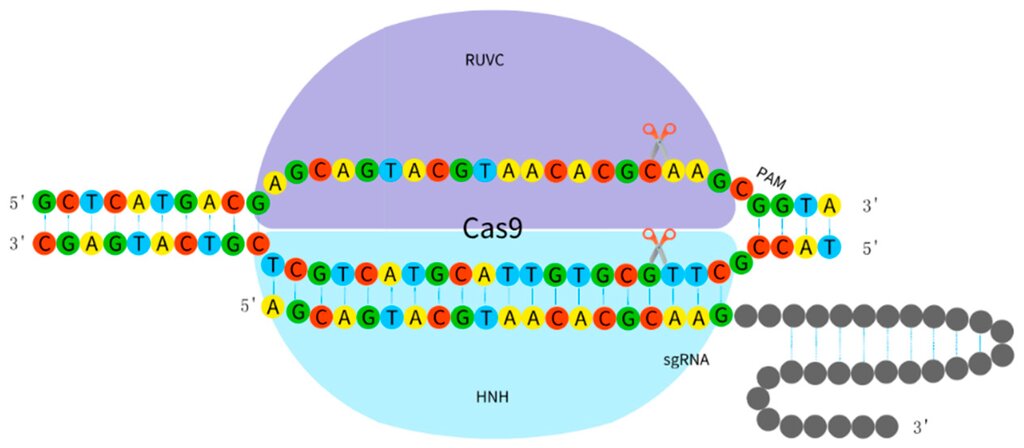
However, there's a crucial checkpoint. Cas9 won't cut just anywhere. It needs to first recognize a short, specific DNA sequence known as a Protospacer Adjacent Motif, or PAM. The PAM sequence is typically just a few letters long, like 'NGG'. Cas9 finds a PAM site and only then checks the adjacent DNA to see if it matches the guide RNA. This PAM requirement is a built-in safety mechanism, preventing the enzyme from cutting randomly.
The PAM sequence acts as an anchor point, telling the Cas9 enzyme, "Check the DNA right here."
If the DNA next to the PAM site is a perfect match for the guide RNA, the Cas9 enzyme changes its shape and uses its two nuclease domains to make a clean, double-strand break in the DNA helix. The cell's natural DNA repair machinery then takes over. This is where the editing happens.
Editing the Code
Once the DNA is cut, the cell tries to fix the break. It can do this in a couple of ways, and scientists can influence the outcome to achieve different types of edits.
-
Gene Knockout: The cell's most common repair method is quick but error-prone. It often joins the broken ends back together imperfectly, adding or deleting a few DNA letters. This usually scrambles the gene's instructions, effectively turning it off or "knocking it out." This is useful for studying what a particular gene does.
-
Gene Correction or Insertion: If scientists provide a new piece of DNA as a template, the cell can use it to repair the break. This more precise method allows for correcting a faulty gene, like one that causes a genetic disease, or even inserting a whole new gene into a specific location.
| Edit Type | Mechanism | Outcome ||---|---|---|| Gene Knockout | Cell's error-prone repair | Disables a gene || Gene Correction | Cell uses a provided template | Fixes or replaces a gene |
This versatility makes CRISPR-Cas9 a revolutionary tool. It provides a straightforward way to rewrite the genetic code in living cells, opening up new possibilities for treating inherited diseases and advancing biological research.
Now let's test your understanding of how this powerful gene-editing tool works.