CRISPR Gene Editing
Systemic Editing Mechanisms
Decoding the Cas9 Mechanism
While CRISPR is often described simply as genetic scissors, the reality of the Cas9 complex is a masterclass in molecular engineering. In this chapter, we will move past surface-level analogies to examine the precise architecture of the RuvC and HNH nuclease domains and the complex biophysics that drive target recognition. By the end, you will understand the thermodynamic triggers and conformational shifts that allow this remarkable protein to navigate the genome and initiate a precise cut.
The Architecture of a Precision Machine
To understand how Cas9 functions, we must first view it as a physical machine with moving parts. It is not a rigid block of protein. Instead, Cas9 is a bi-lobed structure consisting of two primary sections: the Recognition (REC) lobe and the Nuclease (NUC) lobe. If the REC lobe acts as the navigator that holds the in place, the NUC lobe is the business end of the operation, containing the mechanical components required to actually sever the DNA strands.
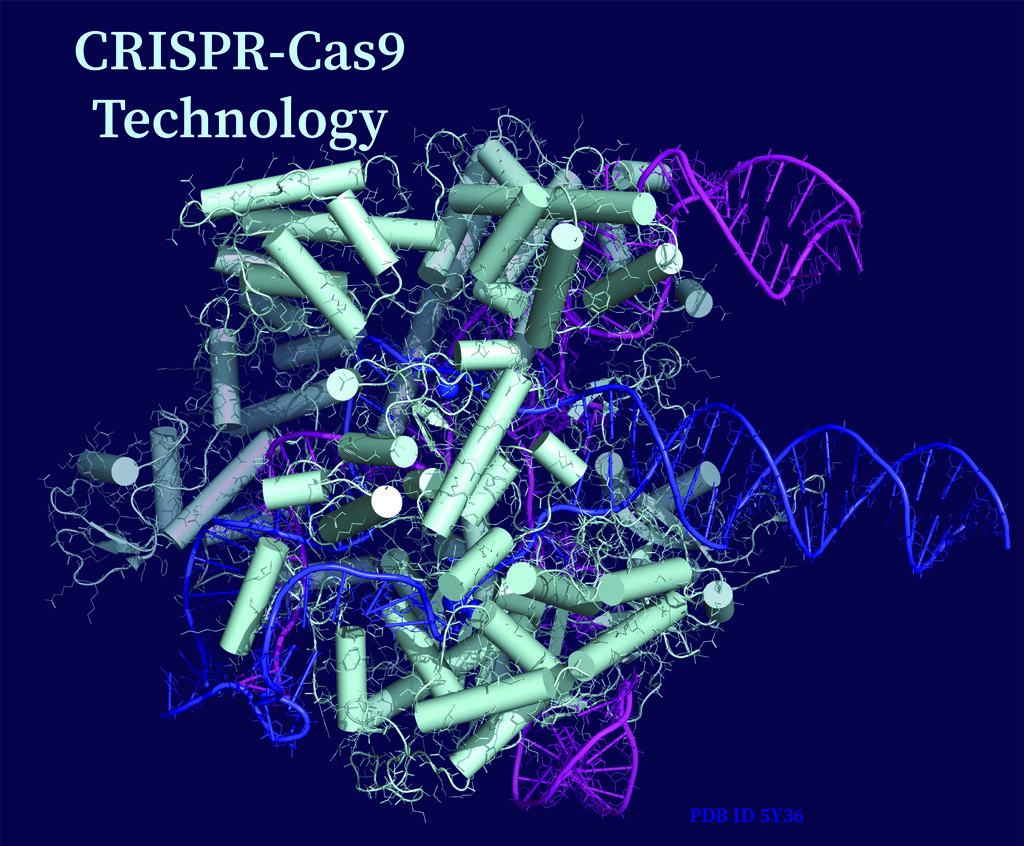
Deep within the NUC lobe lie the catalytic blades of the system: the HNH and RuvC domains. These two domains work in tandem like a pair of high-precision pliers. The is remarkably mobile, acting as a flexible arm that swings into position to cut the DNA strand that is complementary to the RNA guide. Meanwhile, the RuvC domain is responsible for cleaving the non-target strand. This division of labor ensures that both sides of the DNA double helix are cut simultaneously.
The spatial arrangement of these domains is critical for the enzyme's precision. Because the HNH domain is hinge-like and flexible, it can be precisely positioned only when the RNA-DNA match is perfect. This mechanical constraint is a primary safeguard against off-target damage. If the domains aren't aligned correctly, the 'scissors' simply won't close, leaving the DNA intact.
Understanding this bi-lobed structure provides the foundation for seeing Cas9 as a dynamic robot rather than a static chemical. As we look closer, we will see how these lobes open and shut in response to the chemical signals of the genetic code.