Crisis Psychology and Behavioural Management
Crisis Neurobiology
The Brain's Alarm System
When a crisis hits, your brain doesn't wait for your conscious approval to act. It shifts into survival mode, a state governed by a deeply ingrained, automated process. This isn't a flaw; it's a feature honed over millennia to keep you alive. The central command for this rapid response is the Hypothalamic-Pituitary-Adrenal (HPA) axis.
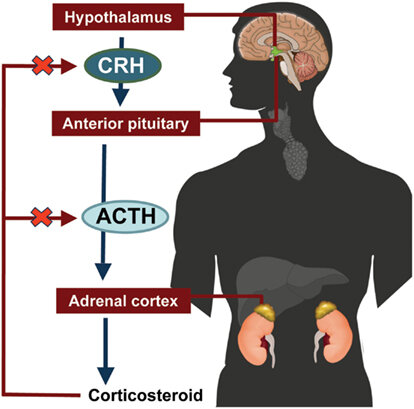
Think of the HPA axis as a biological chain reaction. It starts in the brain when the hypothalamus, sensing a threat, releases corticotropin-releasing hormone (CRH). This hormone travels a short distance to the pituitary gland, instructing it to release adrenocorticotropic hormone (ACTH) into the bloodstream.
ACTH acts as a messenger, travelling to the adrenal glands located on top of your kidneys. Upon receiving the signal, the adrenal glands pump out a flood of stress hormones, most notably cortisol and adrenaline (also known as epinephrine).
A stressful situation — whether something environmental, such as a looming work deadline, or psychological, such as persistent worry about losing a job — can trigger a cascade of stress hormones that produce well-orchestrated physiological changes.
These hormones are the fuel for the 'fight-or-flight' response. Adrenaline provides the immediate jolt, increasing your heart rate, blood pressure, and energy supplies. Cortisol, the primary stress hormone, keeps this state of high alert going. It curbs non-essential functions and floods your body with glucose, ensuring your brain and muscles have the energy they need to face down a perceived danger.
A Tale of Two Brains
This hormonal surge dramatically changes how your brain processes information. Under normal circumstances, your prefrontal cortex (PFC) is in charge. This is the brain's executive suite, responsible for rational thought, long-term planning, and emotional regulation. It keeps impulsive reactions in check.
In a crisis, however, control shifts to a more primitive and reactive part of the brain: the amygdala. The amygdala is your internal smoke detector, constantly scanning for threats. When the HPA axis floods the system with stress hormones, the amygdala kicks into high gear, effectively overriding the logical PFC.
This is often called an 'amygdala hijack'. It's a neurobiological coup where instinct overthrows intellect. The brain dedicates all its resources to immediate survival, effectively shutting down the parts responsible for nuanced thought and impulse control. You stop analysing and start reacting.
Cognitive Shutdown
The consequences of this neural power shift are profound. Under the influence of cortisol and norepinephrine, your cognitive abilities are sharply curtailed. The brain's capacity to juggle multiple facts, weigh potential outcomes, and engage in complex problem-solving plummets.
Your working memory, the mental scratchpad you use for immediate tasks, is one of the first casualties. It becomes incredibly difficult to hold several pieces of information in mind at once. This is why, in an emergency, people struggle to follow multi-step instructions.
The brain simplifies. Instead of processing detailed messages, it looks for clear, simple, and actionable commands. It also defaults to ingrained habits and training, as these require less cognitive energy than creating a new plan from scratch.
High cortisol levels also interfere with memory consolidation and retrieval. The hormone enhances the amygdala's ability to create powerful, emotional memories of the threat itself, but it can impair the hippocampus's role in recalling contextual details and logical sequences. This is why eyewitness testimonies from traumatic events can be vivid yet unreliable on specifics.
Essentially, your brain becomes prepared for physical action, not for a debate or a complex calculation. This neurobiological preparedness is critical for escaping a predator but can be a major liability in modern crises that require calm, logical decision-making.
Building Resilience
The brain is not static. Through a process called neuroplasticity, it can change its structure and function in response to experience. This is the foundation of building resilience to stress. While you can't stop the HPA axis from activating, you can train your brain to recover from it more efficiently.
Practices like mindfulness, controlled breathing exercises, and high-realism training all work by strengthening the neural pathways between the prefrontal cortex and the amygdala. Consistent training helps the PFC maintain more control during stressful situations, preventing a full-blown amygdala hijack.
This strengthens your ability to stay calm, access logical thought, and make better decisions when the stakes are high. It's about teaching the brain's 'CEO' to stay in the boardroom, even when the 'security guard' is sounding the alarm.
What is the correct sequence of activation in the Hypothalamic-Pituitary-Adrenal (HPA) axis?
During a crisis, which part of the brain takes over from the prefrontal cortex, leading to an 'amygdala hijack'?
Understanding these mechanisms is the first step toward managing them, both in ourselves and in others during a crisis.