CRISC Risk Assessment Tools Mastery
Introduction to Risk Management
What Is Risk Management?
Before we can manage risk, we need to agree on what it is. In simple terms, risk is the potential for an event to have an unwelcome impact on your organisation's objectives. It's a combination of the probability of something going wrong and the consequences if it does.
Risk
noun
The potential for an unwanted outcome, resulting from a specific event or action. It is often calculated as the likelihood of an event multiplied by its impact.
Risk isn't always about dramatic, catastrophic events. It can be as simple as a key server failing or a software update introducing a new bug. This is where risk management comes in. It’s not about eliminating every single risk, which is impossible. Instead, it’s a structured way of thinking about what could go wrong and what you should do about it.
Risk management, in its essence, is the process of identifying, assessing, and prioritizing risks, and subsequently applying resources to minimize, monitor, and control the probability or impact of adverse events.
Think of it as a continuous cycle. You are always looking for potential threats, figuring out which ones matter most, deciding how to handle them, and then checking to see if your plan is working.
Aligning IT with Business Goals
Why do we bother with all this? Because IT doesn't exist in a vacuum. The technology, systems, and data an IT department manages are all there to serve a business purpose, whether that's generating revenue, serving customers, or improving efficiency.
A server outage isn't just a technical problem; it could mean lost sales. A data breach isn't just a security failure; it can destroy customer trust and lead to massive fines. Effective risk management builds a bridge between the technical world of IT and the strategic goals of the business.
By understanding IT risks in business terms, you can have more meaningful conversations with leadership and help them make informed decisions about where to invest time and money.
This alignment is crucial. It ensures that the efforts to manage risk are focused on what truly matters to the organisation's success. You're not just fixing problems; you're protecting value and enabling the business to take calculated chances to achieve its objectives.
The Risk Management Process
The process of managing risk can be broken down into a few logical steps that form a continuous loop. While different frameworks might use slightly different terms, the core ideas are consistent.
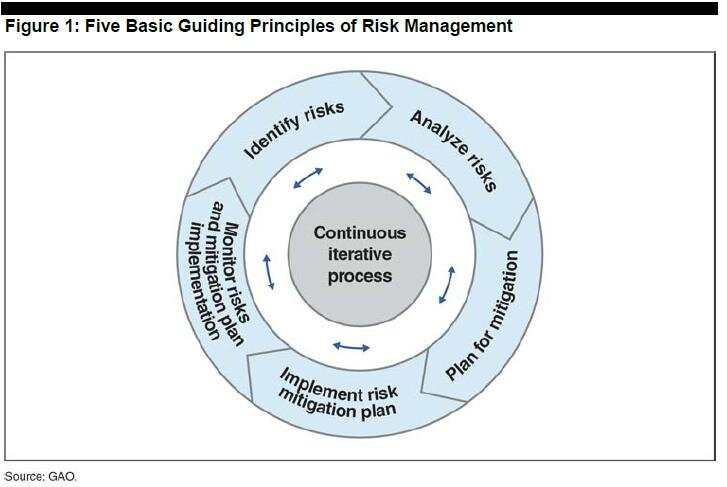
The basic stages are:
-
Risk Identification: What could go wrong? This is where you identify potential risks that could affect your business objectives. This could involve anything from cybersecurity threats to hardware failures or even human error.
-
Risk Analysis & Assessment: How bad could it be? Once a risk is identified, you need to analyse it to understand its potential likelihood and impact. This helps in prioritising which risks need immediate attention.
-
Risk Response & Mitigation: What should we do about it? After assessing the risks, you decide how to respond. You might choose to avoid, accept, reduce, or transfer the risk. This is the planning phase where you decide on the controls and actions.
-
Risk Monitoring & Review: Is our plan working? Risk management is not a 'set it and forget it' activity. You need to continually monitor your risks and the effectiveness of your mitigation plans, making adjustments as the business or threat landscape changes.
This process ensures that risk management is a proactive and dynamic part of running the business, helping to protect its assets and achieve its goals in a controlled way.
In the context of IT, what is the most accurate definition of risk?
What is the primary goal of IT risk management?
Understanding these foundational concepts is the first step in mastering IT risk management. They provide the 'why' behind the specific practices and controls you'll encounter.