Credit Card Payment Processing for VARs
Payment Processing Ecosystem
The Players in a Payment
When a customer pays with a card, a simple swipe or tap kicks off a rapid-fire conversation between several key players. Understanding who these players are and what they do is the first step to mastering the payment ecosystem. Each has a distinct role in ensuring money moves from the customer to the merchant securely and efficiently.
Every time a customer buys something, that financial transaction goes through a series of electronic systems, banking organizations, and digital technologies to process that single payment.
Let's break down the cast of characters:
- The Merchant: This is the business selling goods or services, like the restaurant you're working with. They need a way to accept card payments from customers.
- The Cardholder: The customer making the purchase using a credit or debit card.
- The Issuing Bank: This is the cardholder's bank. It issues the credit or debit card and lends the funds for the purchase (in the case of credit cards). Examples include Chase, Bank of America, or a local credit union.
- The Acquiring Bank (Acquirer): This is the merchant's bank. It provides the merchant with an account to receive funds from card transactions. The acquirer takes on the risk of the transaction for the merchant.
- The Card Network: These are the highways of the payment world. Visa, Mastercard, American Express, and Discover create the rules, manage the networks that connect the banks, and ensure transactions can be routed correctly.
- The Payment Processor: This is the technology provider that acts as a communication hub. It securely shuttles transaction data between the merchant's point-of-sale (POS) system, the card network, and the banks.
The Life of a Transaction
A card transaction happens in two main phases: authorization and settlement. Authorization is the green light for the purchase, and it takes just a few seconds. Settlement is when the money actually moves, which typically happens within a few days.
Think of authorization as asking for permission, and settlement as collecting the funds.
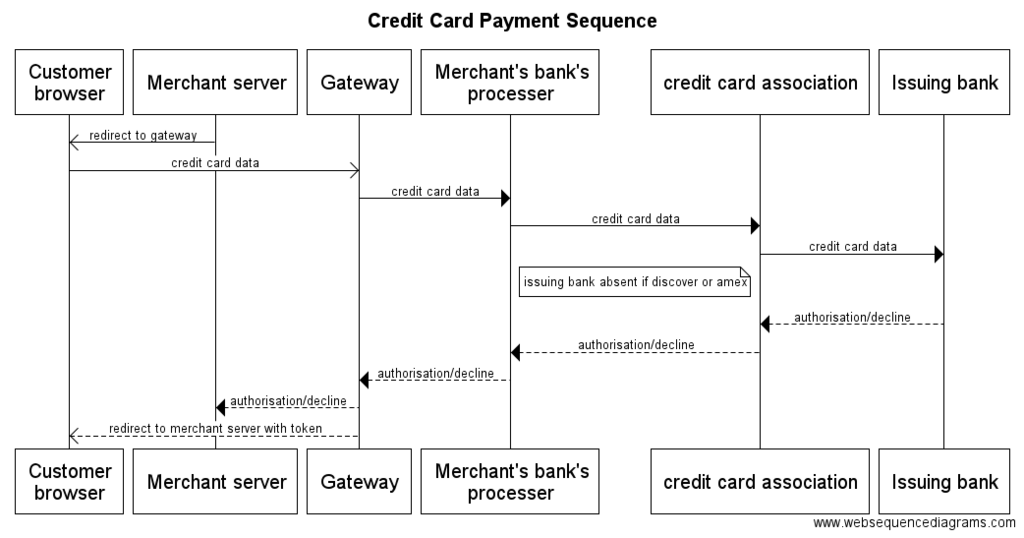
Here’s how it unfolds:
1. Authorization When a customer presents their card, the merchant's POS system captures the card data and sends a request for payment to the payment processor. The processor securely routes this request to the appropriate card network.
The card network then forwards the request to the issuing bank. The issuing bank instantly checks things like the cardholder's available credit, the card's validity, and fraud risk signals. If everything looks good, it sends back an approval code. If not, it sends a decline. This entire round trip—from the restaurant's terminal to the issuing bank and back—is typically completed in under two seconds.
2. Settlement At the end of the business day, the merchant sends a batch of all their approved transactions to their payment processor. This is often called "batching out."
The processor sorts these transactions and sends them to the respective card networks. The card networks facilitate the transfer of funds, debiting the issuing banks for the approved amounts and crediting the acquiring bank.
Finally, the acquiring bank deposits the total funds from the batch into the merchant’s bank account, subtracting any processing fees. This final step is called funding.
The Merchant's ID
In this complex system, every merchant needs a unique identifier to ensure funds are routed to the right place. This is where the Merchant ID (MID) comes in.
Merchant ID (MID)
noun
A unique code assigned by an acquiring bank to a merchant. It acts like a bank account number specifically for payment processing, identifying the merchant during every transaction.
The MID is critical. It links a specific merchant location to their payment processor and their acquiring bank. When a transaction is settled, the MID ensures the acquiring bank knows exactly which merchant account to deposit the funds into.
For businesses with multiple locations, like a restaurant chain, each location typically gets its own unique MID. This allows for clear, separate reporting and reconciliation for each storefront. As a VAR, you'll be helping merchants apply for and manage their MIDs, making it a central part of the setup process.
In a card transaction, which entity provides the merchant with an account to receive funds from sales?
A customer's transaction is declined due to insufficient funds. Who is responsible for making this decision?
With a clear picture of the players and the process, you can better explain the value of seamless payment processing to merchants.