Creative Writing Fundamentals
Introduction to Creative Writing
The Building Blocks of Story
Every story, from a blockbuster movie to a bedtime tale, is built from the same basic parts. Think of them as ingredients. The main ones are plot, character, and setting. The plot is what happens. The characters are who it happens to. The setting is where and when it all takes place.
Mastering these fundamentals is the first step to telling your own compelling stories. You don't need a complicated formula, just a good grasp of how these elements work together to create a world a reader can get lost in.
Crafting a Compelling Narrative is Key
What Happens Next? Plot Basics
Plot is the sequence of events in your story. It’s the engine that pulls the reader forward. At its simplest, a plot answers the question, “And then what?” But a good plot does more than just list events; it connects them with cause and effect.
Most stories follow a surprisingly simple pattern. They start with a state of balance, something disrupts that balance, and the characters spend the rest of the story trying to restore it. This creates a natural arc that feels satisfying to an audience.
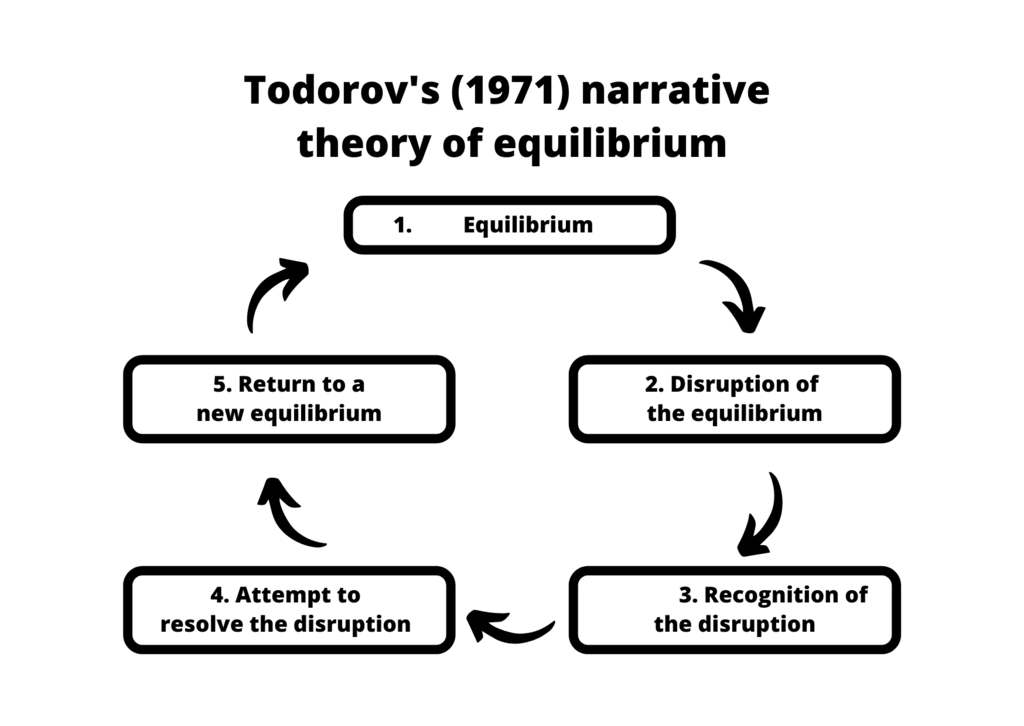
Think about the story of “The Three Little Pigs.”
- Equilibrium: Three pigs build their own houses and are living peacefully.
- Disruption: A big bad wolf arrives, threatening to blow their houses down.
- Recognition & Attempt: The wolf destroys the first two houses. The pigs recognize the danger and try to find safety in the brick house.
- New Equilibrium: The wolf fails to destroy the brick house and is defeated. The pigs are safe again, having learned a valuable lesson about hard work.
A good plot isn't just a series of events. It's a chain reaction where one event causes the next.
Who's in Your Story? Creating Characters
Characters are the heart of your narrative. Readers connect with stories through the people in them. A flat, uninteresting character can make even the most exciting plot feel dull. So how do you create characters that feel alive?
Start with a simple desire. Every compelling character wants something. It doesn't have to be world-changing. It could be a glass of water, a promotion, or forgiveness. This desire drives their actions and gives them purpose.
Protagonist
noun
The main character of a story, who is central to the plot and typically drives the action.
Once your character has a goal, introduce an obstacle. This is the source of conflict, which is essential for any story. The obstacle could be another person (an antagonist), a force of nature, or even something inside the character, like fear or self-doubt. The struggle to overcome this obstacle is what reveals who your character truly is.
Quick Exercise: Think of a character. Now give them one strong desire and one major fear. How does their fear get in the way of what they want? You've just created a conflict.
Finding Your Voice and Genre
Your writing voice is your unique personality on the page. It's the combination of your word choice, sentence structure, and perspective. Are you witty and sarcastic? Or thoughtful and descriptive? There's no right or wrong voice, but finding one that feels authentic to you is crucial.
The best way to develop your voice is to read widely and write constantly. Pay attention to authors you admire. What do you like about their style? Don't copy them, but let their work inspire you to experiment in your own writing.
Genre is simply a way of categorizing stories based on their style and content. Common genres include fantasy, science fiction, romance, mystery, and horror. Each has its own set of conventions, but don't feel locked into one. Many of the best stories blend elements from different genres.
Experiment! Write a funny scene, then a scary one. Write a story set in the future, then one set in the past. Playing with different styles is how you'll discover what you enjoy writing most.
Now, let's test your understanding of these core concepts.
At its simplest, what question does a story's plot answer?
According to the text, what is the most essential starting point for creating a compelling character?
Great job. You now have a solid foundation in the essential elements of creative writing. The key is to practice, experiment, and have fun telling your own stories.