Creative Strategy for High Performance Ads
Advanced Customer Insights
Beyond Demographics: Finding True Insight
You already know the basics of market research—surveying users, tracking conversions, and building buyer personas. But in a world where third-party cookies are disappearing, relying on quantitative data and broad demographic profiles is no longer enough. To create truly effective marketing, you need to understand the why behind your customers' actions.
This means digging deeper to uncover the psychological triggers, unspoken frustrations, and specific pain points that drive their decisions. The goal is to move from knowing who your customers are to understanding how they think and what they truly need. The following techniques will help you gather that rich, qualitative intelligence.
Digital Eavesdropping: Social & Forum Mining
The most honest customer feedback is often unsolicited. People share their genuine thoughts and frustrations on social media and online forums. By systematically monitoring these conversations, you can gain insights that surveys and focus groups rarely reveal.
Start with social media. Use listening tools (or even advanced searches) to track mentions of your brand, your competitors, and relevant industry keywords. Don't just count mentions; analyse the sentiment and context. Are people praising a competitor's customer service? Complaining about a specific missing feature in products like yours? These are patterns you can act on.
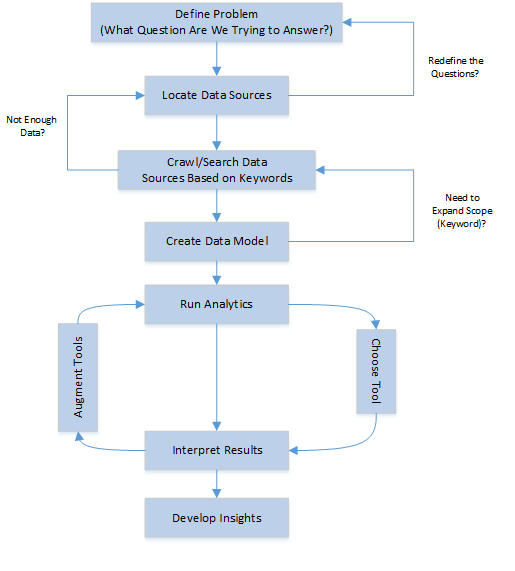
Next, dive into forums where your potential customers gather. Reddit, Quora, and niche industry communities are goldmines. The relative anonymity encourages candid conversations about what works, what doesn't, and what people wish existed.
Look for threads where users compare products, ask for solutions to problems your service addresses, or describe workarounds for common issues. Pay close attention to the exact language they use—it’s perfect for crafting ad copy and landing pages that resonate.
Search for phrases like "[Your Product] vs. [Competitor]", "how to solve [problem]", or "I wish there was a tool for...". The language customers use is your best source for copy and feature ideas.
Decoding Competitor Strategies
Analysing your competitors' messaging is a powerful way to understand the market landscape and find your unique position. The goal isn't to copy them, but to identify their perceived strengths, the audiences they're courting, and the gaps they've left open for you to fill.
The Facebook Ad Library is an invaluable free tool for this. You can see the exact ads any brand is running. As you review them, ask yourself:
- What benefits are they highlighting? Are they focused on saving time, saving money, or improving status?
- What pain points are they addressing? What problem do they claim to solve?
- What is their tone of voice? Is it professional, playful, urgent, or reassuring?
- Who is their target audience? The imagery, language, and specific offers can give you strong clues.
| Competitor | Key Message | Target Audience (Inferred) | Pain Point Addressed | Call to Action |
|---|---|---|---|---|
| Competitor A | "Save 10 hours a week" | Small business owners | Inefficiency, time-consuming admin | "Start Your Free Trial" |
| Competitor B | "Enterprise-grade security" | IT managers in large firms | Data security risks | "Request a Demo" |
| Competitor C | "The affordable alternative" | Startups, freelancers | High cost of existing solutions | "See Pricing" |
By mapping this out, you can spot opportunities. If all your competitors are targeting large corporations, you might find success by focusing on small businesses. If they all compete on price, you can stand out by emphasising premium quality and support.
Synthesising Insights for AI
Gathering these insights is the first step. The next is to structure them in a way that both your team and your AI tools can understand and use effectively. This is where a Brand Context Document comes in. It acts as a single source of truth for your marketing strategy, ensuring consistency and alignment.
Think of it as a detailed brief you can feed to an AI assistant to generate on-brand content, marketing angles, or even strategic recommendations. A well-crafted document prevents generic outputs and helps the AI act as a true extension of your team.
By leveraging sophisticated AI tools, marketers can focus on big creative ideas and fun new ways to promote products and services online.
Your Brand Context Document should include:
-
Target Audience Deep Dive: Go beyond basic personas. List their primary financial, productivity, and support-related pain points. Include direct quotes from your research on Reddit or customer reviews. What are their goals? What frustrates them?
-
Unique Value Proposition (UVP): A clear, concise statement explaining what makes you different and better than the competition. Frame it around the pain points you've identified.
-
Brand Voice & Tone: Define your brand's personality. Are you an expert guide, a friendly partner, or a disruptive innovator? Provide examples of 'do' and 'don't' phrases.
-
Competitive Landscape: Summarise your competitor audit. Who are the key players, what are their main messages, and where are the market gaps you intend to fill?
With this document, you can prime an AI model with a deep understanding of your strategic context, leading to more relevant, creative, and effective marketing outputs.
In the context of modern market research, what is the primary reason for shifting focus from quantitative data to qualitative insights?
When analysing competitors' messaging in the Facebook Ad Library, what is the main objective?
These advanced research methods provide the raw material for a marketing strategy that truly connects with people. By moving past surface-level data, you can build campaigns that are not only seen but felt.