Creative Fiction Writing Fundamentals
Introduction to Fiction Writing
What Is Fiction?
At its heart, fiction is the art of make-believe. It’s any story created from the imagination, not strictly based on history or fact. While it might borrow from real life, its characters, events, and settings are ultimately inventions of the writer.
Fiction
noun
Imaginative writing, especially in the form of prose novels and short stories, that describes invented events and people.
But fiction is more than just telling tales. It’s a way to explore the human experience. Through made-up stories, we can walk in someone else’s shoes, visit worlds that don’t exist, and confront ideas that challenge our own. The purpose of fiction isn't just to entertain, but to connect, to question, and to help us understand ourselves and the world a little better.
Fiction allows us to live countless lives and see the world through different eyes, all from the safety of a page.
A World of Stories
Fiction isn't a single, monolithic thing. It’s a vast landscape of different styles and subjects, organized into categories called genres. Think of genres as signposts for readers, giving them an idea of the kind of journey they’re about to take. A story’s genre influences its tone, setting, and the types of conflicts the characters will face.
Knowing the conventions of a genre helps a writer meet reader expectations—or cleverly subvert them. Here are a few of the most common ones:
| Genre | Core Elements |
|---|---|
| Science Fiction | Technology, space exploration, future societies |
| Fantasy | Magic, mythical creatures, imaginary worlds |
| Mystery | A crime or puzzle to solve, clues, suspense |
| Romance | Focus on a central love story and relationship |
| Horror | Aims to create feelings of fear, dread, and shock |
| Thriller | High stakes, fast pace, suspense, and excitement |
Of course, many stories blend elements from multiple genres. A sci-fi story can have a romantic subplot, and a mystery can be set in a fantasy world. These categories are tools, not rigid rules.
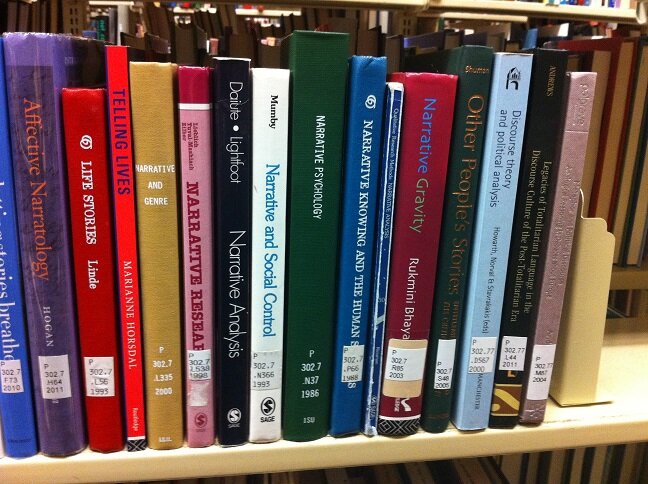
Why We Tell Stories
Humans are storytelling animals. It's one of the oldest and most fundamental ways we communicate. Long before written language, people shared stories around campfires to pass down history, teach moral lessons, and explain the mysteries of the universe. Storytelling connects us to our past and helps us imagine our future.
Stories have the power to captivate, engage, and convey complex truths in a memorable way.
On a personal level, stories help us organize our thoughts and make sense of a chaotic world. They provide structure and meaning to our experiences. Whether it’s a grand epic or a simple anecdote shared with a friend, storytelling is woven into the fabric of our daily lives.
The Writing Process
Writing fiction might seem like a mysterious act of inspiration, but it's usually a more structured process. While every writer works differently, the journey from an idea to a finished story often follows a few key stages. Understanding these steps can make the task feel less daunting and more manageable.
1. Idea & Brainstorming: This is the spark. It can be a character, a situation, a question ("what if?"), or a single image. You'll explore the idea, perhaps by jotting down notes, creating mind maps, or just thinking.
2. Drafting: This is where you get the story down on paper. The goal is to write forward without worrying too much about perfection. It’s often called the "rough draft" for a reason. You're building the raw material.
3. Revising: Now you look at the big picture. Does the story work? Is the pacing right? Are there plot holes? Revision is about reshaping the story, which might involve rewriting entire sections, moving scenes around, or even changing major plot points.
4. Editing & Polishing: This is the final step, focusing on the sentence level. You'll check for grammar mistakes, awkward phrasing, and typos. The goal is to make the prose as clean and clear as possible before sharing it with others.
This process isn't always linear. You might revise a chapter right after drafting it or get a new idea that sends you back to the brainstorming stage. The key is to see writing not as a single event, but as a series of steps that build on each other.
What is the primary characteristic of fiction?
According to the text, what is the main function of a literary genre?
This is just the beginning of the journey into fiction writing. By understanding what fiction is, the different forms it can take, and the process of creating it, you've built a solid foundation for telling your own stories.