Creative Coding with Claude AI
Introduction to Prompt Engineering
What is Prompt Engineering?
Using an AI like Claude is a lot like ordering a coffee. If you walk up to the counter and just say “coffee,” you might get a plain black coffee, an espresso, or something else entirely. It's a gamble. But if you ask for a “large iced latte with oat milk and one pump of vanilla syrup,” you'll get exactly what you want. The barista has clear instructions.
Prompt engineering is the skill of giving clear instructions to an AI. It’s how you communicate your request to get the most accurate, relevant, and useful response possible.
Think of prompt engineering as giving instructions or asking an AI model a question to get an answer.
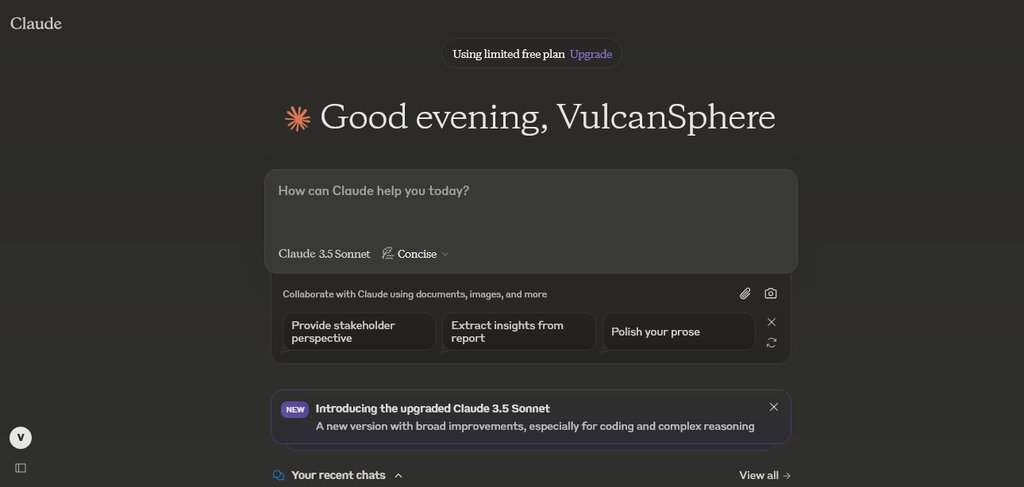
When you interact with an AI, your instruction is called a prompt. A well-crafted prompt acts as a precise guide, steering the AI toward the specific information or output you have in mind. A weak prompt leaves the AI guessing, often leading to generic or unhelpful answers. Learning to write good prompts transforms the AI from a simple tool into a powerful collaborator.
Principles of Effective Prompts
Getting great results from an AI isn't about secret codes or complex commands. It’s about being clear and direct. Three principles form the foundation of almost every successful prompt: being specific, providing context, and defining the output format.
Be Specific. Vague prompts lead to vague answers. The more detail you provide, the better the AI can understand your goal.
Instead of asking a broad question, narrow it down. Tell the AI exactly what you need, who the audience is, and what points to focus on. Notice the difference in the requests below.
| Vague Prompt | Specific Prompt |
|---|---|
| Tell me about electric cars. | Explain the key differences in battery technology between a 2024 Tesla Model 3 and a 2024 Kia EV6. |
| Write a marketing email. | Write a promotional email to existing customers about our new line of waterproof hiking boots. The tone should be enthusiastic and adventurous. Mention the 20% discount that expires Friday. |
Next, provide context. The AI doesn't have access to your thoughts, previous conversations, or specific documents unless you provide them. Context gives the AI the background information it needs to formulate a relevant response.
For example, instead of just asking Claude to summarize a document, it's better to specify what the document is and what you care about. A good prompt would be: "Summarize the attached meeting transcript, focusing only on the action items and deadlines discussed."
Finally, tell the AI exactly how you want the answer to look. Do you want a paragraph, a list, a table, or a JSON object? Defining the output format saves you from having to reformat the response later.
You can ask for the output as a bulleted list, a numbered list, a paragraph, or even a table. For instance: “List the pros and cons of remote work in a two-column table.”
Common Pitfalls and How to Fix Them
Writing great prompts is a skill that improves with practice. As you start, you might run into a few common issues. Here are some typical mistakes and simple ways to correct them.
Another common issue is giving up after the first try. Don't be afraid to refine your prompt and ask again. If the first response isn't quite right, add more detail, clarify your instructions, or ask a follow-up question to steer the conversation in the right direction. This iterative process is key to mastering prompt engineering.
At its core, prompt engineering revolves around clarity, context, and iteration.
Now that you understand the basics of crafting a good prompt, it's time to test your knowledge.
What is the primary goal of prompt engineering?
The text compares writing a good prompt to ordering a coffee. What does this analogy illustrate?
By keeping these principles in mind, you can communicate more effectively with Claude and unlock its full potential.