Creatine's Impact on Body and Mind
Creatine Basics
What is Creatine?
Creatine is a natural compound that your body produces on its own. It's built from three amino acids: arginine, glycine, and methionine. Think of these amino acids as the basic building blocks for creatine.
Creatine
noun
A compound formed from amino acids that plays a key role in cellular energy production.
This synthesis process mainly happens in your liver and kidneys. From there, the newly made creatine travels through your bloodstream to where it's needed most.
Where is it stored?
Once produced, about 95% of your body's creatine is stored in your skeletal muscles. This is why it's so closely associated with muscle function and exercise.
The remaining 5% is found in other tissues, including your brain, where it also plays a vital role in energy supply.
The Energy Currency Connection
Every cell in your body runs on a molecule called adenosine triphosphate, or ATP. You can think of ATP as the energy currency that powers everything from muscle contractions to brain activity. When a cell needs energy, it 'spends' ATP by breaking one of its phosphate bonds, turning it into adenosine diphosphate (ADP).
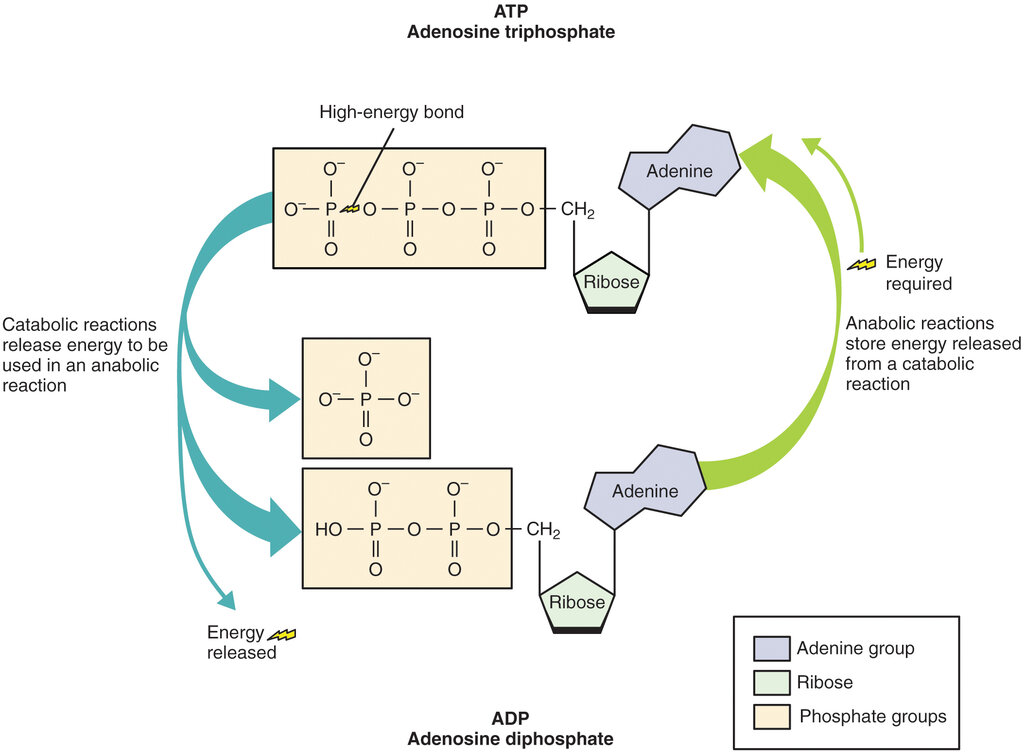
Your body has a limited, quickly-used supply of ATP. During intense activity, you need to regenerate it fast. This is where creatine comes in. In your cells, creatine grabs a phosphate molecule to become phosphocreatine (PCr). This phosphocreatine acts as a phosphate reserve.
When ATP is spent and becomes ADP, phosphocreatine quickly donates its phosphate group back to ADP, instantly turning it back into ATP. This rapid recycling allows your cells to keep producing energy during short, high-demand bursts of effort.
This phosphocreatine system is the body's fastest way to replenish ATP, making it essential for activities like sprinting or lifting heavy weights.
More Than Just Energy
Beyond its primary role in energy metabolism, creatine also has antioxidant properties. Cellular processes naturally produce unstable molecules known as free radicals. When these build up, they can cause damage to cells, a state known as oxidative stress.
Creatine helps to neutralize some of these free radicals, reducing oxidative stress and protecting cells from damage. This secondary function contributes to its overall importance in maintaining cellular health, especially in tissues with high energy demands like muscle and brain.
Now, let's test your understanding of these core concepts.
Creatine is naturally produced in the body from which three amino acids?
Where is approximately 95% of the body's creatine stored?
Understanding what creatine is, where it's stored, and how it works is the first step to appreciating its role in the body.