Crane Underwriting Essentials
Crane Types
A Crane for Every Task
When you think of a crane, you might picture the towering structures that build skyscrapers. But cranes come in many shapes and sizes, each designed for a specific job. Choosing the right one is like picking the right tool from a toolbox. You wouldn't use a sledgehammer to hang a picture, and you wouldn't use a small mobile crane to build a skyscraper. Let's look at the main types you'll find on job sites.
Mobile Cranes
Mobile cranes are the versatile workhorses of the construction world. They are mounted on wheels or crawler tracks, which means they can be driven directly to a job site. This mobility is their biggest advantage. Instead of a lengthy assembly process, they can be set up relatively quickly, perform a lift, and then move on to the next task or location.
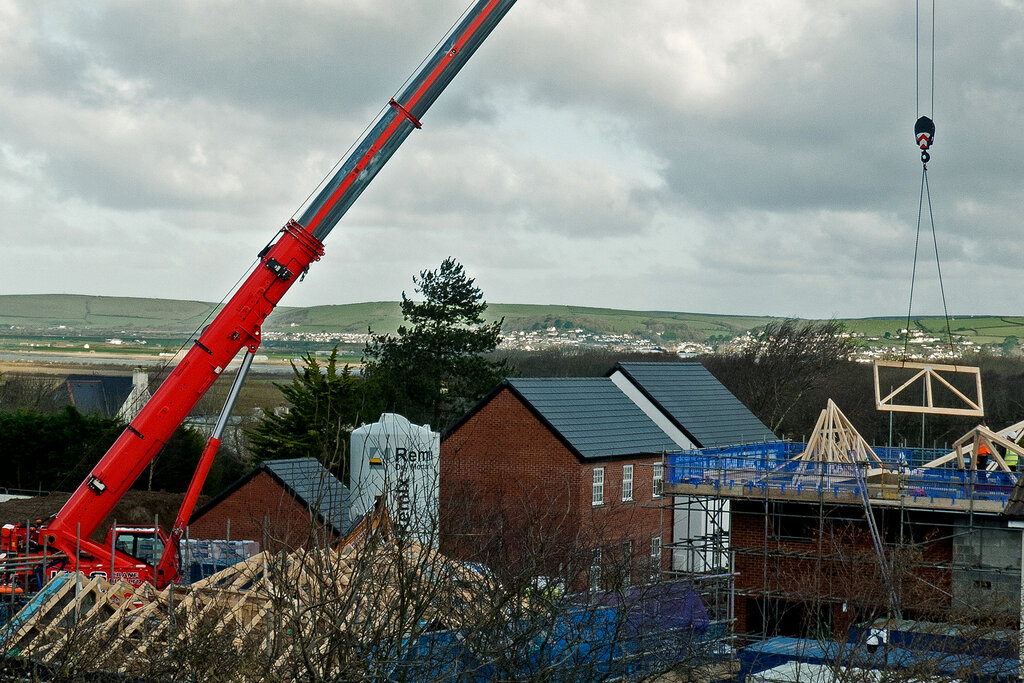
Their design often includes a telescopic boom that can extend to various lengths, allowing for flexibility in reach. They are ideal for short-term projects. You’ll see them installing large air conditioning units on commercial rooftops, lifting materials for smaller buildings, or assisting in road and bridge repairs.
Because they are self-contained and can travel on roads, mobile cranes are the go-to choice for jobs that require power and precision without a long-term commitment.
However, their lifting capacity is limited by their own weight and the stability of their outriggers, the legs that extend to stabilize the crane during a lift. The ground condition is critical; a mobile crane needs a firm, level surface to operate safely.
Tower Cranes
Tower cranes are the giants of the city skyline. Unlike their mobile counterparts, these cranes are fixed in place. They are assembled piece by piece on the construction site and are anchored to a massive concrete foundation. Some can even 'climb' as the building they are constructing grows taller.

Their primary application is for the construction of tall buildings. No other crane type can match their combination of height and lifting capacity. They act as a central hub on a large site, moving heavy materials like steel beams, concrete panels, and large equipment from the ground to precisely where they are needed, hundreds of feet in the air.
Tower cranes are indispensable in modern construction, enabling the efficient and safe lifting of heavy materials and equipment in large projects across the country.
A tower crane consists of a vertical mast, a slewing unit that allows it to rotate 360 degrees, and a long horizontal jib (the operating arm). A shorter counter-jib holds concrete counterweights to balance the load. The operator sits in a small cab at the very top, with a bird's-eye view of the entire project.
Overhead Cranes
Overhead cranes operate in a completely different environment. You won't find them on a typical construction site, but rather inside large industrial buildings like factories, warehouses, and workshops. They are also known as bridge cranes because they consist of a bridge-like beam that runs along parallel runways, usually mounted on the walls of the building.
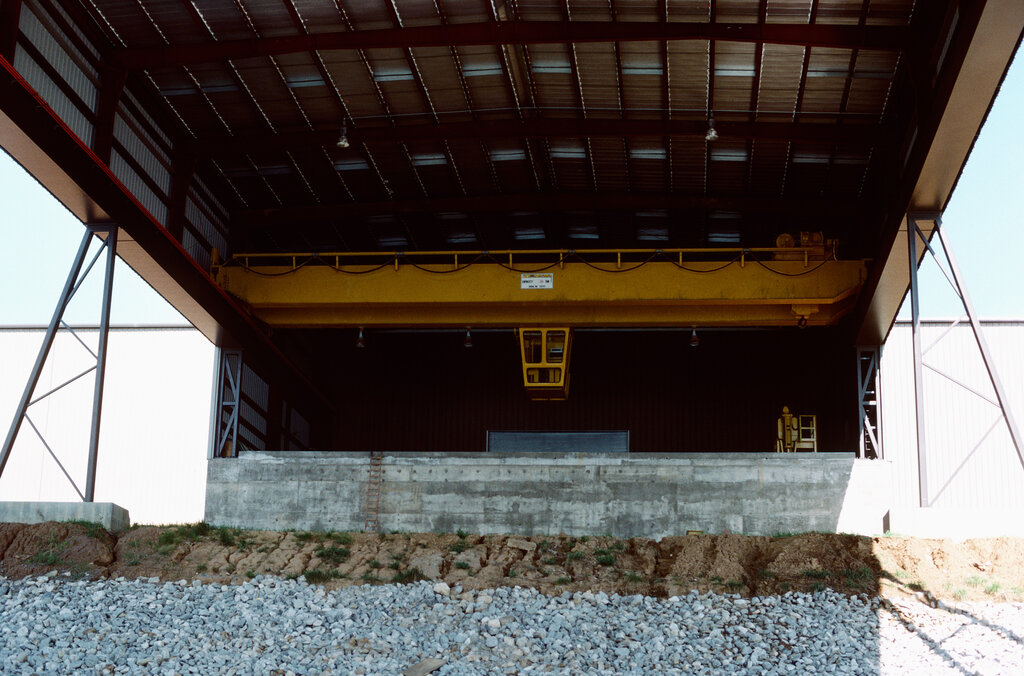
A trolley with a hoist travels back and forth along this bridge. This setup allows the crane to move loads in three directions: up/down, forward/backward, and side-to-side, covering a large rectangular area. Their application is repetitive, heavy lifting within a fixed space. They are essential for manufacturing processes, moving raw materials, loading finished products onto trucks, or positioning heavy components during assembly.
While mobile and tower cranes build structures, overhead cranes are part of the permanent infrastructure that keeps industries moving.
Because they are integrated into the building's structure, overhead cranes are incredibly powerful and stable. They can lift enormous weights, from car engines to entire subway cars, making them a cornerstone of heavy industry.
Which type of crane is most suitable for a short-term project, like lifting an air conditioning unit onto a commercial rooftop?
A tower crane is anchored to a massive concrete foundation and remains in a fixed position for the duration of a large construction project.
Each crane type has a distinct role. Understanding their capabilities helps clarify why you see a particular crane on a job site, from the nimble mobile crane on a short-term project to the stationary tower crane shaping a new skyline.