Crafting Your Social Media Strategy
Understanding Social Media Fundamentals
The Digital Town Square
Before the internet, sharing news or photos with a hundred people at once was a massive undertaking. You’d need a newspaper, a television station, or a big budget for postage stamps. Today, you can do it from your phone in seconds. This is the power of social media.
At its core, social media consists of websites and applications that let people create and share content or participate in social networking. It's not a new idea. Early internet forums and bulletin board systems in the 1980s were a form of social media. But the launch of platforms like Friendster, MySpace, and eventually Facebook in the early 2000s turned it into a global phenomenon.
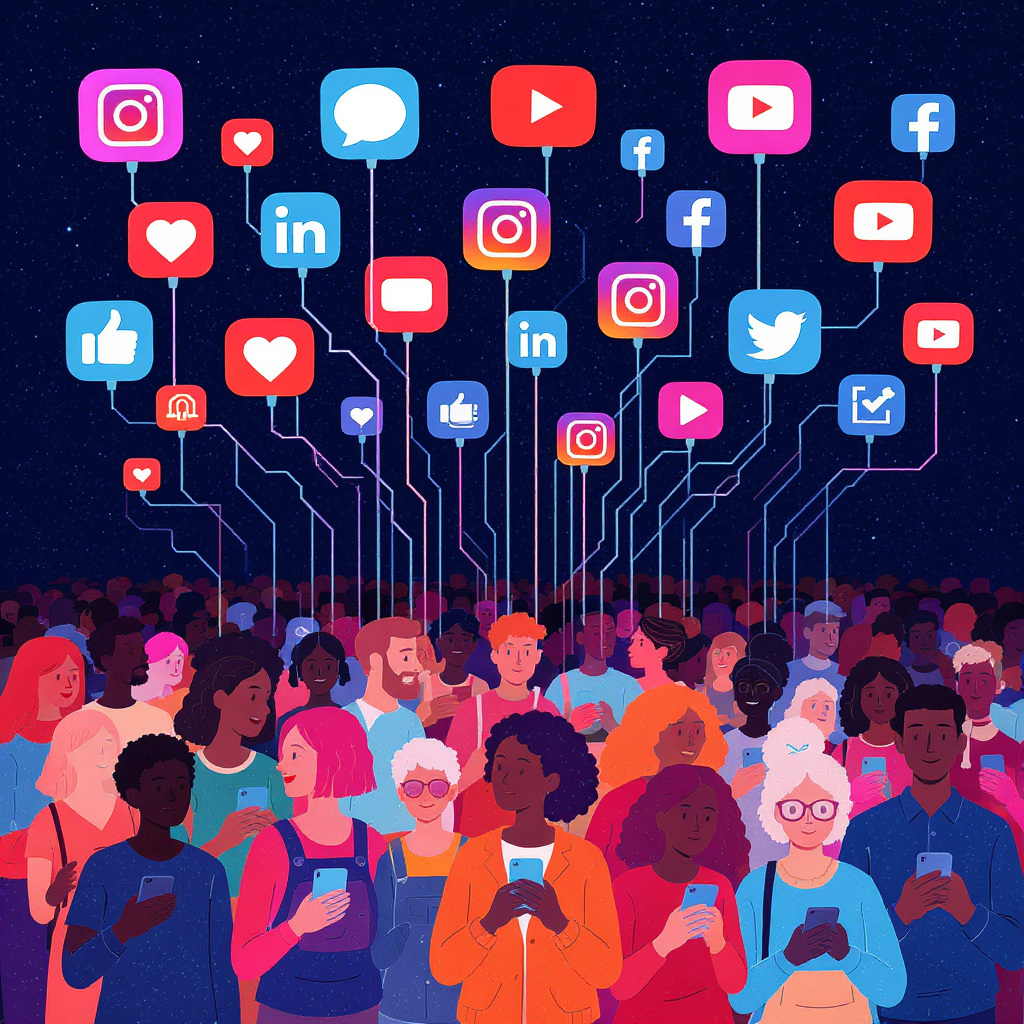
These platforms transformed communication. Instead of one-way broadcasts from media companies, we now have a world of two-way conversations. Anyone can be a creator, sharing their thoughts, art, or expertise. This shift has had a huge impact on everything from personal relationships to global politics and, of course, marketing.
The rise of social media platforms has fundamentally reshaped social interactions, creating new ways for people to connect, share information, and form communities online.
A Tour of the Platforms
Each social media platform is like a different city, with its own culture, language, and customs. What works in one might fall flat in another. Understanding the landscape is the first step to navigating it effectively.
Think of it this way: you wouldn't wear a tuxedo to a beach party. Likewise, a formal business announcement that's perfect for LinkedIn would feel out of place on a visually-driven, informal platform like TikTok. Knowing the audience and the expected type of content is crucial.
| Platform | Primary Focus | Key Demographics |
|---|---|---|
| Connecting with friends & family, community groups | Broad, slightly older (25-55+), global reach | |
| Visuals (photos & short videos), lifestyle, aesthetics | Younger (18-34), strong female user base | |
| X (Twitter) | Real-time news, short updates, public conversation | Well-distributed, leans toward 25-49, popular with journalists & officials |
| Professional networking, B2B marketing, career development | Educated professionals, 25-49 age range | |
| TikTok | Short-form video, entertainment, trends | Very young (16-24), high engagement |
These are just the giants. There are countless other platforms, from Pinterest (visual discovery) and Reddit (niche communities) to Snapchat (ephemeral messaging). The key isn't to be everywhere, but to be on the platforms where your target audience spends its time.
From Conversation to Commerce
Initially, businesses viewed social media with skepticism. It was a place for personal updates, not advertisements. That view has changed dramatically. Social media is now a central pillar of modern marketing.
Why the shift? Because social media offers a direct line of communication with customers. Brands can move beyond simply broadcasting a message and instead build a community. They can answer questions, gather feedback, and share their personality in ways that were impossible with traditional media.
The impact is clear: marketing has evolved from a monologue into a dialogue. Brands no longer just talk at customers; they talk with them.
This direct engagement allows businesses to build loyalty and trust. When a customer feels heard and valued on social media, they are more likely to become a repeat customer and a vocal advocate for the brand. It has transformed marketing from a transactional process into a relational one.
Time to check your understanding of the social media landscape.
What is the core function of social media websites and applications?
True or False: The concept of social media began with platforms like Facebook and MySpace in the early 2000s.
With these fundamentals in place, you can begin to think about how to use these powerful tools strategically.