Crafting Your First Play
Understanding Playwriting
Blueprint for a Live Event
A play is not a story meant to be read quietly in a corner. It's a blueprint for a live performance. Think of it like a musical score. The notes are on the page, but the music only happens when an orchestra plays it for an audience. A novel, by contrast, is more like a finished painting. Everything you need is already on the canvas.
The playwright's job is to create a script that can be brought to life by other artists. The words on the page are just the beginning. The ultimate goal is to create a shared experience in a physical space, something that happens in real-time and is never the same twice.
A play exists in three dimensions: on the page, on the stage, and in the minds of the audience.
The Live Connection
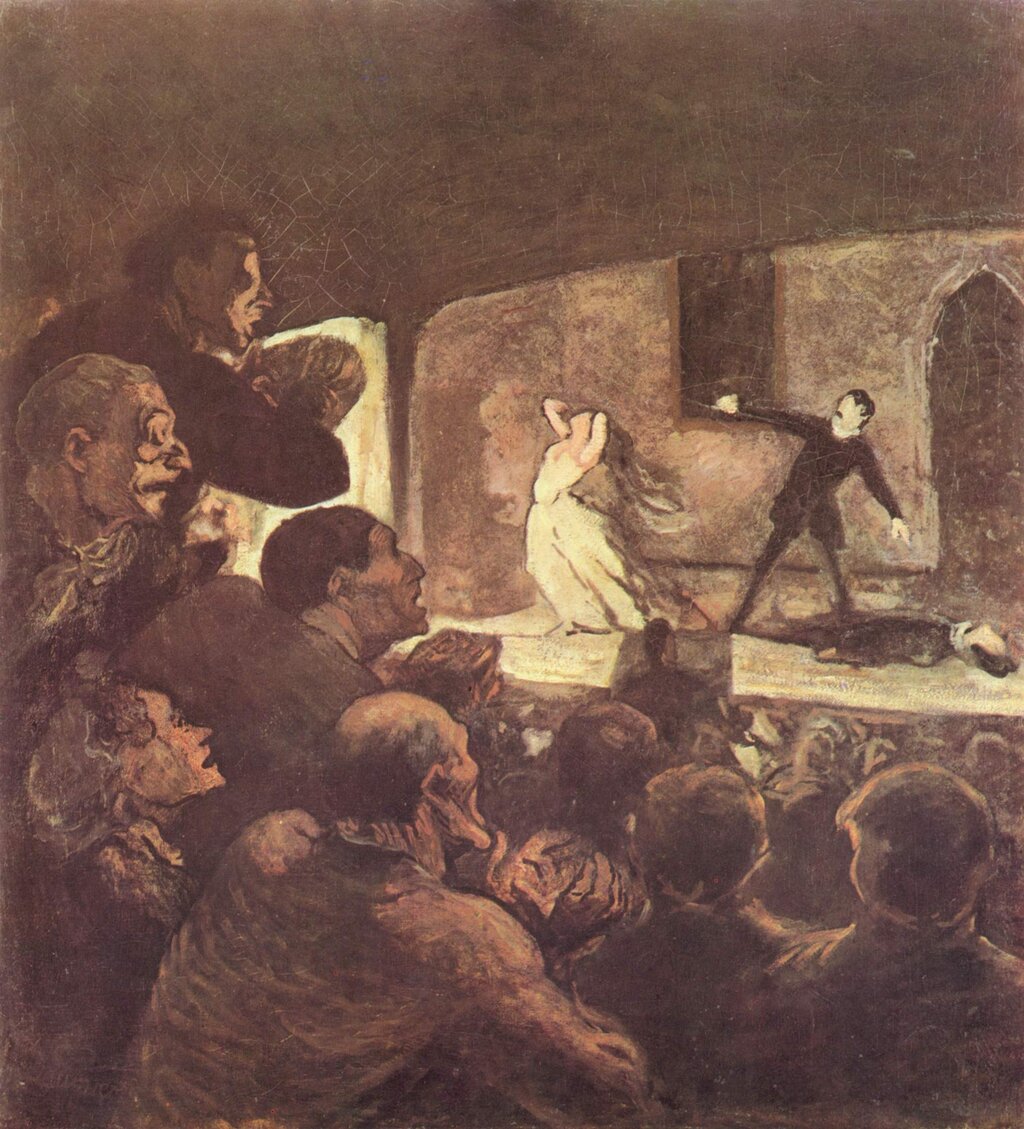
Theater is a conversation, and the audience is a crucial part of it. Unlike film, where the performance is fixed, a live play is shaped by the people watching. An audience’s laughter, gasps, or tense silence can change the energy in the room, affecting the actors' timing and delivery. This feedback loop makes every performance unique.
This is why playwriting is different from screenwriting. A screenplay is for a camera, which can zoom in on a subtle glance or cut to a different location in an instant. A play is for a live audience, whose attention must be captured and directed within the confines of a stage.
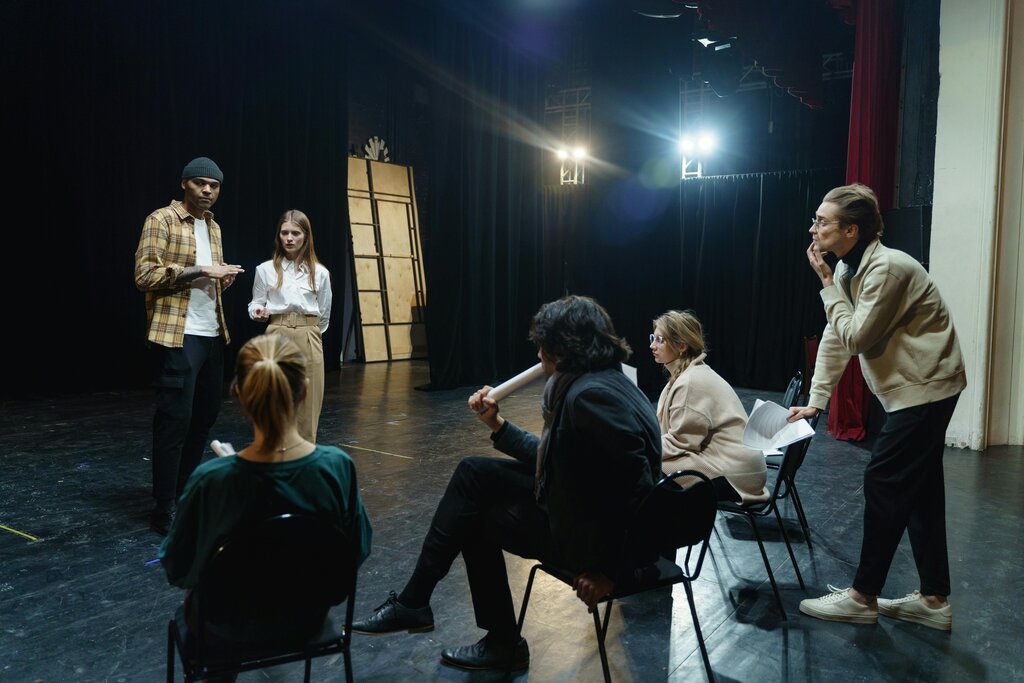
Because it's a live event, theater is also a massive team effort. A playwright provides the script, but that's just the first step. A director interprets the vision, actors breathe life into the characters, and designers build the world through sets, lighting, costumes, and sound. Everyone works together to translate the text on the page into a living, breathing performance.
The Building Blocks
A play script is constructed from a few fundamental components. Understanding these parts is the first step to understanding how a play works.
Characters
noun
The people or beings who inhabit the world of the play.
Characters are the heart of the play. They are the ones who act and are acted upon. The audience experiences the story through their struggles, desires, and relationships.
Dialogue
noun
The words spoken by the characters.
Dialogue is the primary way a story is told on stage. It's how characters reveal who they are, what they want, and what's standing in their way. Unlike a novel, a play has no narrator to explain things. Everything must be communicated through what the characters say to each other.
Stage Directions
noun
The playwright's instructions for the actors and director.
Stage directions describe the setting, the characters' physical actions, and their tone of voice. They are usually written in italics and parentheses. While dialogue is what the audience hears, stage directions are the hidden instructions that guide the performance. They tell an actor to slam the door or to say a line with a smirk.
Here’s a simple example:
MARTHA
(Staring out the window)
He's late again.

LEO
(Without looking up from his newspaper)
He's always late.
In this snippet, the words spoken are the dialogue. The descriptions in parentheses are the stage directions, giving us clues about the characters' actions and emotional states.
These three elements—characters, dialogue, and stage directions—are the essential tools a playwright uses to build a world and tell a story on stage.
Ready to check your understanding?
According to the text, a play script is most like a:
What is the primary way a story is revealed to the audience in a play?
These fundamentals are the starting point. By understanding the unique demands and components of a play, you can begin to appreciate the art of writing for the stage.