Crafting the Parable of the Fig Tree Sermon
Symbolic Foundations
More Than a Tree
In first-century Judea, a fig tree was a sign of life. Its broad leaves offered shade from the harsh sun, and its fruit was a staple of the local diet. To sit under one's own vine and fig tree was a common expression for peace, security, and prosperity. This wasn't just agricultural reality; it was a deeply embedded cultural and theological symbol. When Jesus spoke of fig trees, his audience heard more than just a lesson in horticulture. They heard a commentary on the spiritual state of their nation.
The health of the fig tree was a visual barometer for the health of Israel itself.
This powerful connection between plant and people wasn't new. It was woven into the fabric of the Hebrew Scriptures. Prophets consistently used the fig tree as a living metaphor for Israel's covenant relationship with God. A fruitful tree signified divine blessing and national faithfulness. A barren or withered one, however, was a stark image of judgment and spiritual failure.
Prophetic Roots
Long before Jesus walked the roads of Galilee, the prophet Hosea set the stage. He recalled God's initial delight in Israel, writing, "Like the first fruit on the fig tree in its first season, I saw your fathers" (Hosea 9:10). This imagery is tender and hopeful. It portrays Israel as a source of joy to God, like a traveler finding the first sweet figs of the year. But the tone of Hosea's message quickly sours, as he laments the nation's unfaithfulness.
Conversely, the prophet Joel used the destruction of the fig tree to illustrate national catastrophe. Describing a devastating locust plague, a symbol of an invading army, he proclaimed, "It has laid waste my vine and splintered my fig tree... its branches are made white" (Joel 1:7). For his audience, a ruined fig tree meant more than a lost harvest. It was a sign of covenant broken and divine favor lost. This established a pattern: the fig tree's condition was a direct reflection of Israel's spiritual state.
Genesis, by virtue not only of its place in the canon but also in the timeline of biblical and revelatory history, is filled with events and concepts that are intended both logically and theologically to be viewed as patterns, or paradigms.
This symbolism was tied to the tree's unique agricultural cycle, which was well known to every listener in Jesus's day. A healthy fig tree in Judea would often produce an early crop of small, edible buds called taqsh before its main leaves and fruit appeared. A tree that had leaves but no early fruit was a deceptive sign. It had the appearance of life and productivity but offered nothing. This detail is crucial for understanding the parables in the involving barren fig trees.
A Tale of Two Trees
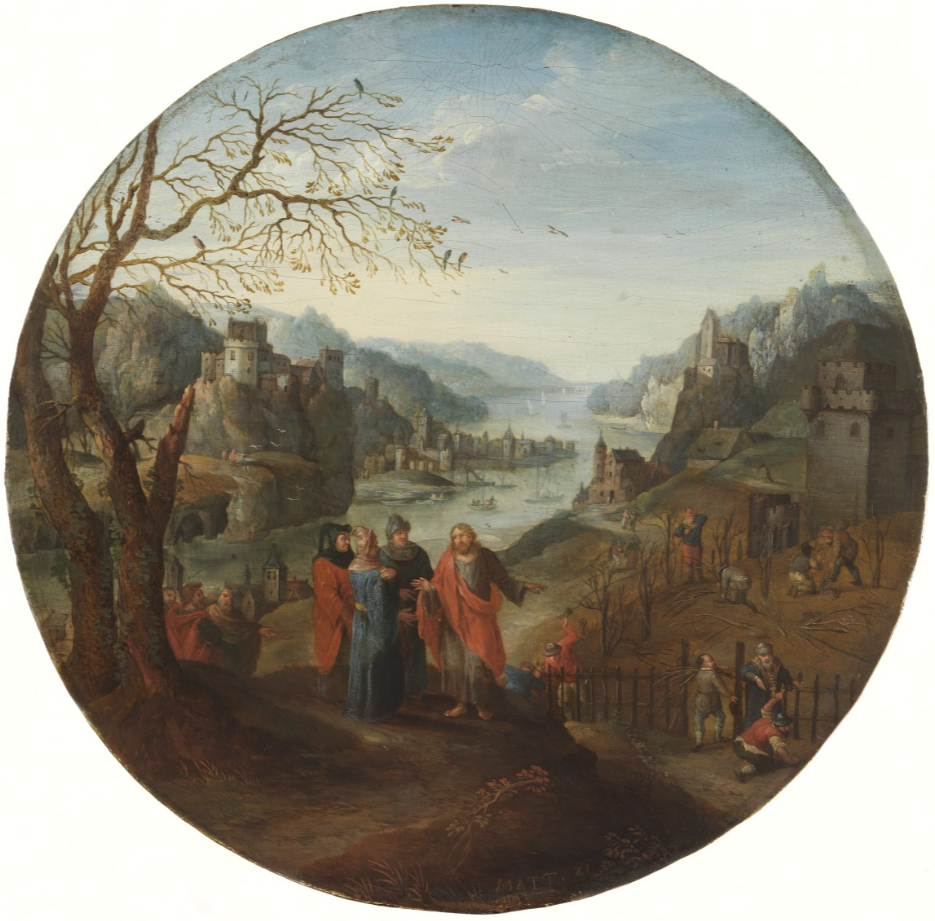
This Old Testament foundation gives rise to a powerful tension in the New Testament, creating a duality in the fig tree's symbolism. Jesus employs this metaphor in two distinct ways: as a sign of judgment and as a sign of hope.
| Symbolism | Meaning for Israel | Key Action |
|---|---|---|
| The Barren Fig Tree | Judgment, spiritual hypocrisy | Cursed or slated for removal |
| The Budding Fig Tree | Hope, future restoration | A sign to watch for |
The Barren Fig Tree represents Israel's religious leadership, which had the outward appearance of piety (the leaves) but lacked genuine fruit of righteousness and justice. When Jesus curses the fig tree in Mark 11, it's not a random act of frustration. It's a prophetic sign-act, a living parable directed at the Temple in Jerusalem, which he had just cleansed. The tree looked promising but was spiritually empty. Its withering was a stark warning of the judgment to come upon a system that had become spiritually bankrupt.
Yet, the fig tree isn't only a symbol of doom. The Budding Fig Tree serves as a symbol of hope and eschatological promise. In the (Matthew 24, Mark 13, Luke 21), Jesus tells his disciples to learn a lesson from the fig tree. When its branches become tender and put out leaves, they know that summer is near. He uses this familiar, natural sign to teach them about the signs preceding his return and the establishment of his kingdom. The new growth on the fig tree symbolizes a new beginning and the promise of future restoration.
The same tree that symbolizes a fruitless past can also point to a fruitful future. The difference lies in the response to God's call.
This dual symbolism is the engine that drives the narrative arc for a powerful sermon. It presents a choice. The fig tree stands as a metaphor not just for a nation in the first century, but for any community or individual. It asks a probing question: Are we displaying only leaves of outward religion, or are we producing the true fruit that God desires? At the same time, it offers the hope that even after a season of barrenness, new life and budding leaves can signal a coming summer of restoration.
Time to check your understanding of these core symbolic ideas.
In first-century Judea, what did the common expression 'to sit under one's own vine and fig tree' typically symbolize?
According to the prophets in the Hebrew Scriptures, the condition of the fig tree served as a living metaphor for what?
Understanding this symbolic foundation is key. It transforms Jesus's interactions with fig trees from strange agricultural episodes into profound theological statements about judgment, hypocrisy, and the unwavering hope of renewal.