Crafting the Oboe
Oboe Construction Basics
The Oboe's Anatomy
At its heart, an oboe is a carefully crafted tube of wood. Most professional oboes are made from grenadilla, a dense, dark hardwood from Africa. This wood is prized for its ability to produce a rich, resonant sound. Its density also makes it stable, which is important for an instrument with such precise engineering.
The oboe’s body is typically made from dense hardwoods like grenadilla or rosewood.
However, grenadilla can be prone to cracking, especially with changes in temperature and humidity. To avoid this problem, many student models are made from durable plastic or resin. While these materials might not have the same tonal warmth as wood, they are much more resilient and affordable for beginners.
Three Main Sections
An oboe isn't a single piece. It breaks down into three main sections that fit together snugly.
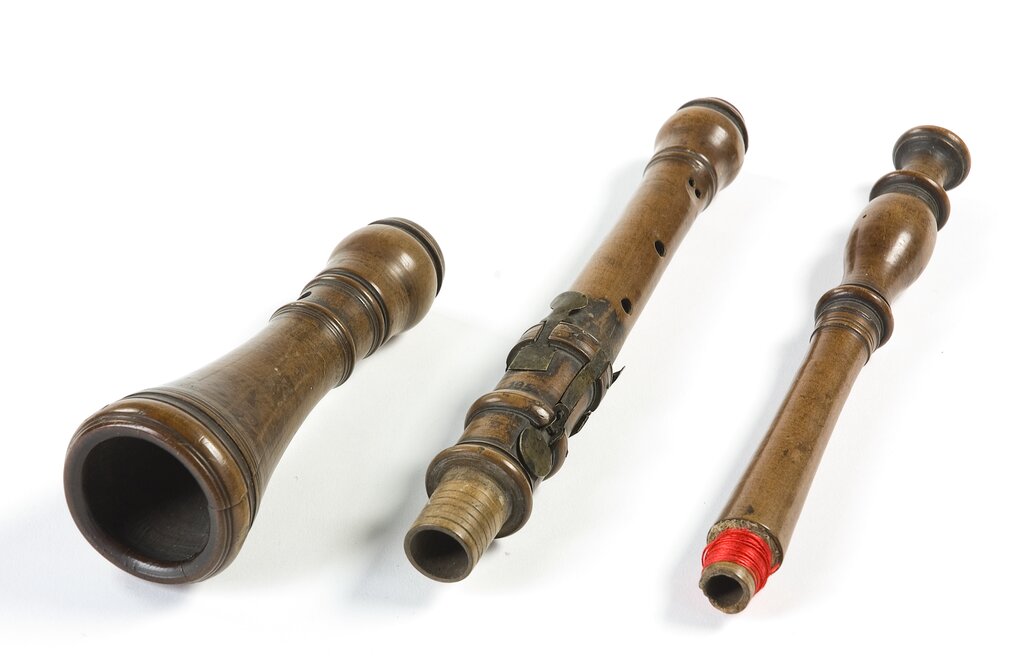
At the top is the upper joint, where the player's left hand goes. In the middle is the lower joint, for the right hand. At the bottom, the instrument flares out into the bell, which helps project the sound. These three parts connect with cork-lined joints to ensure an airtight seal.
The oboe consists of three main sections: the upper joint, the lower joint, and the bell.
The Key System
The intricate web of silver-plated keys is what allows an oboist to play a wide variety of notes. The modern oboe uses a full conservatory key system, which has become the standard. This system features around 45 keys, levers, and rings that cover the instrument's tone holes.
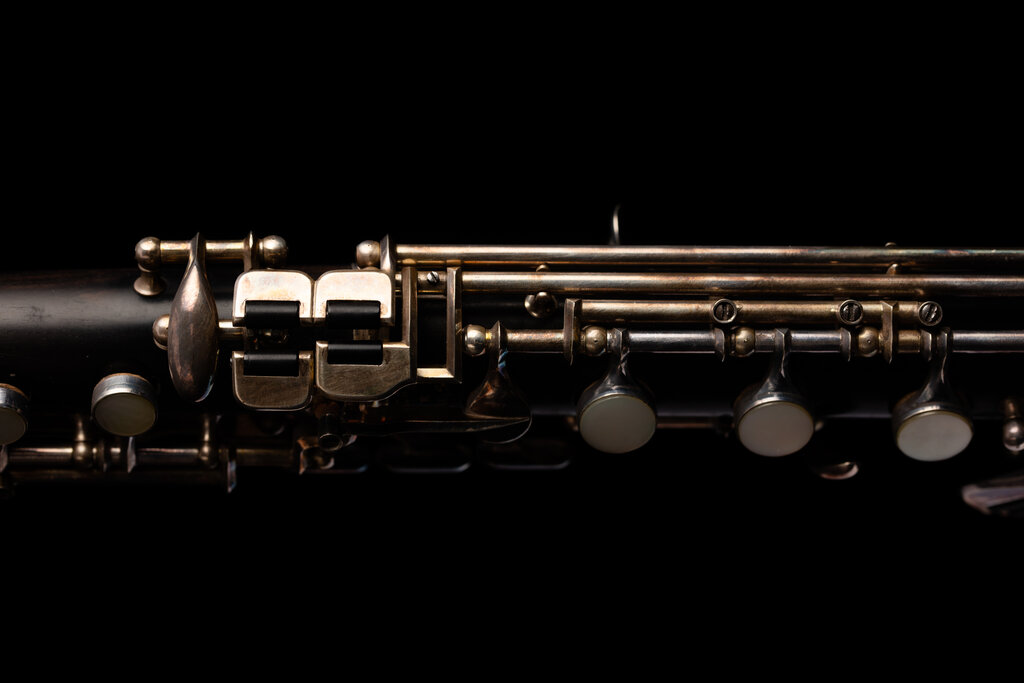
This complex mechanism allows the player to produce a range of over two and a half octaves, typically from a low B♭ up to a high A. While it looks complicated, the layout is designed to be ergonomic, allowing for fast and fluid finger movements.
The sound itself is generated by a double reed, a small component made of two pieces of cane tied together. When a player blows through the reed, the two pieces vibrate against each other, creating the oboe's distinctive tone. The body and keys of the instrument then shape that vibration into music.
The oboe reed is arguably the most critical component of the instrument, acting as the sound generator.
Now, let's review what we've learned about how this fascinating instrument is put together.
What type of wood is most commonly used for professional oboes due to its density and resonant sound?
Why are many student model oboes made from plastic or resin instead of grenadilla wood?