Crafting Shareable Digital Project Management Modules
User Engagement Principles
What Keeps Learners Hooked?
Why do we stick with some online courses and abandon others? It often comes down to engagement. A truly engaging course doesn't just present information; it taps into the core psychological drivers that make learning feel meaningful and rewarding. It's not about flashy graphics, but about understanding what makes us tick.
When designing online courses, it’s not just about the technology or the platform you use; it’s about understanding the learner’s journey and how different theories of learning can influence the way content is delivered and experienced.
Two powerful frameworks help us understand this: Self-Determination Theory, which explains what we need to feel motivated, and the ARCS model, which gives us a roadmap for how to build that motivation into a course.
Control, Skill, and Connection
Self-Determination Theory (SDT) proposes that all humans, regardless of culture, have three basic psychological needs. When these needs are met, we are more motivated, productive, and happy. When they're not, our motivation flags.
-
Autonomy: This is our need to feel in control of our own actions and decisions. In learning, this means having choices. It could be as simple as choosing the order of modules, setting personal learning goals, or deciding which optional activities to pursue.
-
Competence: We need to feel effective and capable. A well-designed course builds competence by providing challenges that are difficult but achievable. Clear instructions, constructive feedback, and seeing tangible progress all feed this need.
-
Relatedness: This is our need to connect with others. We want to feel like we belong and are cared for. Online courses can foster this through group projects, discussion forums, or peer review sessions.
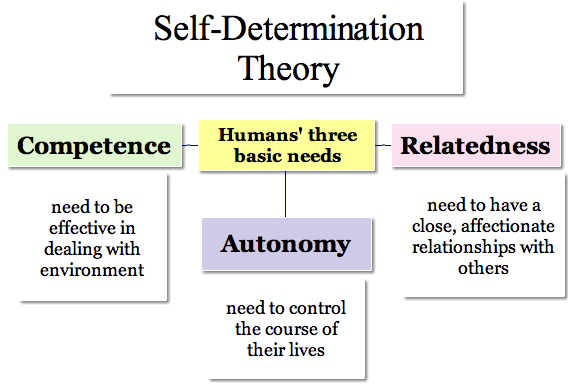
When a course supports your autonomy, builds your competence, and fosters a sense of relatedness, you're not just learning—you're thriving.
A Practical Recipe
If Self-Determination Theory is the 'why,' then the ARCS model is the 'how.' It’s a framework developed by John Keller specifically for instructional design. It provides four steps for creating motivational learning experiences.
| Component | What It Means | How to Do It |
|---|---|---|
| Attention | Grab the learner's interest. | Start with a surprising statistic, a relatable story, or a thought-provoking question. Use variety in your presentation. |
| Relevance | Show why the material matters to them. | Connect the content to their job, personal goals, or past experiences. Answer the question, "What's in it for me?" |
| Confidence | Help them believe they can succeed. | Start with small, manageable tasks to build early wins. Provide clear objectives, rubrics, and supportive feedback. |
| Satisfaction | Make the learning experience rewarding. | Give praise for effort, award badges for milestones, or create opportunities to apply new skills in a meaningful way. |
By weaving these four elements into your course, you create a structure that not only teaches but also consistently motivates the learner from start to finish.
Don't Overload the Brain
Have you ever felt completely overwhelmed by a new topic? That feeling is what researchers call high cognitive load. Cognitive Load Theory suggests that our working memory—the part of our brain that processes new information—is very limited. If a course throws too much at us at once, we can't process it, and learning stops.
To manage cognitive load, course designers should:
- Break down complex topics into smaller, digestible chunks.
- Remove non-essential information, like decorative images or fluffy text.
- Use clear and simple language instead of jargon.
- Provide worked examples that walk learners through a process step-by-step.
The goal is to make the path to learning as smooth as possible, so the learner's mental energy is spent on understanding the material, not on deciphering it.
Ready to check your understanding?
An online course allows learners to choose between two different final projects: a research paper or a multimedia presentation. Which core psychological need from Self-Determination Theory does this choice primarily support?
According to Cognitive Load Theory, which of the following is an effective strategy for designing a course?
By understanding these core principles, we can move from simply creating content to designing experiences that truly engage and empower learners.