Crafting Realistic Scale Model Nature Dioramas
Scale and Materials
The Language of Scale
Before you build anything, you need to decide on its size. In the world of miniatures, this is called scale. Scale is simply a ratio that compares the size of the model to the size of the real-world object it represents. It's the rule that ensures everything in your scene, from a tiny soldier to a massive tank, looks like it belongs together.
Scale
noun
The ratio of a linear dimension of a model to the corresponding linear dimension of an original.
Scale is written as a fraction, like 1:35 or 1/35. This means that every one inch (or centimeter) on your model represents 35 inches (or centimeters) in real life. A smaller number after the colon means a larger model. For example, a 1:35 scale figure will be much bigger and more detailed than a 1:72 scale figure of the same person.
Choosing a Common Scale
While you could invent any scale you want, it's wise to stick to common ones. This is because manufacturers produce kits, figures, and accessories in these standard sizes, making it much easier to find the parts you need.
Here are a few popular choices:
| Scale | Common Use | Size & Detail |
|---|---|---|
| 1:35 | Military vehicles, soldiers | Large size, allows for high detail. The most popular military scale. |
| 1:48 | Aircraft, some military vehicles | A good middle ground. Detailed but smaller than 1:35. |
| 1:72 | Aircraft, smaller military scenes | Small size, great for depicting large battles in a small space. |
| 1:87 | Model railroading (HO scale) | Very small, perfect for expansive train layouts and landscapes. |
So, how do you pick? Think about your subject. If you're building a World War II tank scene, 1:35 is a great choice because of the vast selection of available kits. If you want to show a squadron of fighter jets, 1:72 will allow you to fit them all in a reasonable amount of space. Also, consider your own comfort. Larger scales are often easier to work with for beginners, as the parts aren't quite as tiny.
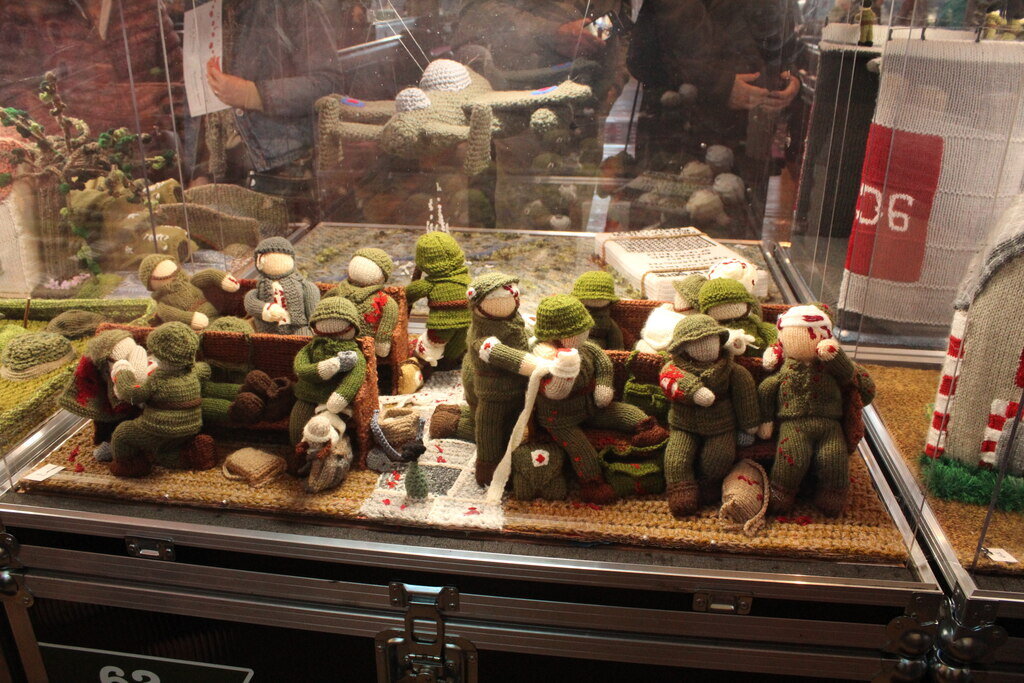
Your choice of scale is the first and most important decision. It dictates the materials you'll use, the detail you can achieve, and the final size of your project.
Foundation and Form
With your scale decided, it's time to gather materials. Every diorama starts with a solid base. This is the foundation that holds your entire scene together.
- Plywood: For large or heavy dioramas, plywood is an excellent choice. It's strong, resists warping, and can support a lot of weight. You can even build a frame around it for a clean, finished look.
- Foam Board: Also known as extruded polystyrene, this is a lightweight and versatile option. It’s easy to cut and shape, making it perfect for creating hills, cliffs, and varied terrain. You can stack and glue layers together to build up elevation quickly. It's ideal for smaller, lighter projects.
Once you have your base, you can start building the landscape. This is where you can get creative.
- Plaster: You can mix plaster powder with water to create a paste that can be spread over your foam base or a wire mesh screen. It creates a hard, rock-like shell that you can carve and sand once it dries. Plaster cloth, which is gauze infused with plaster, is another great option for quickly covering large areas.
- Modeling Clay: Air-dry or epoxy clays are fantastic for sculpting specific details like rocks, tree stumps, or rubble. They give you a lot of control to create precise shapes that would be difficult to carve from other materials.
Holding It All Together
The final piece of the puzzle is choosing the right adhesive. Using the wrong glue can ruin your materials or create a weak bond that falls apart over time.
- PVA Glue (White Glue): This is your all-purpose adhesive. It works well for gluing down sand, gravel, and static grass. It's also great for wood and paper. It dries clear but can take a while to set fully.
- Wood Glue: When attaching a wooden frame to a plywood base, or for any wood-on-wood connection, wood glue provides a much stronger bond than standard PVA.
- Foam-Safe CA Glue (Super Glue): Standard super glue will melt foam board. Make sure you get a foam-safe variety. It's perfect for quickly tacking foam pieces together before securing them more permanently.
- Epoxy: This two-part adhesive creates an incredibly strong bond for attaching heavy items made of metal or resin to your base. It takes longer to cure but provides superior strength.
Which of the following scales would produce the largest model of the same object?
True or False: A 1:72 scale model of a tank is larger than a 1:35 scale model of the same tank.
With these basics of scale and materials, you have the foundational knowledge to start planning and building your own miniature world.