Crafting Memorable Music Motifs
Understanding Musical Motifs
The Building Blocks of Music
Think of a memorable song. What part gets stuck in your head? Chances are, it's a short, catchy snippet of music. This small, recurring musical idea is called a motif. It’s like a single, crucial Lego brick. On its own, it might seem simple, but when repeated and varied, it can be used to build an entire musical world.
A motif is the smallest structural unit possessing thematic identity.
This identity is what makes a motif so powerful. It acts as a musical signature, a recurring thought that ties a piece together. When you hear it, you recognize it. Composers use motifs to create a sense of unity and guide the listener's ear through the music. They can be found in every style, from symphonies to movie scores to pop songs.
Types of Motifs
Motifs aren't just about melody. They can be built from rhythm, harmony, or a combination of these elements. Understanding the different types helps you hear music on a deeper level.
Melodic Motif
noun
A short, recurring sequence of notes that forms a distinct melodic idea.
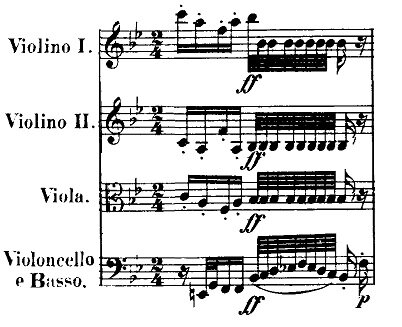
This is the most common type of motif. It's a tune, a little fragment of a melody that keeps coming back. The most famous example is the opening of Beethoven's Fifth Symphony: three short notes followed by a long one. Da-da-da-DUM. This simple idea appears in countless variations throughout the entire piece, giving it a powerful, cohesive feel.
A rhythmic motif is a recurring pattern of beats or durations. The melody and harmony might change, but the rhythm stays recognizable. Think of the stomp-stomp-clap pattern from Queen's "We Will Rock You." That iconic rhythm is a motif that defines the entire song, even before any instruments or vocals come in.
Finally, a harmonic motif is a recurring chord progression. While melodies and rhythms often get more attention, a specific sequence of chords can be just as powerful in establishing a song's identity. The classic I–V–vi–IV progression, heard in countless pop songs from the last several decades, functions as a widespread harmonic motif for an entire genre.
A Brief History
While composers have used recurring ideas for centuries, the concept of the motif truly blossomed during the Classical and Romantic periods (roughly 1750-1900). Composers like Beethoven began to build entire symphonies from a few small, potent motifs. This was a new way of thinking about musical structure, creating tightly woven, dramatic narratives from just a handful of notes.
Later, composers like Richard Wagner took the idea even further with the leitmotif, a motif associated with a specific character, place, or idea in his operas. When you heard a particular musical phrase, you knew that a certain character was on stage or being talked about. This technique has had a huge influence on film music. The menacing two-note theme for the shark in Jaws or the heroic brass fanfare for Star Wars are direct descendants of this idea. They are powerful motifs that instantly tell us who or what is important.
In modern pop, rock, and electronic music, a short, catchy motif is often called a 'riff' or a 'hook.' It's the part of the song that grabs you and refuses to let go.
Now that you know what to listen for, you'll start hearing motifs everywhere. They are the secret ingredients that make music memorable and meaningful.