Crafting Human-Like AI Agents
Introduction to AI Fundamentals
What Is Artificial Intelligence?
Artificial intelligence is the science of making machines that can think like humans. The goal is to create systems that can learn from experience, reason through problems, and correct their own mistakes. Instead of being explicitly programmed for every single task, an AI system is designed to recognize patterns, make predictions, and adapt.
Think about how you learn. You observe, you try things, you see what works, and you adjust. AI aims to replicate this process in a machine. It's a broad field that covers everything from simple spam filters in your email to complex systems that can drive cars or compose music.
Artificial Intelligence
noun
A field of computer science dedicated to creating systems capable of performing tasks that typically require human intelligence, such as visual perception, speech recognition, decision-making, and translation between languages.
A Quick Trip Through Time
The idea of intelligent machines has been around for centuries, but the formal field of AI research began in the 1950s. Early researchers were optimistic, believing that a machine with human-level intelligence was just a few decades away.
Progress wasn't always a straight line. The field experienced periods of reduced funding and interest, known as "AI winters," when the technology couldn't live up to the hype. However, recent breakthroughs in computing power and the availability of massive amounts of data have led to the rapid advancements we see today.

The AI Family Tree
AI isn't a single technology; it's a large family of different approaches and subfields. Understanding these distinctions is key to understanding how AI works. The most important branches are Machine Learning, Deep Learning, and Natural Language Processing.
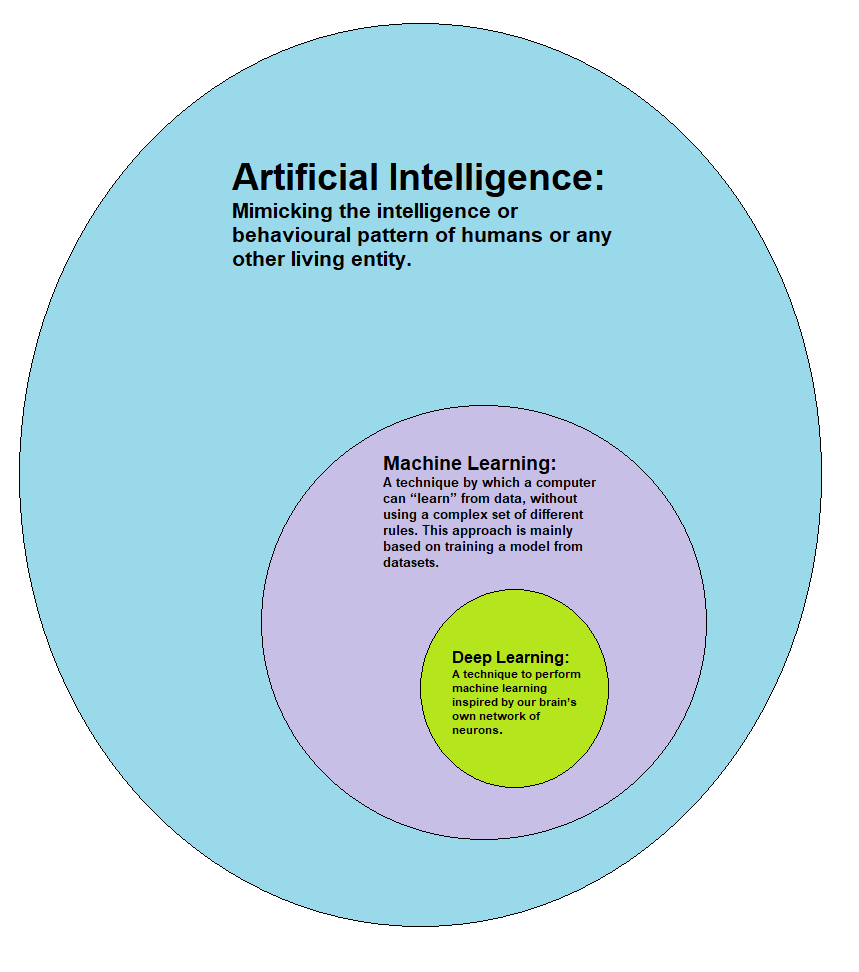
Machine Learning (ML) is a core part of modern AI. Instead of writing step-by-step instructions, developers feed a machine learning model vast amounts of data and let it learn the patterns on its own. It's like teaching a child to recognize a dog by showing them hundreds of pictures of different dogs. Eventually, the child learns the key features of a dog without you having to define "dog" explicitly. An email spam filter is a classic example of machine learning. It learns to identify junk mail by analyzing thousands of examples of spam and legitimate emails.
Deep Learning (DL) is a specialized type of machine learning that uses structures inspired by the human brain, called neural networks. These networks have many layers, allowing them to learn very complex patterns from data. This is why it's called "deep." Deep learning is the powerhouse behind many recent AI achievements, like image recognition that can identify your friends in photos or voice assistants that understand your commands.
Natural Language Processing (NLP) is the subfield focused on enabling computers to understand, interpret, and generate human language. Whenever you use a translation app, a grammar checker, or ask a chatbot a question, you're interacting with NLP. The goal is to bridge the gap between human communication and computer understanding.
AI in the Real World
Artificial intelligence is no longer just science fiction. It's an integral part of many industries, often working quietly in the background.
In healthcare, AI helps doctors analyze medical images like X-rays and MRIs to spot diseases earlier and more accurately. In finance, it powers fraud detection systems, instantly flagging suspicious transactions to protect your accounts.
Your favorite entertainment streaming service uses AI to recommend movies and songs based on what you've enjoyed in the past. In retail, AI manages inventory and personalizes your shopping experience. And in the automotive industry, AI is the key technology behind self-driving cars, processing real-time data from sensors to navigate roads safely.
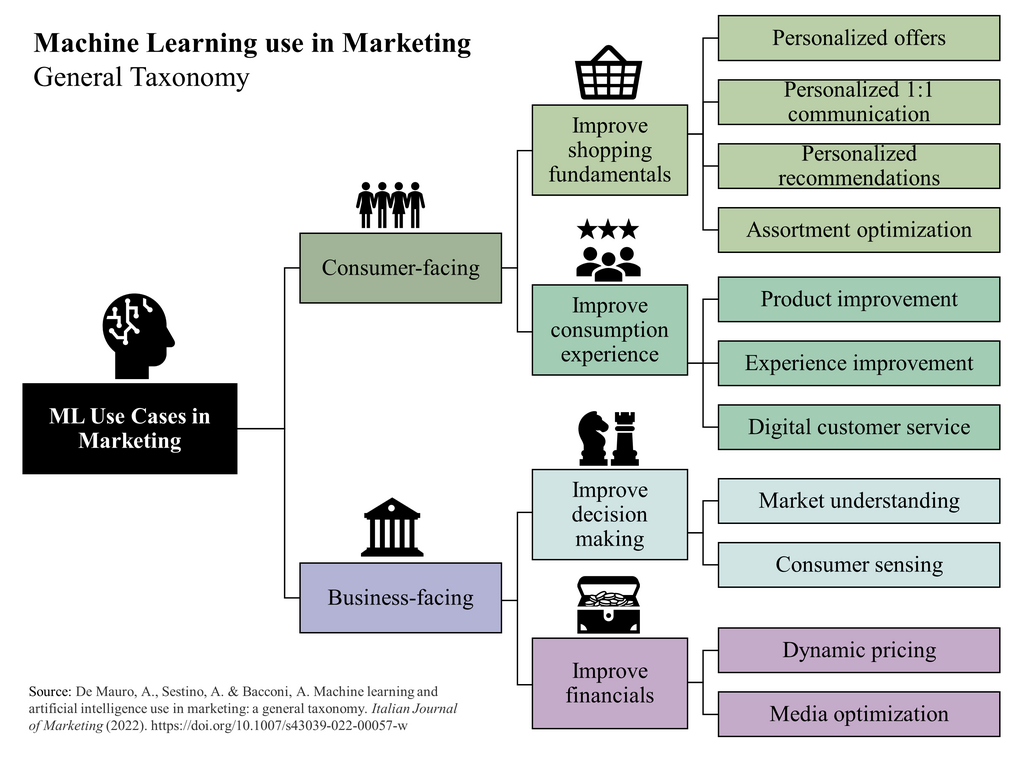
These applications are all built on the foundational concepts of learning from data, recognizing patterns, and making intelligent decisions. Understanding these basics is the first step toward seeing how AI is reshaping our world.
What is the primary goal of artificial intelligence?
The history of AI research has been a steady, uninterrupted line of progress since it began in the 1950s.