Crafting an Effective CV
Understanding CV Basics
What Is a CV?
A curriculum vitae, or CV, is a detailed document that outlines your academic and professional history. Think of it as the full story of your career. Its purpose is to provide a comprehensive overview of your qualifications, including your education, work experience, research, publications, presentations, and other accomplishments.
Curriculum Vitae
noun
A Latin phrase that translates to "course of life."
Unlike a resume, which is a brief summary tailored to a specific job, a CV is a complete record that can be several pages long. It's most commonly used in academic, medical, and scientific fields, or for international job applications.
CV vs. Resume
The biggest confusion for many job seekers is the difference between a CV and a resume. While both are used for job applications, they serve different purposes and have different formats. The main distinctions come down to length, content, and purpose.
| Feature | Curriculum Vitae (CV) | Resume |
|---|---|---|
| Length | Comprehensive; can be multiple pages. | Concise; typically one page. |
| Content | Detailed history of academic and professional life. | Brief summary of relevant skills and experience. |
| Purpose | Used for academic, research, or scientific roles. | Used for most other job applications. |
| Focus | Credentials and comprehensive background. | Skills and qualifications for a specific job. |
In the United States and Canada, the term "resume" is used for most job applications, while "CV" is reserved for academic or research positions. In many other parts of the world, including the UK, Europe, and Asia, "CV" is the standard term for all job application documents.
The Anatomy of a CV
A standard CV is broken down into several key sections. Each one plays a role in painting a complete picture of who you are as a professional.
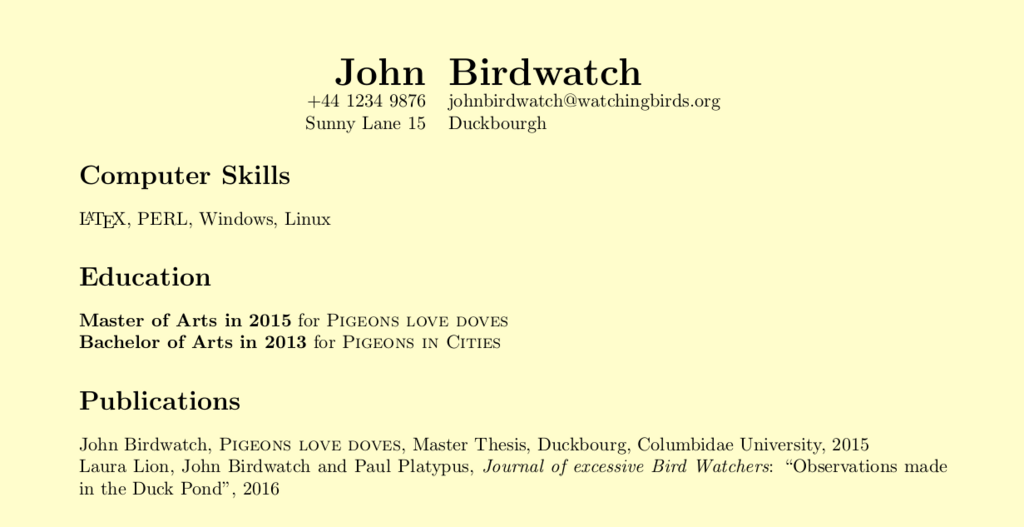
Personal Information: This is straightforward. Include your full name, phone number, email address, and optionally, a link to your professional profile (like LinkedIn).
Professional Summary: This is a brief, 2-3 sentence paragraph at the top of your CV. It's your elevator pitch, summarizing your key expertise, experience, and career goals. It should grab the reader's attention and make them want to learn more about you.
Education: List your academic qualifications in reverse chronological order (most recent first). Include the name of the institution, degree obtained, and graduation date. If you're in academia, you might also include your thesis or dissertation title.
Work Experience: Also in reverse chronological order, this section details your professional history. For each role, include your job title, the company's name, its location, and the dates you worked there. Under each position, use bullet points to describe your responsibilities and, more importantly, your accomplishments.
Use strong action verbs to start each bullet point. Instead of saying "was responsible for managing the team," try "Managed a team of five to increase productivity by 15%."
Skills: This section highlights your specific abilities. It's often helpful to break it down into categories like "Technical Skills" (e.g., software, programming languages) and "Language Skills." Be honest about your proficiency level (e.g., basic, proficient, fluent).
Additional Sections: Depending on your background, you might include other sections to showcase your qualifications. These can include:
- Publications: A list of any articles, papers, or books you've authored or co-authored.
- Certifications: Professional certifications or licenses you hold.
- Awards and Honors: Recognition you've received for your work or academic performance.
- Conferences and Presentations: Any talks or presentations you've given at professional events.
Now that you understand the basic components, let's test your knowledge.
What is the primary purpose of a Curriculum Vitae (CV)?
In the United States and Canada, a CV is most commonly used when applying for which type of position?
Understanding these core elements is the first step toward building a strong CV that accurately reflects your professional story.