Crafting Advanced Worksheets for Born a Crime
Worksheet Layout Principles
Beyond the Question List
A good worksheet does more than just ask questions. It guides a student's thinking. When designing a resource for a book as layered as Trevor Noah's 'Born a Crime', the layout itself becomes a teaching tool. A cluttered page filled with dense blocks of text can overwhelm a student before they even begin. This is where a principle from psychology can help us: Cognitive Load Theory
Cognitive load refers to the total amount of mental effort being used in your working memory. When a worksheet is poorly designed, students waste precious mental energy trying to figure out what to do, rather than focusing on the actual content.
Our goal is to reduce extraneous load—the mental work that doesn't contribute to learning. We want students spending their energy grappling with Noah's experiences under Apartheid, not deciphering confusing instructions or navigating a chaotic layout. By using clean design, we free up their minds to engage with the material on a deeper level.
Guiding the Eye, Guiding the Mind
A worksheet's layout should create a clear path for the student. This is achieved through —the arrangement of elements to signal importance. Think of it as creating an instructional flow, moving the learner from simple engagement to more complex analysis.
Here are the key tools at your disposal:
-
White Space: Don't cram the page. Generous margins and spacing between sections give the content room to breathe. This reduces visual clutter and makes the task feel more manageable.
-
Typography: Use a clean, readable font. Create a clear hierarchy with headings, subheadings, and body text. Use bold or italics sparingly to emphasize key terms or instructions, not entire paragraphs.
-
Grouping: Place related items close together. A question should be right next to the space provided for an answer. An excerpt from the book should be clearly connected to the task that references it. This is called the principle of proximity.
A well-designed worksheet leads the student's eye from a low-stakes warm-up activity, to a core task, and finally to a higher-stakes analytical question, all without them consciously realizing it.
Structuring for Understanding
The most effective worksheets align their layout with their learning objective. If your goal is for students to trace a recurring theme, a linear list of questions is less effective than a tool designed for that specific purpose. This is where graphic organizers excel.
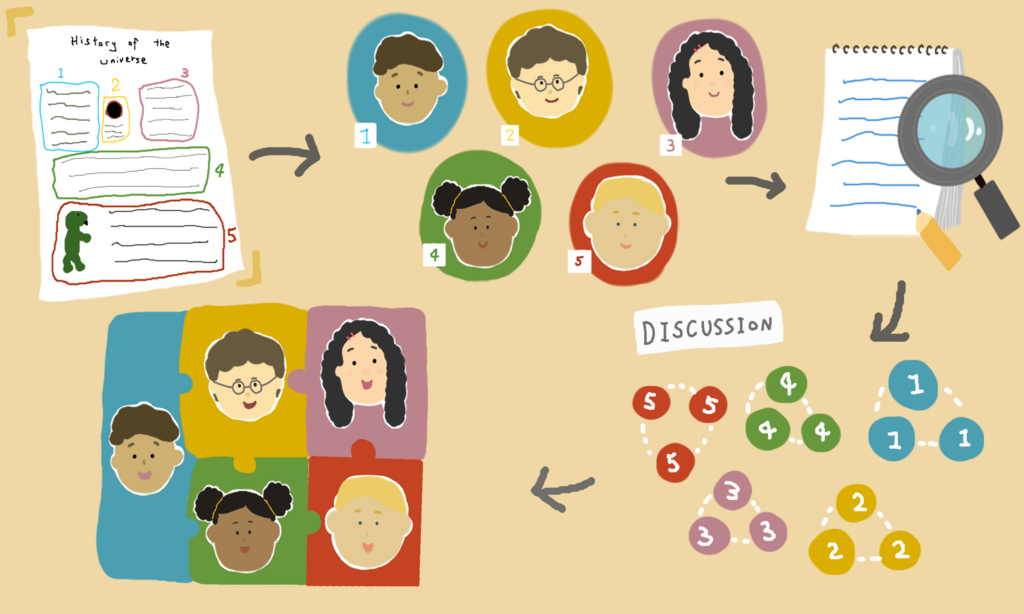
For 'Born a Crime', a key objective might be to help students understand how the abstract system of Apartheid had concrete, daily consequences for Trevor Noah. Instead of asking, "How did Apartheid affect Trevor Noah?", we can use a graphic organizer to map the connection between the law and his lived experience.
This structure visually connects cause and effect. It breaks down a complex idea into manageable parts, reducing cognitive load while guiding the student toward a specific analytical insight. The layout is the instruction.
What is the primary goal of reducing "extraneous load" in worksheet design, according to Cognitive Load Theory?
Which of the following best describes the function of "visual hierarchy" on a worksheet?
By focusing on these principles of cognitive load, visual hierarchy, and objective-aligned structure, you can create worksheets that are not just assessments, but powerful tools for learning.