Crafting a Powerful Brand Strategy
Brand Fundamentals
More Than a Logo
What do you think of when you hear the word “brand”? For many, it’s a logo, a catchy name, or a specific color scheme. But a brand is much deeper than that. It’s the gut feeling a person has about your product, service, or organization. It’s your reputation. It’s the story people tell about you when you’re not in the room.
A brand lives in the minds of your audience. It's an intangible asset built from every single interaction someone has with your company, from your customer service to your social media posts. While a logo is a visual shortcut to your brand, it isn't the brand itself.
Brand
noun
The perception of a company, product, or service in the mind of the consumer, shaped by experiences, communications, and reputation.
Since a brand is about perception, leaving it to chance is a huge risk. This is where brand strategy comes in. A brand strategy is a long-term plan for how you want your brand to be perceived. It’s the act of intentionally shaping that perception to build recognition, trust, and loyalty.
A brand strategy is a long-term, comprehensive plan that outlines a clear set of goals and principles for how your business will be perceived by the public.
Without a strategy, your brand can become inconsistent and confusing. A clear strategy ensures that every decision you make, from product development to marketing campaigns, reinforces the same core message and builds a strong, cohesive identity.

The Foundation of Your Brand
A powerful brand isn’t built on flashy visuals alone. It stands on a solid foundation of clear, guiding principles. These core elements act as an internal compass, ensuring your company stays true to itself as it grows. The four key pillars of this foundation are purpose, vision, mission, and values.
Your Brand Purpose is your reason for being, beyond making money. It’s the “why” behind what you do. What fundamental problem in the world does your organization exist to solve? A strong purpose connects with people on an emotional level and gives your work meaning.
Think of it this way: a company that makes hiking boots doesn't just sell footwear. Its purpose might be to inspire people to connect with nature and explore the outdoors.
Next is your Brand Vision. This is your big, audacious goal for the future. It’s a snapshot of the world you hope to create if you succeed in your purpose. A vision statement should be aspirational and inspiring, painting a picture of what’s possible.
If the vision is the destination, the Brand Mission is the road you take to get there. Your mission statement is a practical, action-oriented declaration of what your company does, who it serves, and how it achieves its vision. It’s grounded in the present.
| Vision | Mission |
|---|---|
| Describes the future you want to create. | Describes what you do today. |
| Answers “Why?” | Answers “What?” and “How?” |
| Broad and inspirational. | Specific and action-oriented. |
Finally, your Brand Values are the core principles that guide your company’s behavior and decisions. They are the non-negotiable beliefs that shape your culture and dictate how you conduct business. Values aren’t just words on a wall; they should be evident in your actions every day. Common examples include integrity, innovation, customer commitment, or sustainability.
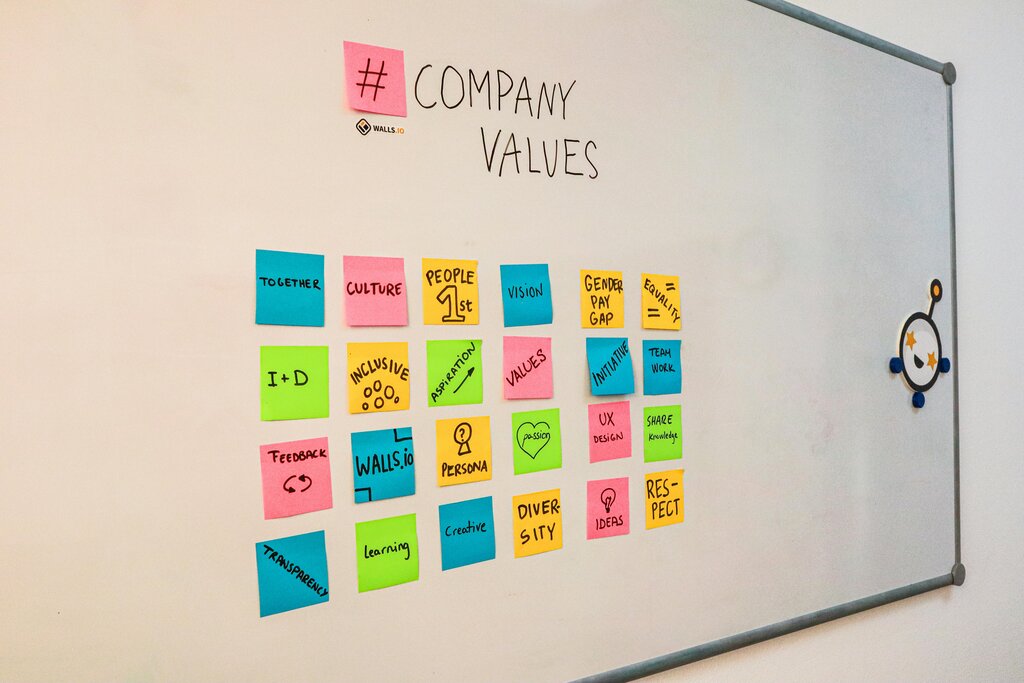
Together, these four elements create a powerful framework. They define who you are, what you stand for, and where you're going, providing the clarity needed to build a brand that truly connects with people.
Time to check your understanding of these core concepts.
What is the most accurate definition of a brand?
A technology company declares, "We operate with unwavering honesty and empower our team to always do the right thing for our customers." This statement is a clear example of the company's ____.
With these fundamentals in place, you have a solid foundation to guide every aspect of your business.